Catch and Cook Guide
The full catch-and-cook cycle is one of fishing's deepest rewards - handling a fish from water to table, knowing exactly what you are eating and where it came from. Here is the…
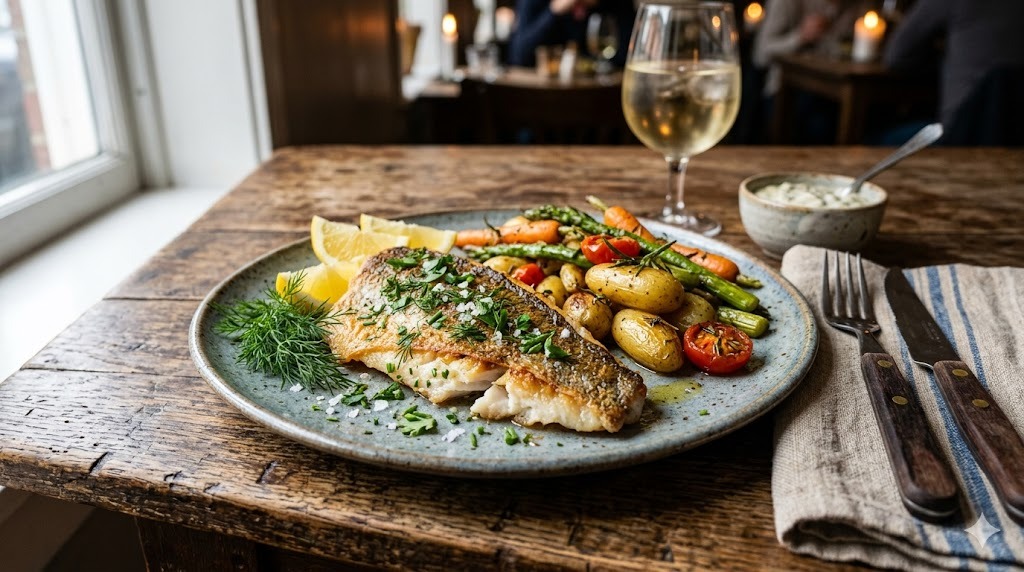
The full catch-and-cook cycle is one of fishing’s deepest rewards - handling a fish from water to table, knowing exactly what you are eating and where it came from. Done right, it produces some of the finest meals available. Done wrong, it produces ruined fillets, foodborne illness, or fish so abused it tastes like the lake mud you dragged it out of.
This guide covers the full process: handling the catch, killing humanely, bleeding, icing, filleting, food safety, and a handful of go-to recipes that turn freshwater and saltwater catches into great meals. Table quality varies a lot by species, so it helps to know the fish you are targeting before you ever put one on ice.
On-Water Care: The First Hour Decides Everything
The taste of fish is decided in the first hour after catching, not in the kitchen.
Kill Promptly
A fish that thrashes on a stringer for an hour produces inferior meat. Lactic acid buildup, stress hormones, and slime damage flesh quality.
- Iki jime - Quick spike or knife through the brain. Humane and immediate.
- Brain spike for larger fish.
- Solid blow to the head with a priest (fish bonker) for smaller fish.
Bleed
For premium-quality fillets - especially tuna, salmon, mahi, and trout:
- Immediately after killing, cut both gill arches with a sharp knife.
- Bleed into water (in the live well off, or in a bucket) for 5-10 minutes.
- Blood drains, leaving the flesh white/clean.
This step alone elevates fish quality enormously.
Ice Immediately
Get the fish into ice within minutes of bleeding.
- Slurry ice (ice + saltwater) cools fastest.
- Solid ice with the fish on top, ice on top of the fish. Don’t let the fish sit in pooled water at the bottom of the cooler - it gets warm and waterlogged.
- Cool the body cavity of larger fish by gutting on the water and packing ice inside.
Quick Field Dressing (for Some Species)
For freshwater game fish (trout, salmon, perch) and many species, gutting on the water before icing produces better flesh:
- Insert knife at the anal vent and slice forward to the gills.
- Remove the entrails. Scrape the blood line (dark strip along the backbone) with a spoon or knife.
- Rinse cavity with clean water.
- Pack cavity with ice.
For larger gamefish (tuna, big walleye, salmon), gutting is universally beneficial.
Filleting: Tools and Technique
Tools
- Fillet knife - Flexible 6-9” blade. Brands: Bubba (electric and manual), Rapala, Dexter-Russell, Wusthof.
- Electric fillet knife - Bubba Pro Series, Rapala R12 - for high-volume work like crappie, panfish, walleye limits.
- Fillet glove - Cut-resistant glove for the holding hand. Optional but smart.
- Cutting board - Flexible plastic mat is best; wood absorbs fish smell.
- Ziplock bags and vacuum sealer for storage.
Basic Fillet Technique (Most Fish)
- Place fish on cutting board, head to your dominant hand side.
- Make a cut behind the gills, angled down toward the head, until you hit the spine.
- Turn the knife horizontal and cut along the spine, from gills to tail, separating the fillet from the carcass. Use long smooth strokes.
- Flip the fish and repeat on the other side.
- Remove the skin: Place fillet skin-side down, insert knife at the tail between flesh and skin. Hold the skin tight and slide the knife forward, separating flesh from skin.
- Trim the rib bones by sliding the knife under them and lifting them out.
- Remove the blood line along the lateral line if present.
- Rinse and pat dry.
For panfish (bluegill, perch), an electric knife makes quick work and yields cleaner fillets.
Pin Bones
Some species (salmon, trout) have pin bones running through the fillet. Run your finger along the fillet to find them. Pull each with needle-nose pliers or specialized pin-bone tweezers.
Food Safety
Storage
- Use or freeze within 1-2 days of catching.
- Refrigerate at 32-38°F wrapped in butcher paper or plastic.
- Freeze fish at 0°F or below. Vacuum-sealed for best long-term storage (up to a year).
- Don’t refreeze thawed fish - quality drops fast.
Parasites
Some freshwater and Pacific salmon contain parasites that are killed only by:
- Cooking to 145°F internal temperature.
- Freezing at -4°F for 7 days (sushi-grade prep).
Sushi-grade tuna and other ocean fish flash-frozen at -40°F by commercial processors are safe raw. Wild-caught freshwater fish should generally be cooked.
Mercury and Contaminants
Some species accumulate mercury and PCBs:
- Avoid daily consumption of large predatory fish (large bass, pike, walleye, swordfish, tuna).
- Children and pregnant women should follow state advisories.
- Local water advisories - many states issue advisories for specific waters. Check before keeping fish from urban or industrial-zone waters.
Smaller, younger fish accumulate less. Panfish, smaller trout, and lower-trophic-level species are generally safer.
Allergies and Cross-Contamination
- Wash hands, knives, and surfaces after handling raw fish.
- Don’t use the same cutting board for cooked food without thorough washing.
Cooking Methods and Recipes
Pan-Fried Fillets (Most Versatile)
Best for: walleye, perch, bass, snapper, trout, panfish.
- Pat fillets dry. Season with salt and pepper.
- Dredge in seasoned flour or panko.
- Heat oil in cast-iron or stainless skillet over medium-high.
- Cook 2-4 minutes per side depending on thickness, until golden and flaky.
- Squeeze of lemon, serve.
Beer-Battered (Fish & Chips)
Best for: cod, haddock, walleye, perch, halibut.
- Mix 1 cup flour, 1 tsp baking powder, 1 tsp salt, 1 cup cold beer.
- Dredge fillets in flour, dip in batter.
- Deep-fry at 375°F for 4-6 minutes until golden.
- Drain, salt, serve with tartar sauce.
Grilled (Whole or Fillet)
Best for: salmon, trout, mahi, snapper, striped bass.
- Brush with oil, season with salt, pepper, herbs.
- Hot grill grates, oiled.
- Skin-side down first if fillet; 4-6 minutes per side depending on thickness.
- Internal temp 145°F.
Cedar Plank (Salmon)
- Soak cedar plank 1+ hours.
- Place salmon skin-side down on plank.
- Brush with maple syrup, mustard, or marinade.
- Grill on plank with lid closed, 15-20 minutes.
Blackened (Cajun)
Best for: redfish, snapper, mahi, walleye.
- Coat fillets in melted butter and heavy blackening seasoning (paprika, cayenne, garlic, thyme).
- Sear in screaming-hot cast iron 3-4 minutes per side. (Lots of smoke - do outside.)
- Squeeze of lemon, serve.
Smoked (Whole or Fillet)
Best for: salmon, trout, whitefish, mackerel.
- Brine fillets 8-12 hours in 1 cup salt + 1 cup sugar per gallon of water.
- Rinse and pat dry. Air-dry on rack 1-2 hours to form pellicle.
- Smoke at 175-200°F until internal 145°F (1-3 hours depending on size).
Ceviche (Raw, Cured)
Best for: snapper, halibut, sea bass - ocean fish only, freshly caught.
- Dice fillets into 1/2” cubes.
- Cover with fresh lime juice, 30 minutes-2 hours in refrigerator until opaque.
- Add diced red onion, cilantro, jalapeño, cucumber, salt.
- Serve with tortilla chips or saltines.
Poached / Steamed (Mild Whole Fish)
Best for: tilapia, sole, flounder, branzino.
- Place fish on bed of herbs and lemon slices in steamer or covered pan with 1/2” of broth.
- Cover, steam 8-12 minutes until flaky.
Storage Tips
Freezing
- Vacuum seal for best results - eliminates freezer burn.
- Water glazing - Dip fillets in ice water and re-freeze; repeat to build ice layer that protects flesh.
- Plastic wrap + foil + zip bag as a budget alternative.
- Label with date and species.
Thawing
- Overnight in refrigerator is best.
- Cold water thaw in sealed bag is faster but still safe.
- Never thaw at room temperature - bacterial growth.
FAQ
Why does my fish taste muddy? Usually from poor handling - fish stressed on a stringer, not bled, warm on the boat. Some species (large carp, certain catfish from organic-rich water) carry a muddy flavor in their skin and blood line; trim aggressively.
How long can I keep fish on ice? 2-3 days in good ice slurry; freeze beyond that.
Can I eat raw freshwater fish? Generally no - many freshwater fish carry parasites that survive light curing. Always cook freshwater fish or freeze at -4°F for 7 days for sushi prep.
Best fish for catch and cook? Walleye, yellow perch, crappie, trout, salmon, snapper, mahi, halibut - mild whites and rich pinks/reds are universal crowd-pleasers.
Are sharks and rays edible? Yes, but they accumulate ammonia in flesh that requires careful bleeding and quick cooling. Mako and thresher shark steaks are excellent when handled properly.
Conclusion
Catch and cook closes the loop on fishing. It rewards careful handling on the water, builds knife skills, develops cooking confidence, and produces meals that no restaurant can match. Master the basics - kill promptly, bleed and ice, fillet cleanly, cook respectfully - and the fish you catch becomes one of the best things you eat all year. Few experiences in fishing match sitting down to a meal of yesterday’s catch with people you care about.
🛒 Recommended Gear on Amazon
- Fillet knife - browse current options and reviews on Amazon.
- Portable camp stove - browse current options and reviews on Amazon.
- Cast iron skillet - browse current options and reviews on Amazon.
As an Amazon Associate, we earn from qualifying purchases - at no extra cost to you. This helps us keep producing free, in-depth guides.