Shore Lunch: Cook Your Catch
How to cook a proper shore lunch: the gear you need, keeping fish cold and safe streamside, the classic fried shore lunch step by step, and leave-no-trace cleanup.
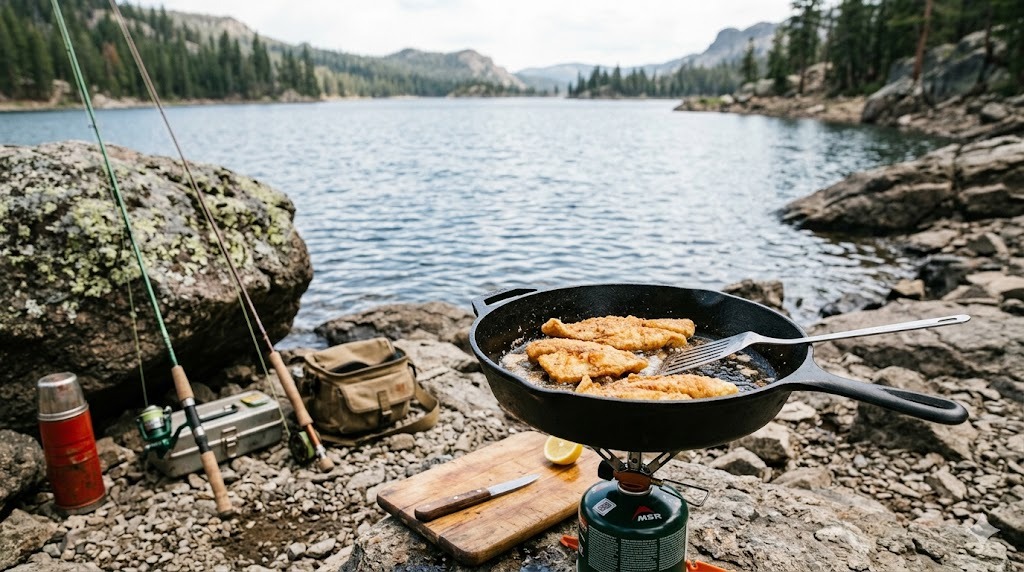
A shore lunch is fishing’s best meal: fish in the pan an hour after it left the water, eaten on the bank where you caught it. It’s also genuinely simple once you’ve done it once. This is the honest walk-through - the gear, how to keep your catch safe until the pan, the classic fried lunch step by step, and how to leave the spot cleaner than you found it.
Part of our Catch & Cook series - the half of fishing that happens after the net: cleaning, cooking and eating what you keep.
If filleting on a rock is new to you, run through cleaning and filleting fish at home first so the streamside version is muscle memory.
The gear - keep it simple
A shore lunch needs less than people think. The classic kit fits in a small tote or a daypack.
- A heat source: a small propane or butane burner is easiest and safest, especially where open fires are restricted. A fire ring works where fires are allowed and conditions are safe.
- A heavy frying pan - cast iron holds heat best - and a spatula.
- Cooking oil in a small leakproof bottle.
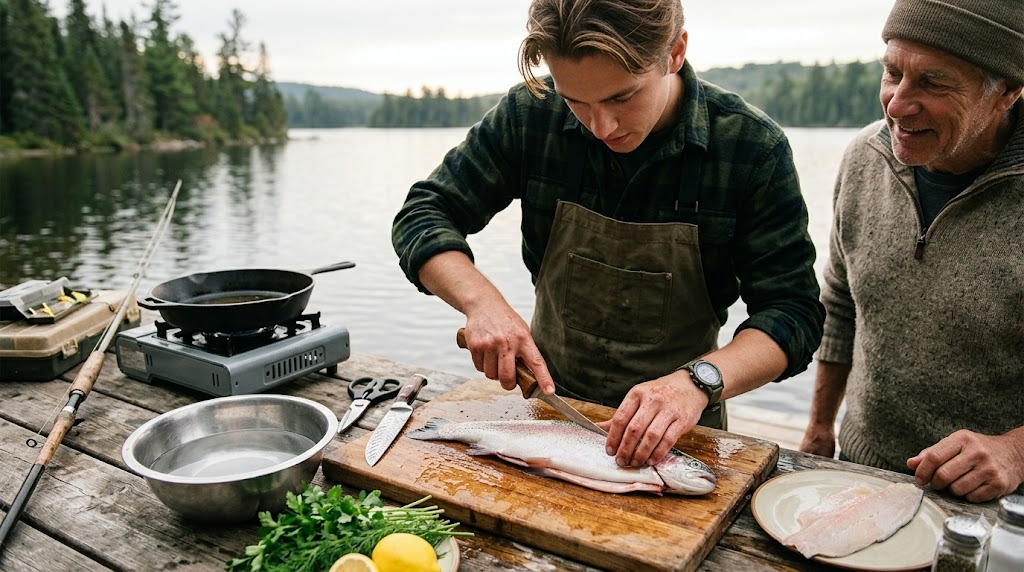
- A sharp fillet knife and a small cutting board.
- Coating: flour or cornmeal, salt and pepper, premixed in a bag or container.
- Plates, forks, paper towel, drinking water, and a lighter plus a backup.
- A trash bag, and ideally a sealed container for fish waste.
Lemon, butter and a foil packet of potatoes or beans turn it from a snack into a meal, but the core is fish, oil, coating and heat.
Streamside handling - keep the fish cold and safe
The fish you cook in an hour still has to be handled like food in that hour. Warm fish on a bank degrades fast.
- Decide keep-or-release as you go, and only keep what you’ll eat. A cooler of bluegill makes a fine shore lunch, but there’s no need to fill it beyond a meal. Dispatch kept fish promptly rather than letting them suffer on a stringer in warm shallows.
- Get them cold. A cooler with ice is the surest way; if you’re keeping fish on a stringer, keep it in cool, flowing water and don’t let fish bake in the sun.
- Fillet just before cooking, not at dawn to eat at noon. The shorter the warm window, the better and safer the meal.
- Keep your cutting board, knife and hands clean. A jug of water and a little soap is enough.
The classic fried shore lunch, step by step
This is the method that’s fed anglers for generations because it works with almost any panfish, walleye or brook trout.
- Fillet your fish and pat the fillets dry with paper towel. Dry fillets crisp; wet ones steam.
- Set up your burner on stable, level ground, well clear of dry grass and brush, with water on hand.
- Heat enough oil to coat the pan generously, about 1/8 inch, until a pinch of flour sizzles briskly - roughly 350 to 375F.
- Dredge each fillet in seasoned flour or cornmeal and shake off the excess.
- Lay fillets in without crowding the pan. Cook in batches if you have a crowd.
- Fry about 2 to 3 minutes a side for thin fillets, flipping once, until golden and the flesh is opaque and flakes - an internal temperature of about 145F (63C).
- Rest the fillets a moment, hit them with salt and a squeeze of lemon, and eat them hot. Cook potatoes or beans in the same pan while the oil’s good.
That’s it. The magic isn’t a secret recipe; it’s the freshness and the setting.
Fire and food safety on the bank
A shore lunch is low-risk if you respect two things: the fire and the fish.
- Check fire regulations and conditions before you light anything. In dry or windy weather, or under a fire ban, use a contained burner only, or skip the cooking.
- Keep a clear, non-flammable zone around your heat source and never leave a flame unattended. Have water or a way to douse it within reach.
- Let hot oil cool completely before you handle or pack it. Never pour hot oil onto the ground or into the water.
- On the food side: keep the catch cold until it’s cooked, cook it through, and don’t keep or cook fish from waters under a consumption advisory or known contamination. These are general guidelines.
Leave no trace - clean up properly
The point of a shore lunch is to enjoy a wild place, which means leaving it as wild as you found it.
- Pack out everything you packed in: wrappers, foil, bottles, paper towel. If you carried it in full, you can carry it out empty.
- Cool used oil and carry it out in a sealed bottle. Don’t dump it.
- Fish frames and guts: follow local rules. Where allowed, deep water disposal away from shore and swimming areas is common; otherwise bag and pack them out. Don’t leave a gut pile on a popular bank.
- Drown and scatter any cold fire ashes, or pack out a portable fire pan. Leave no scorched ground.
- Do a final sweep before you leave. The next angler should never know you cooked there.
For everything that happens before and after the bank - dispatching, deeper cleaning technique and home recipes - see our catch and cook guide.