How to Raise Black Crappie at Home
Black crappie are a sweet-eating panfish that breed and school readily - but without a predator to thin them, they overpopulate and stunt into a pond full of tiny fish.
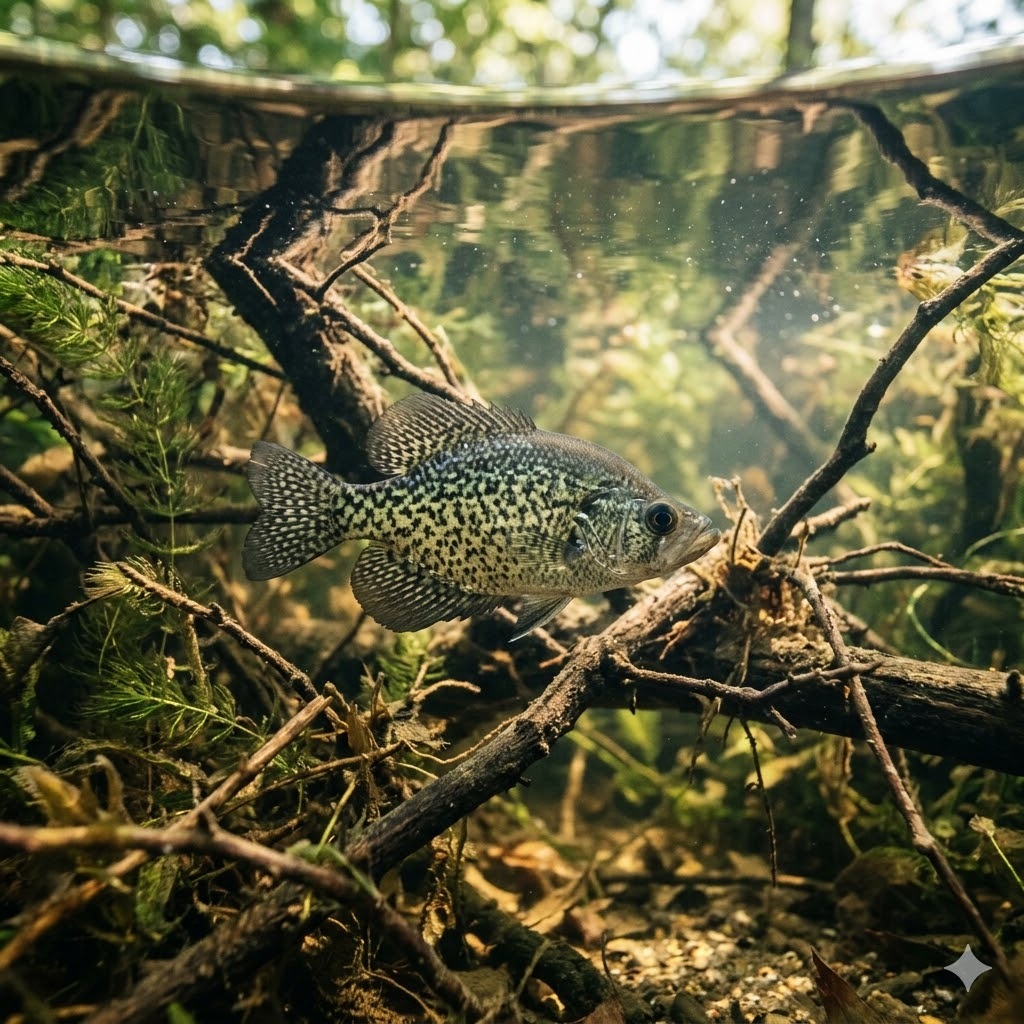
Black crappie are one of the best-eating panfish there is - sweet, white, flaky flesh that many anglers rate above almost anything else from fresh water. They school readily, they breed enthusiastically, and in a home pond they seem like an easy win. The problem is exactly that enthusiasm. Left to their own devices, black crappie out-breed their food supply and stunt, filling a pond with thousands of tiny, bony fish that never reach a size worth eating. The whole art of keeping them is managing that tendency, and the classic answer is to pair them with a predator like bass.
This suits the pond owner who wants a productive panfish for the table and is willing to manage the population rather than just stock and walk away. It is a pond fish, not a tank fish, and it works best in a balanced pond community rather than alone. Anyone hoping to dump crappie into a pond and come back to slab-sized fillets is in for a disappointment.
Why raise black crappie
Black crappie earn their place on eating quality. The flesh is sweet, white, and flaky, and a well-grown crappie is one of the finest panfish on the table. They also school and breed readily, so a balanced pond can produce a steady supply once it is running well.
What you get out of it:
- Excellent-eating panfish with sweet, flaky white flesh.
- A prolific, schooling fish that reproduces on its own in a suitable pond.
- A productive addition to a balanced warm-water pond community.
Do not expect it to be effortless. The same fertility that makes crappie productive makes them prone to overpopulating and stunting, so the payoff comes only with population management. A managed crappie pond is a genuine larder; an unmanaged one is a nursery full of fish too small to bother with.
The system and space
Black crappie are a pond fish and need a real pond to do well - they are not suited to a small tank. They want a warm-water pond with some structure and cover, since crappie relate to submerged brush, weed edges, and drop-offs where they can school and ambush small prey.
A workable setup:
- A pond of decent size, since crappie need room and a balanced community to avoid overpopulating.
- Some structure - submerged brush, weed beds, or other cover - which crappie naturally use.
- A predator species, most commonly bass, stocked alongside them to crop the young and keep numbers in check.
- Reasonable depth so the pond stays stable through summer heat and winter cold.
The single most important design decision is not the crappie at all - it is the predator you pair them with. A crappie-only pond almost always overpopulates and stunts, whereas a pond with bass keeps the crappie numbers cropped so the survivors grow to a good size. Plan the community, not just the crappie, before you stock. This is a fish that works in a balanced pond and fails on its own.
Water and temperature
Black crappie are a warm-water fish and comfortable across the range of temperatures a temperate or warm pond naturally sees through the year. They handle summer warmth and overwinter fine in a pond deep enough not to freeze solid, so temperature is rarely the make-or-break factor it is for trout or tilapia. They are reasonably tolerant of ordinary pond water quality, which is part of why they thrive and multiply so readily.
That tolerance is exactly why the challenge with crappie is biological rather than chemical. The water will usually be fine; the fish population is what runs out of control. In a natural pond the volume of water and the plant life keep oxygen and waste in balance, and a sensibly stocked, balanced pond mostly manages itself. Keep the pond from being overstocked, keep it reasonably deep, and watch for the low-oxygen risk on hot, still summer nights that threatens any warm-water pond.
If you do keep crappie in a more contained system, the usual rules apply - cycle it before stocking, and test for ammonia, nitrite, nitrate, and pH, doing partial water changes when readings climb. But the honest emphasis for crappie belongs on population balance far more than on water chemistry.
Stocking and feeding
Stock black crappie from a pond fish supplier, and here the key decision is stocking them as part of a balanced community rather than alone. The standard approach is to stock them alongside a predator such as largemouth bass, which preys on the young crappie and keeps the population from exploding. Without that predator, crappie reproduce faster than the pond can feed them, and the result is stunting. Do not overstock at the start, and think in terms of the whole pond community.
Feeding is largely natural in a pond. Crappie eat zooplankton, insects, and small fish, and a healthy pond with a good forage base feeds them on its own. You can supplement, but a balanced pond food web is what really grows good crappie, so building forage and structure matters more than pellets.
The recurring theme with crappie feeding is that a stunted, overpopulated pond is a food shortage in disguise - too many mouths for the available food. Managing numbers through predation is, in effect, managing the feed supply so that fewer fish each get enough to reach a decent size. This is why a pond with good forage and a healthy predator will grow slab-sized crappie, while an identical pond stocked with crappie alone produces a crowd of thumb-length fish that never fill out.
Health and the common mistakes
With black crappie, the big mistakes are about population, not disease. The common ones, in order:
- Stocking crappie without a predator. This is the classic failure - they overpopulate and stunt into a pond of tiny fish. Pair them with bass.
- Overstocking generally, which compounds the crowding and food-shortage problem.
- A pond with no structure or forage, which leaves the fish nothing to school around and nothing to eat.
- Ignoring low oxygen on hot, still summer nights, which threatens any crowded warm-water pond.
- Expecting to stock and forget - a crappie pond needs its balance watched and managed.
Actual disease is usually secondary and tends to follow stress from an overcrowded, food-short pond. The single most effective health measure for crappie is keeping the population in balance, because a stunted, overcrowded pond stresses every fish in it. Get the community right and most problems never arise.
Harvesting black crappie
In a well-balanced pond, black crappie reach a good panfish size and are ready to harvest, and here harvesting is part of management rather than a separate event. Taking crappie regularly helps thin the population and keeps the survivors growing well, so a keeper who eats plenty of crappie is also doing the pond a favour.
Processing is simple panfish work. Chill or dispatch the fish quickly and humanely, then scale, gut, and fillet - crappie fillets are small but superb. The flesh is sweet, white, and flaky, and crappie are a favourite for frying. Because the fillets are small, most people harvest several fish at once, which suits the goal of thinning the population. Stop feeding for a day or two before harvest if you have been supplementing, so the gut is empty. If a fish tastes muddy, that comes from the water and clears up with a few days in clean water before harvest.
Is black crappie right for you?
Black crappie are right for you if you have a warm-water pond, you want an excellent-eating panfish, and you are willing to manage the population by pairing them with a predator like bass. They suit a pond owner who wants a productive, self-sustaining larder and understands that balance is the whole game.
They are the wrong fish if you want a stock-and-forget pond, if you cannot or will not include a predator, or if you have only a small tank rather than a pond. Without population control, crappie will disappoint you with a pond full of stunted fish.
One honest and important note: black crappie are native to parts of North America but are non-native, and potentially invasive, in many other regions and waters, where introduced fish can disrupt native communities. Check your local regulations before you buy or stock any, and never release fish into the wild. Keep them contained, and enjoy them on the plate.