How to Raise Blue Crayfish at Home
Blue crayfish are the electric-blue Florida crayfish kept for looks - hardy and easy to breed, but so territorial that one per small tank with plenty of hides is the rule.
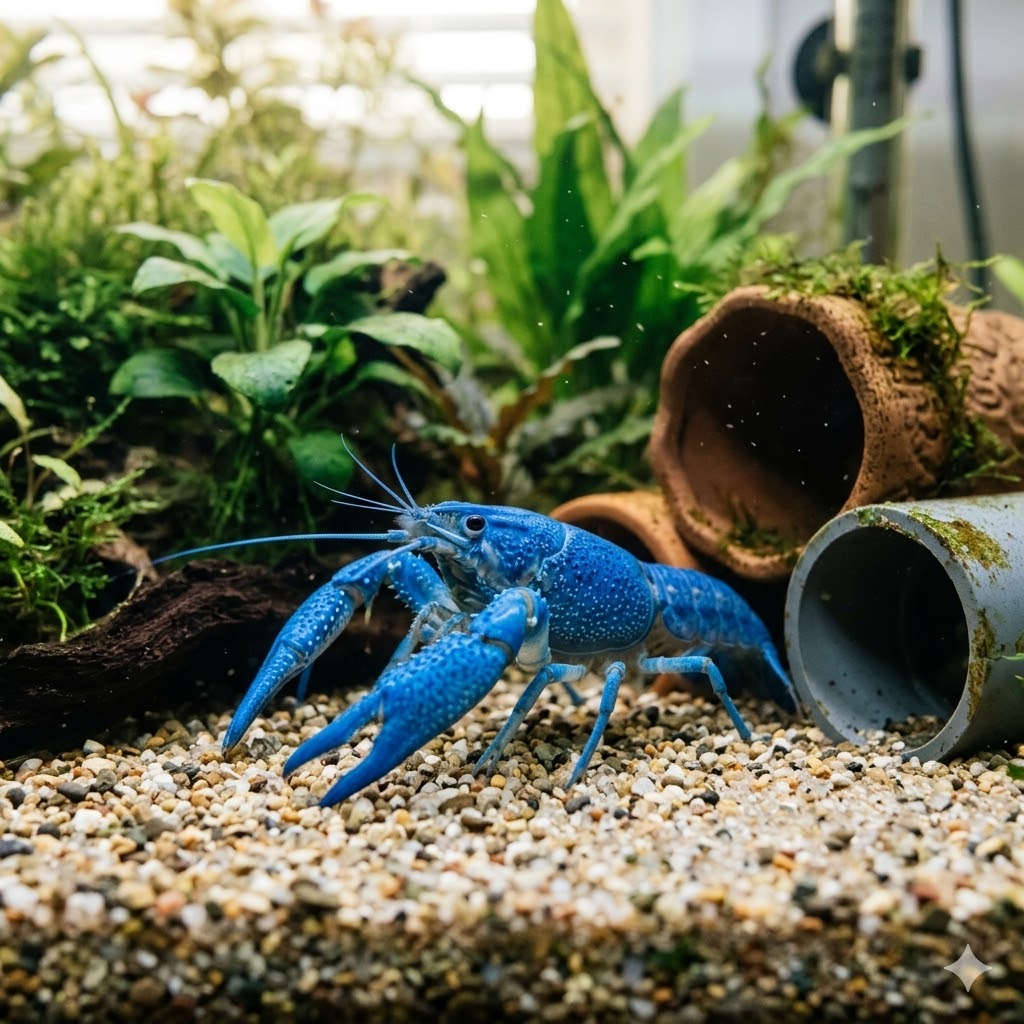
Blue crayfish are the electric-blue members of the Florida crayfish family kept almost entirely for how they look. That vivid, near-neon blue makes them a centrepiece in a home aquarium, and unlike most of the fish in this section they are raised for display rather than for the table. They are hardy, undemanding, and breed readily, which makes them easy to keep alive. The one thing that shapes everything about their care is temperament: blue crayfish are aggressively territorial and will fight, injure, and even eat each other, so the golden rule is one crayfish per small tank, with plenty of hiding places.
This suits the aquarium keeper who wants a striking, low-maintenance invertebrate with real personality, and who is set up to keep them singly rather than in a crowd. It is not a food project and not a community-tank fish - it is a display animal that needs its own space. Anyone hoping to keep a group of them together in one small tank is setting up a fight to the last crayfish.
Why raise blue crayfish
Blue crayfish are kept for their looks first and foremost. The colour is the draw - a clean, electric blue that stands out in any planted aquarium - and they back it up with active, curious behaviour, forever digging, rearranging, and exploring their territory. They are also genuinely hardy and forgiving of beginner mistakes, which makes them an easy first invertebrate.
What you get out of it:
- A striking, electric-blue display animal that anchors an aquarium.
- A hardy, low-maintenance invertebrate that tolerates a range of ordinary tank conditions.
- An active, characterful creature that is genuinely entertaining to watch.
Do not expect a social pet or a food crop. Blue crayfish are solitary and territorial, so this is a one-animal-per-tank hobby, and they are kept for display, not for eating. The payoff is a hardy, beautiful, engaging aquarium centrepiece, provided you respect its need to live alone.
The system and space
Blue crayfish do not need a large or complicated setup, but they do need the right one. A modest aquarium suits a single crayfish well, and the defining features are secure hiding places and a lid, because crayfish are escape artists that will climb out of an open tank.
A workable setup:
- A small to modest aquarium for a single crayfish - they do not need a big tank, but they do need their own.
- Plenty of hides - caves, pipes, rock crevices, driftwood - so the crayfish has cover and a territory to claim.
- A secure, well-fitting lid, since crayfish readily climb out and will escape a gap.
- A filter and gentle aeration to keep the water oxygenated and clean.
- A substrate they can forage and dig in, which suits their natural behaviour.
The one rule that overrides everything is one crayfish per small tank. Their territorial aggression means two in a small space will fight, and the loser is often injured or killed, especially around moulting when a soft-shelled crayfish is defenceless. If you want more than one, that means separate tanks, not a shared one. Plan the hides and the lid before you add the animal, because a bare, open tank leaves a crayfish stressed and prone to escaping.
Water and temperature
Blue crayfish are tolerant of ordinary room-temperature aquarium water and do not need heating in most indoor settings, which is part of their appeal. They handle a normal range of household temperatures comfortably and are not the delicate, temperature-critical animals that trout or tilapia are. Stable, clean, well-oxygenated water is what they want, rather than any exotic conditions.
The nitrogen cycle still applies. The crayfish produces ammonia, which is toxic, and beneficial bacteria in the filter convert it first to nitrite (also toxic) and then to nitrate (much safer). Those bacteria take a few weeks to establish, so cycle the tank before adding the crayfish, and do partial water changes to keep nitrate down. Test for ammonia, nitrite, nitrate, and pH, and keep readings in a safe range.
One water-quality point matters especially for crayfish and other invertebrates: they need adequate mineral content, particularly calcium, to build a firm shell after each moult. Very soft, mineral-poor water can leave the new shell weak. Hard or moderately hard water, or a calcium source in the tank, supports healthy moulting. Avoid copper-based treatments, as copper is toxic to crayfish and other invertebrates - always check that any additive is invertebrate-safe.
Stocking and feeding
Getting started is simple: buy a single blue crayfish from an aquarium supplier and give it its own tank. Resist the temptation to add a companion, because that companionship ends in a fight. If you want to keep several crayfish, set up several tanks - the animal is cheap to house individually, and individual housing is the whole basis of keeping them successfully.
Feeding is easy, since blue crayfish are omnivorous scavengers that eat almost anything. They take sinking pellets, algae wafers, blanched vegetables, and the occasional bit of protein, and they will scavenge leftover food and detritus in the tank. Feed small amounts and only what the crayfish clears, since uneaten food fouls the water. A varied diet with some vegetable matter and a calcium source supports good colour and firm moulting.
Do not house them with small fish or delicate tankmates you value, because a crayfish will catch and eat what it can, especially at night. Slow bottom-dwellers and long-finned fish are particularly at risk, since a crayfish can grab them while they rest. In practice most keepers give them a tank of their own, which sidesteps both the aggression toward other crayfish and the predation on tankmates.
A moulting crayfish deserves special mention at feeding time. Every so often the animal sheds its whole shell to grow, emerging soft and defenceless, and it will often hide for a day or two while the new shell hardens. Do not disturb it, and leave the shed shell in the tank - the crayfish will usually eat it back to reclaim the calcium. A hungry crayfish with poor calcium in its water is far more likely to have a bad moult, so steady feeding and hard water pay off precisely at these vulnerable moments.
Breeding blue crayfish
Blue crayfish breed readily in captivity, which is a large part of why they are so popular. When a male and a female are put together in adequate space, the female carries the fertilised eggs under her tail and later carries the tiny hatchlings there too, and they eventually detach as miniature crayfish. It happens without much intervention once the adults are in good condition.
The management challenge is the same territorial aggression that governs everything else. To breed them you must pair a male and female together, but that pairing is risky - the adults may fight, and the female is especially vulnerable to the male around moulting. Introduce them carefully, with plenty of hides, and be ready to separate them. Once the young hatch and detach, they too become cannibalistic and territorial as they grow, so a tank of juveniles will start eating each other unless they have abundant cover and are separated as they mature. The plentiful hides and eventual separate housing are what turn a batch of young crayfish into surviving adults rather than a single well-fed victor.
Is blue crayfish right for you?
Blue crayfish are right for you if you want a striking, hardy, low-maintenance aquarium centrepiece with genuine character, and you are happy to keep them singly. They are ideal for a keeper who wants an invertebrate that looks spectacular and forgives beginner mistakes.
They are the wrong choice if you want a community animal, a group in one tank, or a food crop. Their territorial aggression means one per small tank is not a suggestion but a requirement, and they are display animals rather than table fare. If you want to keep several, be ready to run several tanks.
One honest and important note: blue crayfish and their relatives are non-native and potentially invasive outside their home range, where released or escaped crayfish have established damaging populations and spread disease to native species. Check your local regulations before you buy or keep any, and never release a crayfish, or its water, into the wild or down a drain that reaches natural waters. Keep them contained, and enjoy the colour.