How to Raise Bluegill at Home
A beginner-friendly guide to raising bluegill in a pond or tank for sweet panfish fillets, kid-friendly fishing, and forage for bass.
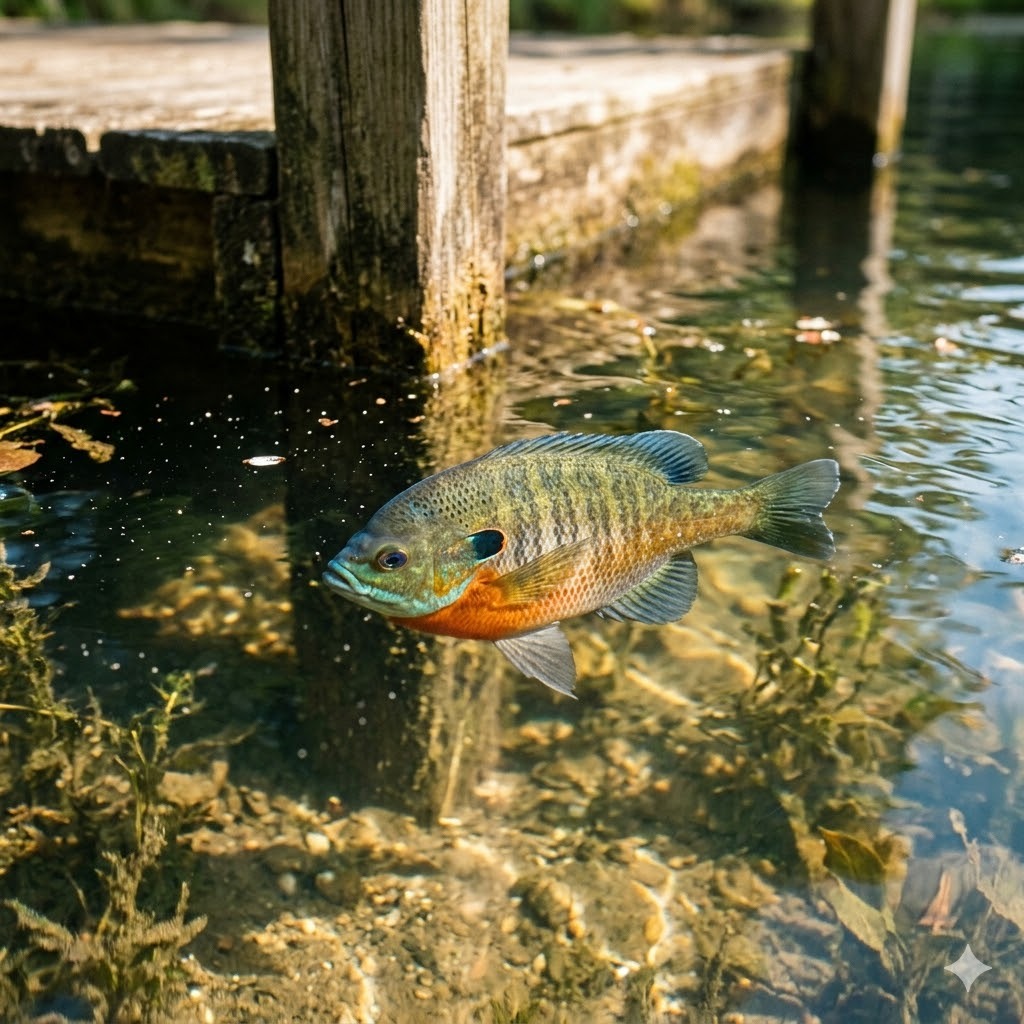
Bluegill are the perfect starter fish for a backyard pond, and honestly one of the most forgiving aquatic species you can raise. They breed readily, eat almost anything, tolerate a wide range of conditions, and give you a steady supply of sweet panfish fillets all summer. They also make excellent forage for a bass population, which is why so many pond owners run the two together. If you want an easy, productive, kid-friendly first project, bluegill are hard to beat.
The one honest warning to hold in mind from the start: bluegill are almost too good at breeding. In a pond with no predator to thin them, they overpopulate fast and end up stunted - hundreds of tiny fish that never reach a decent size. Managing that is the whole game, and this guide will keep coming back to it.
Why raise bluegill
Bluegill give you three things at once. First, food: they produce firm, sweet, mild fillets that fry up beautifully and are a favorite panfish for good reason. Second, sport - not the hard fight of a bass, but easy, constant, kid-friendly fishing. A pond of bluegill will keep children busy all afternoon, and they bite readily on simple bait. Third, forage. Bluegill are the classic prey base in a stocked pond, breeding fast enough to feed a bass population while still leaving plenty to catch.
That paired-pond relationship is worth understanding. Bass eat the smaller bluegill and keep the population from exploding, and the bluegill in turn feed the bass and grow to a better size because they are not overcrowded. Run together, both species do well. Run alone, bluegill overbreed and stunt, and bass starve. Most backyard pond owners stock them as a pair for exactly this reason.
Bluegill are a beginner project because they are so tolerant. They handle warm water, imperfect water quality, and crowding better than most fish, and they will eat pellet feed, insects, and scraps happily. The yield is real: a well-managed pond produces panfish steadily through the warm months for years.
The system and space
Bluegill are flexible on space, which is part of their appeal. They do best in a pond, where they can breed and forage naturally, but they also tolerate a tank better than many pond fish, making them a workable option for a smaller setup.
For a pond, even a small one - a fraction of an acre - supports a healthy bluegill population, ideally with a deeper section that holds cool, oxygenated water in summer and does not freeze solid in winter. Some structure like weed beds, brush, or rocky margins gives them spawning areas and cover. A pond like this needs no pumps; it runs on its own biology.
For a tank, bluegill can be raised in a recirculating setup, though you give up the natural breeding and forage cycle and take on the work of filtration and feeding. A beginner tank needs aeration, mechanical and biological filtration, and steady attention to water quality. Our systems and water quality guide covers tank filtration in detail. For most people, a pond is the easier and more rewarding way to keep bluegill, and the tank option makes more sense if a pond is not available.
Water and temperature
Bluegill are a warm-water fish and thrive in the comfortable warm range of a temperate summer. They feed and grow fastest in warm water, slow down as it cools, and overwinter fine under ice as long as the deep water holds oxygen. Their tolerance for less-than-perfect conditions is a big reason they are a beginner fish, but tolerant does not mean bulletproof.
The main risks are the usual pond killers: low oxygen and fouled water, both worsened by overstocking, overfeeding, and hot still summer weather. Warm water holds less oxygen, and a crowded, weedy, unaerated pond can crash overnight, especially near dawn. Aeration and sensible stocking are your defenses. Because bluegill breed so heavily, overcrowding is a constant background pressure on water quality, which is one more reason to keep the population in check.
In a tank the nitrogen cycle is front and center. Fish waste releases ammonia, which beneficial bacteria convert to nitrite and then to nitrate; without an established biological filter, ammonia builds and poisons the fish. Cycle a new tank before stocking, add fish gradually, and test the water regularly. In a pond the same cycle runs through plants and bacteria, and your job is mainly to avoid overloading it with too many fish and too much feed.
Stocking and feeding
Buy bluegill fingerlings from a reputable hatchery or pond-stocking supplier rather than moving fish from a wild lake, both to avoid introducing disease and to get healthy stock suited to your climate. If you are pairing them with bass, stock the bluegill first and give them a season to establish and start breeding before you add the predators - the bluegill are the food base, so they need a head start.
Density is where beginners go wrong. Because bluegill breed so freely, a pond fills up faster than you expect. Stocking at a sensible rate and then relying on a predator or on hard harvesting to control numbers is the whole strategy. In a bluegill-only pond with no bass, you must harvest aggressively to keep the fish from stunting.
Feeding is easy - this is one of the least fussy fish to feed. Bluegill happily take a floating pellet feed, and they also eat insects, larvae, and small invertebrates on their own. Feed lightly and consistently in warm weather, only as much as they clean up in a few minutes, and cut back when the water is very warm or when the pond looks stressed. Overfeeding fouls the water faster than it grows fish.
A useful trick for a pond is that feeding also concentrates the fish. Bluegill quickly learn to come to a feeding spot, which makes them easy to catch there and easy to observe - you can watch their size and condition and judge whether the population is stunting. If the fish coming to feed are all small and skinny, that is your signal to harvest harder or add a predator.
A brief honest note on the law. Bluegill are non-native or regulated in some regions. Check your local regulations before stocking any pond, use legal disease-tested stock for your area, and never release bluegill or any fish into wild lakes, rivers, or streams.
Harvesting bluegill
Bluegill reach a decent eating size - a hand-sized panfish - within a year or two in a well-managed pond, faster in warm climates with good feeding and no overcrowding. Unlike slower fish, they are meant to be harvested freely and often. In fact, harvesting hard is how you keep the survivors from stunting, so do not be shy about taking fish for the pan.
Process them simply. Dispatch the fish quickly, keep it cold, and either fillet it or, since bluegill are small, cook it whole or pan-dressed. The fillets are white, sweet, and mild, and they are a classic fry fish. Because they are small, most people process a batch at once for a meal.
If you keep bluegill without bass, remember that heavy, regular harvest is not optional - it is the only thing standing between you and a pond full of tiny stunted fish. Take the bigger ones for the table and keep thinning the population all summer. A common mistake is to protect the pond by fishing it lightly, expecting the fish to grow larger if left alone. With bluegill the opposite is true: fish the pond hard, and the survivors grow bigger because there is more food to go around.
Is bluegill right for you?
Bluegill are close to the ideal first aquaculture project. They suit a beginner, a family, anyone with a pond, and anyone who wants easy fishing and a steady supply of panfish without a steep learning curve. If you have kids, a small pond, and modest ambitions, start here. They also make an excellent partner species if you plan to raise bass, forming the forage base that makes the whole pond work.
They are less suited to someone who wants large fish or high-volume fillets from a single species, since bluegill are small and their tendency to overpopulate demands active management. And if you cannot or will not harvest regularly - or add a predator - a bluegill-only pond will stunt and disappoint you. Manage the numbers, keep the water healthy, and bluegill will feed you and entertain you for years with very little fuss.