How to Raise Brook Trout at Home
Brook trout are a beautiful cold-water char that reward a home grower with cold, clean, oxygen-rich water and honest patience.
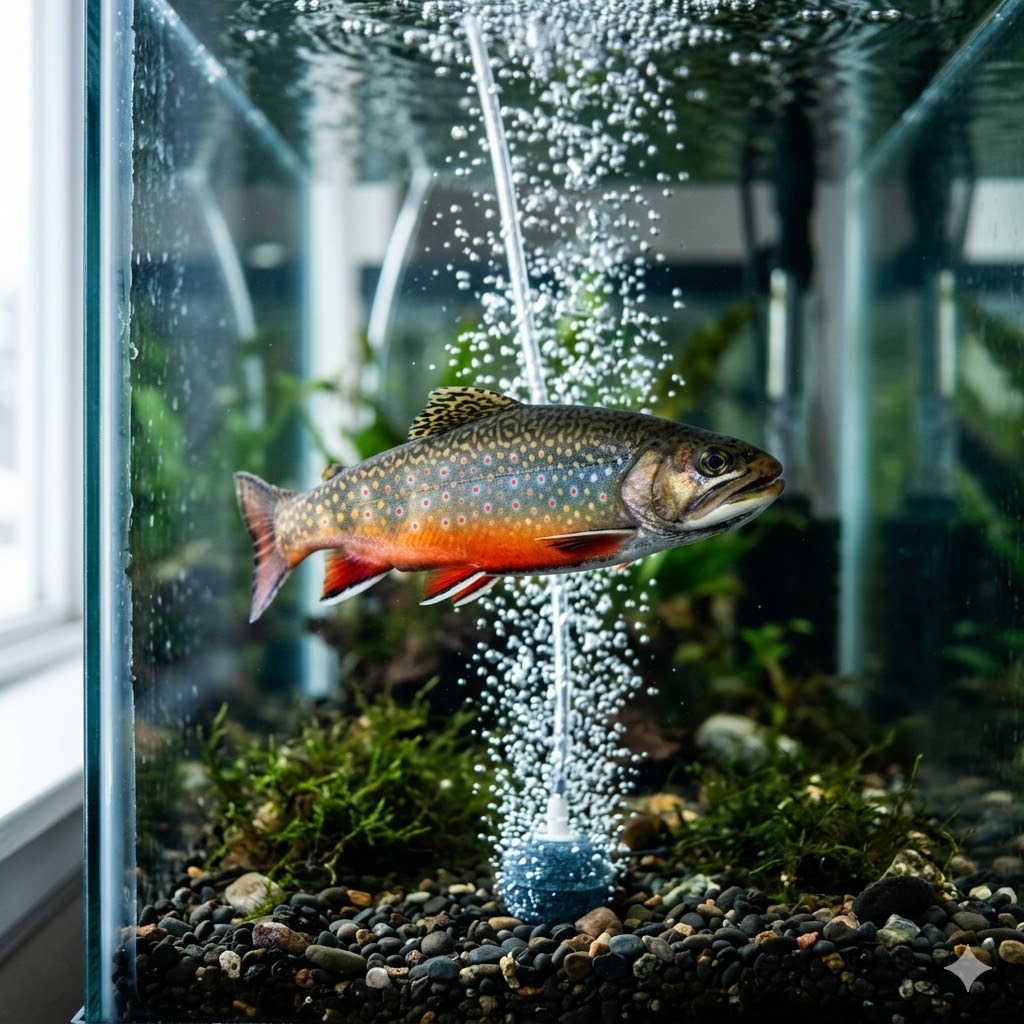
Brook trout are not a fish, strictly speaking - they are a char, a close cousin of the trout family that carries the same needs and a slightly softer edge. They are the fish to raise if you have cold, clean water and you want something prettier and more forgiving of the odd acidic, slightly warmer patch than a rainbow trout will put up with. They grow more slowly than tilapia and they demand cold water year-round, but the flesh is fine, the fish is handsome, and a well-run system produces a genuine delicacy from your own tank or pond.
This suits the grower in a cool climate who has access to cold spring water, a running stream feed, or a heavily chilled recirculating system, and who wants a cold-water fish that tolerates a little more acidity and warmth than the fussier salmonids. It is not a warm-tank fish, and no amount of good intention will change that.
Why raise brook trout
Brook trout are the cold-water answer to the question tilapia cannot solve. Where tilapia need heat, brook trout need cold, and if your climate or your water source runs cold most of the year, a heater becomes someone else's problem and cold becomes your advantage. They tolerate slightly warmer and more acidic water than rainbow trout, which makes them the most forgiving of the char and trout for a grower whose water is not perfect.
What you get out of it:
- A fine-eating cold-water fish with delicate, clean flesh that many people rate above rainbow trout.
- A hardy char that copes with soft, slightly acidic water where other salmonids struggle.
- A striking fish to look at, which matters if the pond is part of the garden as much as the larder.
Do not expect speed. Brook trout grow slowly compared with warm-water fish, and reaching plate size can take a year or more. The payoff is quality, not quantity, and a fish that fits a cold climate instead of fighting it.
The system and space
Brook trout need cold, moving, oxygen-rich water, and that shapes the whole system. The classic setup is a cold spring-fed or stream-fed pond or raceway, where fresh cold water flows through continuously and carries oxygen in and waste out. If you have that, you have the ideal rig and very little to fight.
Without a natural cold flow, you are looking at a recirculating tank with serious support:
- A tank or pond holding a good volume of water - more water buffers temperature swings, which matters with a cold-water fish.
- Strong aeration, since char demand high dissolved oxygen and warm water holds less of it.
- Reliable chilling or a naturally cold, shaded location, because summer heat is the enemy.
- A mechanical and biological filter to keep ammonia in check in any closed system.
A shaded, spring-fed pond in a cool region is the low-effort route. An indoor or basement recirculating system with a chiller is the high-effort, high-control route. What you cannot do is run brook trout in a warm, still, sun-baked tank. Give thought to shade, depth, and a cold water source before you stock, because those decide success far more than feed or genetics.
Water and temperature
This is the section that decides everything. Brook trout want cold water - ideally around 10 to 16C, and they are stressed and stop feeding well above the low 20s. They tolerate a touch more warmth and acidity than rainbow trout, but "a touch" is the operative phrase, not a licence to run them warm. Sustained water above roughly 20 to 22C is dangerous, and a hot, still summer is the classic killer.
Oxygen is the twin of temperature here. Cold water holds more dissolved oxygen and char demand a lot of it, so the two problems compound: as water warms it both stresses the fish and carries less of the oxygen they need. Run strong aeration or a continuous cold flow, and keep the water moving.
The nitrogen cycle applies as it does to every system. Fish produce ammonia, which is toxic. Beneficial bacteria in your filter convert that ammonia first to nitrite (also toxic) and then to nitrate (much safer). Those bacteria take four to six weeks to establish, so cycle a new closed system before adding a full load of fish, add stock gradually, and let the biology catch up. Test for ammonia, nitrite, nitrate, and pH regularly, and do partial water changes when readings climb.
Stocking and feeding
Get your first fish as fingerlings from a cold-water hatchery or trout supplier - buying young stock is far simpler than trying to breed char at the start. Stock conservatively. Cold-water fish need more oxygen per fish than warm-water species, so keep density low, especially while you learn, and lean toward fewer fish in more water.
Feed a floating or slow-sinking pellet formulated for trout, which is higher in protein and fat than a tilapia feed. Feed small meals and only what the fish clean up in a few minutes. Uneaten feed rots, spikes ammonia, and fouls cold water just as it does warm. Char are visual, active feeders, so a floating pellet lets you watch appetite and read their condition.
Feed less as water cools and back off when the fish go quiet, since cold trout digest slowly and food they cannot process just fouls the tank. Appetite is your early warning system - a batch that suddenly goes off its feed is telling you to check temperature and oxygen before anything visibly goes wrong.
Health and the common mistakes
Most brook trout failures are keeper error, not disease. The common ones, in order:
- Letting the water get too warm. A hot summer or a shallow, sunlit pond is the classic total loss. Shade, depth, and cold flow are your insurance.
- Starving the water of oxygen. Warm, still water suffocates char fast. Aerate hard and keep water moving.
- Overstocking. Too many cold-water fish overwhelm the oxygen supply and the filter.
- Overfeeding. Excess feed rots and poisons the water, and cold water is slow to recover.
- Skipping the cycle in a closed system, which means an ammonia spike that kills the fish.
When disease does appear, it usually follows stress from warm or fouled water. Watch for fish gasping at the surface, clamped fins, loss of appetite, or spots and sores. The first response is almost always to cool and freshen the water and check your parameters, not to reach for a chemical. Good cold water and light feeding prevent most problems.
Harvesting brook trout
Brook trout are ready to harvest once they reach a size you are happy with, often a modest pan size, which in a home system can take a year or more of cold-water growth. You can harvest selectively, taking the biggest fish as you want them and leaving the rest to grow on.
Processing is straightforward. Chill or dispatch the fish quickly and humanely, then gut and either cook whole or fillet. The flesh is fine, clean, and delicate, and brook trout are excellent pan-fried whole. Stop feeding for a day or two before harvest so the gut is empty, which makes cleaning easier and improves flavour. If a fish ever tastes muddy, that comes from the water and clears up with a few days in clean, cold, well-oxygenated water before harvest.
Is brook trout right for you?
Brook trout are right for you if you have cold water year-round - a spring, a cold stream, a shaded deep pond, or a chilled recirculating system - and you want a beautiful, fine-eating cold-water fish that is more forgiving of soft, slightly acidic, slightly warmer water than a rainbow trout. They are ideal for a cool climate where heating a warm-water fish makes no sense.
They are the wrong fish if you cannot keep the water reliably cold and well-oxygenated through summer, or if you want fast results, since they grow slowly. In a warm climate, look at tilapia instead.
One honest and important note: brook trout are native to some regions and non-native, sometimes invasive, in others, where introduced char have displaced local fish. Check your local regulations before you buy or stock any, and never release fish into the wild. Keep them contained, and enjoy them on the plate.