How to Raise Brown Trout at Home
Brown trout are the toughest of the trout, forgiving of warmer and less pristine water, but wary and cannibalistic enough to demand sorting by size.
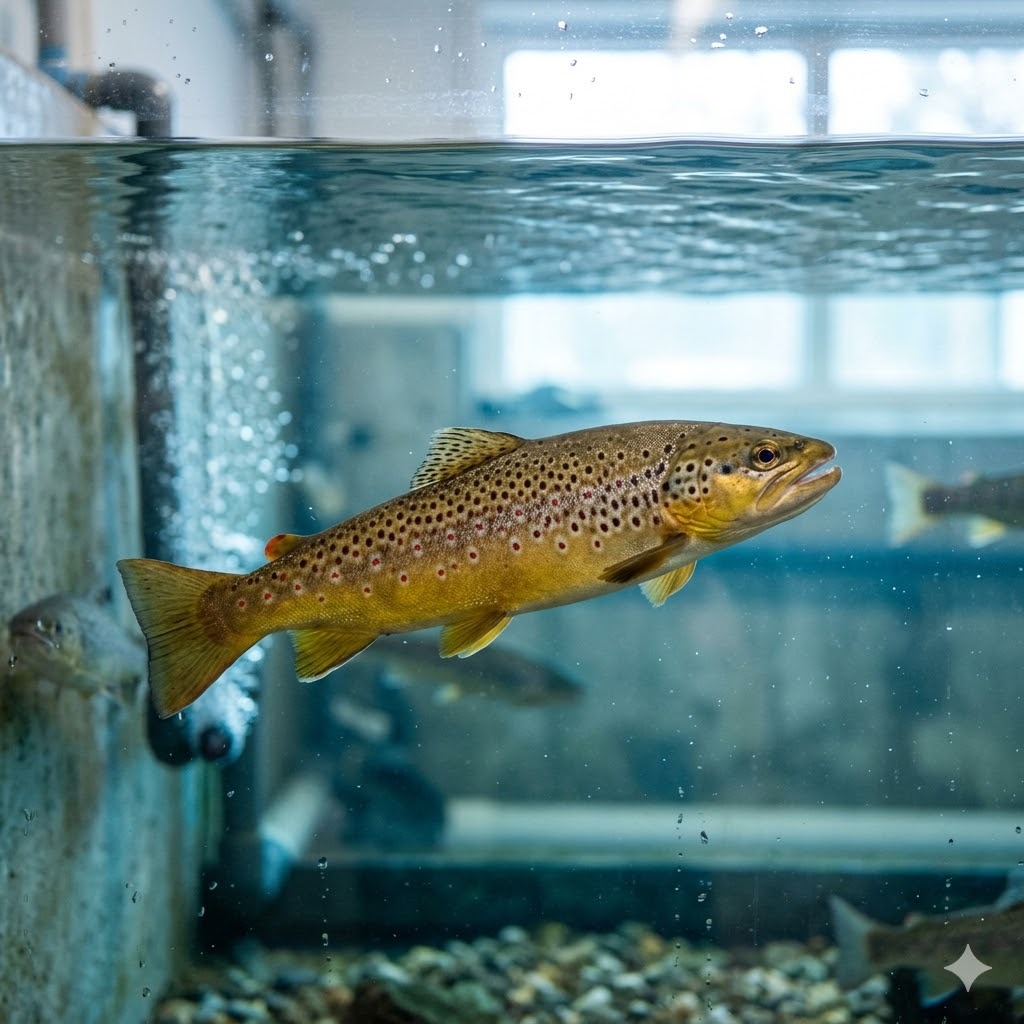
If tilapia are the training-wheels warm-water fish and brook trout the delicate cold-water char, brown trout are the hard case of the trout family - the one that puts up with the most. They handle slightly warmer, slightly less pristine water than rainbow or brook trout, which makes them the most robust cold-water fish a home grower can keep. The trade-offs are their temperament: brown trout are wary, predatory, and cannibalistic, so a batch of mixed sizes will happily eat itself down to the biggest survivors unless you grade them.
This suits the grower in a cool or temperate climate who has cold-ish water but not perfect water, and who wants the toughest trout available rather than a fussy one. It is still a cold-water fish and still needs oxygen and reasonable temperatures, but it forgives more than its cousins and rewards a keeper who is willing to sort fish by size.
Why raise brown trout
Brown trout are the trout you raise when your water is cold but not pristine. They tolerate slightly warmer water and lower quality than rainbow or brook trout, shrugging off conditions that would stress the others. That toughness is the whole reason to choose them - they are the salmonid that copes.
What you get out of it:
- A hardy cold-water fish that handles warmer, murkier, less perfect water than other trout.
- Excellent eating flesh, firm and flavourful, from a fish that many rate highly on the table.
- A robust species that suits a grower whose water source is good but not textbook.
Do not expect them to be docile. Brown trout are wary and predatory, and a tank of uneven sizes turns into a feeding ground where big fish eat small ones. They also grow more slowly than a warm-water fish, so this is a patience project measured in seasons rather than weeks. The payoff is a resilient fish, but you pay for it in the extra work of grading and managing an aggressive feeder.
The system and space
Brown trout need cold, oxygen-rich, moving water like the other trout, but they buffer imperfection better, which widens your options. A spring-fed or stream-fed pond or raceway is still the ideal, with cold water flowing through to carry oxygen in and waste out.
A workable setup includes:
- A tank or pond with a good volume of water to buffer temperature swings.
- Strong, continuous aeration, since trout demand high dissolved oxygen.
- A cold flow or a chiller, plus shade, to hold summer temperatures down.
- A mechanical and biological filter in any recirculating system.
Because brown trout are cannibalistic, the system also needs a way to separate sizes - a second tank, a divided pond, or a grading routine that moves the big fish out. Plan that in from the start rather than discovering the problem when your small fish start disappearing. A shaded, deep, cold pond is the low-effort route; a recirculating tank with a chiller and a grading tank is the controlled route. Give thought to depth, shade, cold water, and a way to sort fish before you stock.
Water and temperature
Brown trout want cold water, ideally in the low to mid teens Celsius, but they tolerate the low 20s better than rainbow or brook trout do. That extra margin is real but modest - sustained water in the mid 20s is still dangerous, and a long hot summer is still the classic threat. Treat their tolerance as insurance against a warm spell, not as permission to run them warm.
Oxygen matters as much as temperature. Cold water holds more dissolved oxygen and trout need a lot of it, so as water warms it stresses the fish and starves them of oxygen at the same time. Run strong aeration or a continuous cold flow, and keep the water moving.
The nitrogen cycle applies to every closed system. Fish produce ammonia, which is toxic. Bacteria in your filter convert it first to nitrite (also toxic) and then to nitrate (much safer). Those bacteria take four to six weeks to establish, so cycle a new system before a full stocking, add fish gradually, and let the biology catch up. Test for ammonia, nitrite, nitrate, and pH regularly, and do partial water changes when readings climb.
Stocking and feeding
Get your first fish as fingerlings from a trout hatchery - buying young stock is far easier than trying to breed trout at home. Stock conservatively, because cold-water fish need more oxygen per fish than warm-water species. Then, and this is the key point for brown trout, grade by size. Sort the fish periodically and keep similar sizes together, because a wary, predatory brown trout will eat a smaller tankmate without hesitation. Uneven batches stunt and cannibalise; graded batches grow evenly.
Feed a floating or slow-sinking trout pellet, higher in protein and fat than warm-water feed. Feed small meals and only what the fish clear in a few minutes, since uneaten feed rots and fouls the water. Brown trout are cautious feeders and can be shy at first, so give them quiet and time to settle to the pellet. In the wild they are ambush predators that hold in cover and dart out at prey, and that wariness carries into the tank, so a stressed or freshly moved batch may refuse food for a while before it settles.
Feed less as water cools and back off when the fish go quiet, because cold trout digest slowly. Appetite is your early warning - a batch that goes off its feed is telling you to check temperature and oxygen before trouble shows.
Health and the common mistakes
Most brown trout failures are keeper error, not disease. The common ones, in order:
- Letting the water get too warm. Even the toughest trout has a ceiling, and a hot, shallow, sunlit pond is a classic loss.
- Ignoring cannibalism. Mixed sizes mean big fish eat small ones. Grade regularly.
- Starving the water of oxygen. Warm, still water suffocates trout fast. Aerate hard.
- Overstocking. Too many fish overwhelm the oxygen supply and the filter.
- Overfeeding, or skipping the cycle in a closed system, either of which fouls the water and can kill a batch.
When disease appears, it usually follows stress from warm or fouled water. Watch for gasping at the surface, clamped fins, loss of appetite, or spots and sores. The first response is to cool and freshen the water and check parameters, not to reach for a chemical. Good cold water, grading, and light feeding prevent most problems.
Harvesting brown trout
Brown trout are ready to harvest once they reach a size you want, which in a home system can take a year or more of cold-water growth. Because you should be grading them anyway, harvesting the largest fish fits naturally into the routine - take the big ones as they come up and leave the rest to grow on.
Processing is straightforward. Chill or dispatch the fish quickly and humanely, then gut and either cook whole or fillet. The flesh is firm and flavourful, and brown trout are excellent on the table. Stop feeding for a day or two before harvest so the gut is empty, which makes cleaning easier and improves flavour. If a fish ever tastes muddy, that comes from the water and clears up with a few days in clean, cold, well-oxygenated water before harvest.
Is brown trout right for you?
Brown trout are right for you if you want a cold-water fish and your water is cold but not perfect, since they are the toughest trout and forgive warmer, murkier conditions than their cousins. They suit a grower willing to grade fish by size and manage an aggressive feeder in exchange for a resilient, fine-eating trout.
They are the wrong fish if you cannot keep the water cold enough through summer, if you want a peaceful fish you can leave unsorted, or if you want fast results, since they grow slowly. In a warm climate, look at tilapia instead.
One honest and important note: brown trout are native to Europe and western Asia and are a notorious invasive species elsewhere, where introduced fish have displaced and preyed on native species. Check your local regulations before you buy or stock any, and never release fish into the wild. Keep them contained, and enjoy them on the plate.