How to Raise Channel Catfish at Home
Channel catfish are a hardy, fast-growing warm-water fish that put on meaty fillets in a pond or large tank over a warm summer.
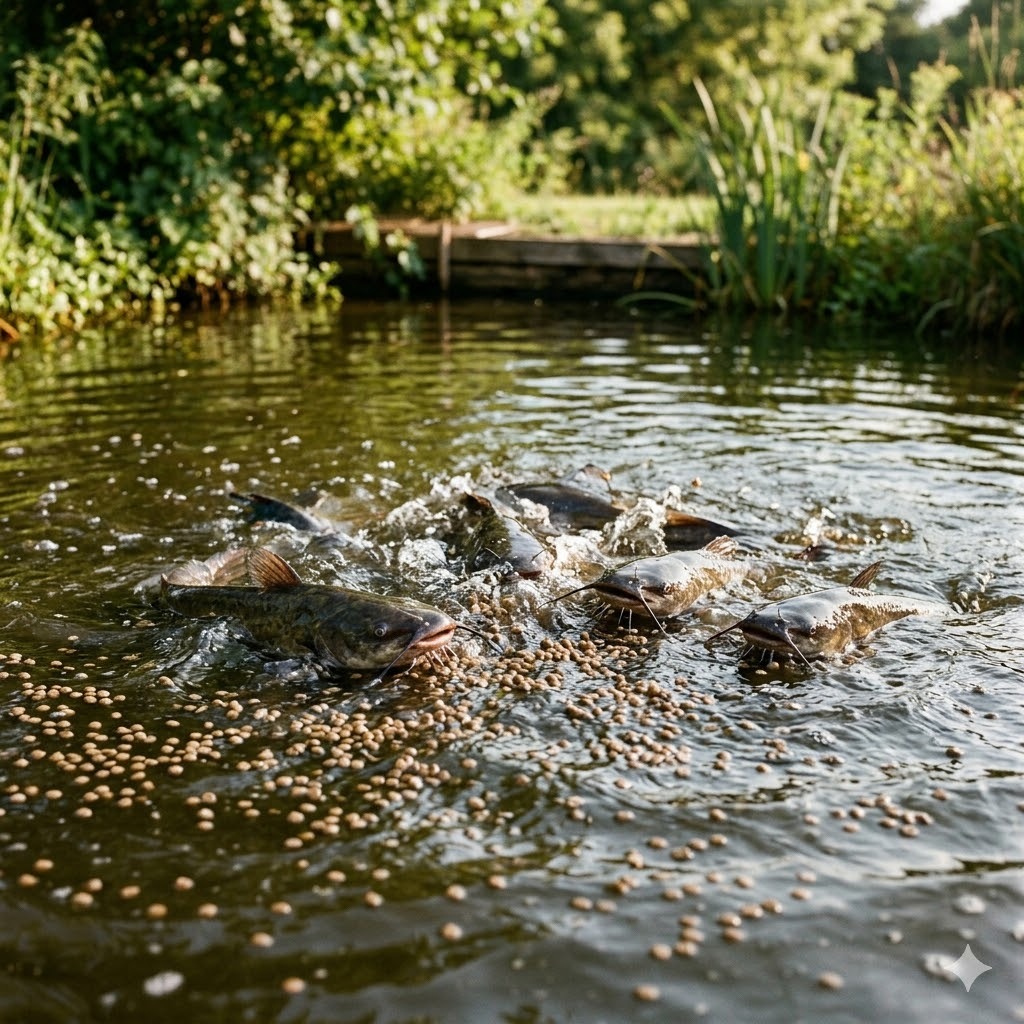
Channel catfish are the most farmed food fish in North America, and that is not an accident. They are hardy, they forgive low oxygen better than almost any other food fish, and they pack on weight fast through a warm summer. For a home grower with a pond or a large tank, they are one of the easiest ways to grow serious quantities of fillets. If you have the space and a warm season, catfish are a genuinely low-fuss project.
This suits the pond owner, the smallholder with room for a big tank, and anyone who wants a lot of meat rather than a novelty fish. It suits a beginner well, provided you respect the one thing catfish care about most: dissolved oxygen.
Why raise channel catfish
Catfish reward you with meaty, boneless fillets and a lot of them. In a warm season, fingerlings stocked in spring can reach eating size - roughly 0.5 to 1 kilogram - by autumn, and larger over a second year. The flesh is firm and mild, and a well-run pond can feed a family through the winter.
What you get:
- High yields of clean white fillets from a modest system.
- A hardy fish that tolerates warm, low-oxygen water that would kill trout or bass.
- A crop you can harvest all at once in autumn or take selectively through the season.
The honest trade-off is that catfish want warmth and space. In a cool climate their growing season is short, and a small tank will not match a pond for output. But pound for pound of feed, few fish are easier or more productive.
The system and space
Catfish do best with room. The classic home setup is a pond, but a large tank or a lined above-ground pool works well too. The more water you have, the more stable it stays and the more fish it carries.
A workable setup includes:
- A pond, large tank, or lined pool holding at least a few thousand litres for a meaningful crop.
- Reliable aeration - an air pump, a fountain, or a paddle wheel. This is not optional.
- Some filtration or, in a pond, enough volume and plant life to process waste naturally.
- Shade or depth to keep the water from overheating in full sun.
A tank system needs proper biological filtration because the water volume is small and waste concentrates fast. A pond is more forgiving because it is a bigger, more buffered system, but it still needs aeration on hot, still nights. Start with a stocking level you can aerate comfortably rather than filling the space to capacity.
Whichever you choose, size the aeration to the worst night, not the average one. The danger point is a hot, windless summer night: the water is warm, so it holds little oxygen, and there is no breeze stirring the surface. Plants and algae also consume oxygen after dark rather than producing it, so the lowest oxygen of the whole day comes at dawn, exactly when you are asleep. A pump or fountain that runs through the night covers that gap. Many home growers who lose a pond of catfish did everything else right and simply had no aeration on the one night it mattered.
Water and temperature
Catfish are warm-water fish. They grow best when the water sits roughly between 24 and 30C and they feed hard through summer heat. They slow down and stop eating as the water cools in autumn, which naturally sets your harvest window.
The single most important number is oxygen. Catfish handle warm water, but warm water holds less oxygen, and a still, hot night is when tanks and ponds crash. Stock only what your aeration can support, and run that aeration continuously through summer. A simple air pump or a fountain earns its keep every warm night. If you ever see fish gulping at the surface at dawn, that is an oxygen warning - add aeration immediately.
The nitrogen cycle applies here as everywhere. Fish excrete ammonia, beneficial bacteria convert it to nitrite and then to safer nitrate, and that biological filter takes several weeks to establish. Cycle a new tank before stocking heavily, and in a pond let a smaller stock and natural processes build up first. Test ammonia, nitrite, nitrate, and pH regularly, especially in tanks. Our systems and water quality guide covers cycling and aeration in more detail.
Stocking and feeding
Buy channel catfish fingerlings from an aquaculture supplier or a fish farm in spring, so they have the whole warm season to grow. Fingerlings are far easier than trying to breed your own, which is difficult in a home setup.
Stock conservatively and match it to your aeration, not to your space. Overstocking is the main way home growers lose catfish - the fish grow fine until a hot night, then the oxygen crashes and you lose the lot. When in doubt, stock fewer fish and grow them bigger.
Feed a floating catfish or general pond-fish pellet. Catfish feed enthusiastically in warm water - feed once or twice a day, giving only what they clean up within about ten minutes. Overfeeding fouls the water and wastes money. As the water cools below the low 20s in C, they eat less, so cut back. They will also take natural food in a pond, but pellets drive the fastest, most reliable growth.
A floating pellet lets you watch the feeding response, which is useful information. A hard, splashy feeding frenzy on a warm evening means healthy, hungry fish and good water. If the fish suddenly feed poorly, treat it as a warning and check oxygen and water quality before assuming anything else. In a pond, a set feeding spot and a set time trains the fish to come up together, so you can gauge the whole stock at a glance and spot trouble early. Resist the urge to feed heavily just because they are eager - the extra waste from overfeeding is a bigger risk to your catfish than underfeeding ever is.
Health and the common mistakes
Catfish are hardy, so most losses come from keeper error rather than disease. The real mistakes:
- Overstocking beyond what aeration can support. This is the classic catfish disaster on a hot night.
- Trusting warm-water tolerance too far and skimping on oxygen.
- Overfeeding, which rots and fouls the water.
- Stocking too late in the season, so the fish never reach size before it cools.
- In tanks, skipping the nitrogen cycle and hitting an ammonia spike.
Disease usually follows stress from poor water or overcrowding. Watch for fish off their feed, gasping, or showing sores, ragged fins, or spots. The first response is to check and correct water quality and aeration, not to reach for a chemical. A pond that is stocked sensibly and aerated well rarely gives disease trouble.
Harvesting channel catfish
Catfish reach eating size - around 0.5 to 1 kilogram - in one warm season from spring fingerlings, and larger over a second year. Their natural feeding slowdown in autumn makes late summer to autumn the standard harvest window.
You can seine or net a pond to take the whole crop at once, or harvest selectively through the season. Dispatch fish quickly and humanely, then skin and fillet them - catfish are skinned rather than scaled, and the skin peels off with pliers after a cut behind the head. The fillets are boneless along the main body and freeze well. Holding fish in clean, well-aerated water for a day or two before processing empties the gut and improves flavour; muddy taste comes from the water and clears the same way.
Is channel catfish right for you?
Channel catfish are right for you if you have a pond or a large tank, a warm growing season, and you want real quantities of fillets with modest effort. They are one of the best choices for high yield per unit of fuss, and forgiving enough for a first-timer who respects oxygen.
They are the wrong fish if you only have a small tank and want steady year-round harvests - tilapia fit that better - or if you live somewhere too cold for a proper warm season. They are also wrong if you cannot commit to reliable aeration, because that single failure point causes most catfish losses.
Channel catfish are non-native in many regions and stocking may be regulated where you live, so check your local rules before you buy or introduce any. Never release fish into the wild - escaped or dumped stock can establish and disrupt native waters. Keep them contained in your system and enjoy them on the plate.