How to Keep Freshwater Mussels at Home
An honest guide to keeping freshwater mussels as living pond filters, and why they are a difficult pond-health project rather than an easy crop.
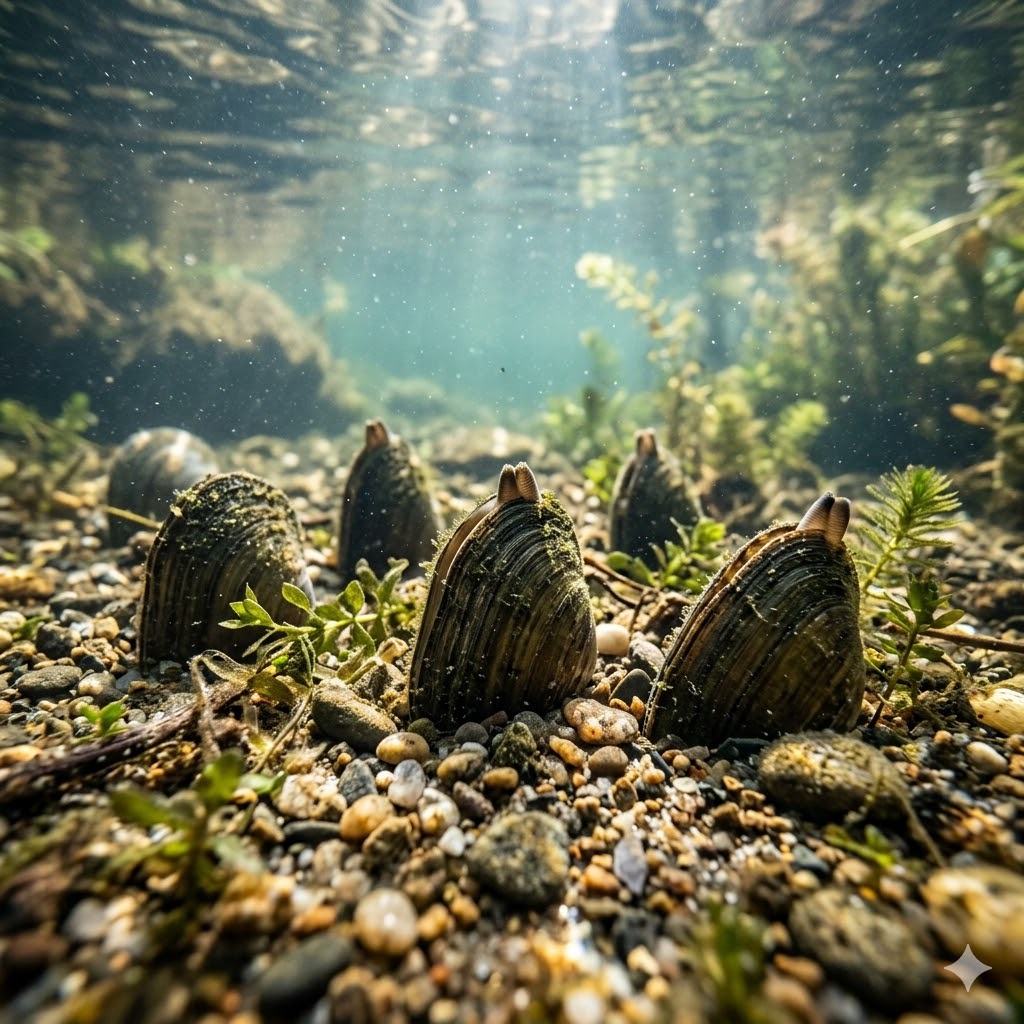
Freshwater mussels are living filters. Each one draws pond water in through a siphon, strains out algae, plankton, and fine suspended particles, and pushes the cleaned water back out. A bed of mussels can clear a green, cloudy pond into something noticeably brighter, working silently on the bottom while doing nothing but breathing and eating. For anyone trying to improve the water in a pond, that filtering power is genuinely valuable.
But this guide has to be honest from the start: freshwater mussels are hard to keep, and they are not a crop. Unlike shrimp or snails, you cannot simply add a few and let them multiply. Their life cycle has a strange twist - the larvae must attach to and briefly parasitise a living fish before they can grow into young mussels - so breeding them at home is difficult to impossible without the right host fish and conditions. Treat mussels as a pond-health and filtration project, something you keep to improve and study your water, rather than a food or trade animal you farm.
Why keep freshwater mussels
Freshwater mussels earn their place for a few specific reasons.
- Living water filtration. This is the whole point. A single mussel filters many litres of water a day, removing algae, plankton, and fine debris. A group of them can measurably clear and brighten a pond.
- Natural nutrient control. By eating suspended algae, mussels compete with the green-water blooms that plague nutrient-rich ponds, helping keep the water clearer without chemicals.
- An indicator of pond health. Mussels are sensitive to pollution and low oxygen. A thriving mussel is a sign that your pond water is genuinely clean and well-oxygenated - they are a living gauge of conditions.
- A quiet, fascinating subject. For anyone interested in pond ecology, watching a filter-feeder at work and learning its odd life cycle is rewarding in itself.
Be realistic about the limits, because they are large. Mussels are difficult, slow, and easily killed by poor water. They are not food you can harvest at home, and you should never eat wild-collected mussels. They filter feed on tiny particles you cannot easily provide in a bare tank, which is why they belong in a living pond, not a display aquarium. Keep them because you want cleaner pond water and find the animal interesting - not because you expect an easy return.
The system and space
Freshwater mussels are pond animals, and that is where they belong. A bare aquarium almost always starves them, because it cannot grow the constant supply of microscopic food they filter from the water. A mature, planted pond with a soft bottom is the right home.
The core of a mussel-friendly system is a living pond with a soft substrate and steady food supply.
- A mature, established pond. Mussels need water rich in the tiny algae and plankton they filter. A pond that has been running long enough to develop a natural food web can support them; a brand-new or sterile system cannot.
- A soft substrate. Mussels burrow partway into sand or fine gravel, anchoring with a muscular foot while their siphons draw water. Give them a soft bottom several centimetres deep to settle into, not bare liner or hard rock.
- Good oxygen and gentle flow. They need well-oxygenated water and gentle circulation that brings a constant stream of food past their siphons. Stagnant, low-oxygen water kills them.
- Space and a stable bottom. Mussels do not move much once settled. Give them a calm, undisturbed area of the pond bottom where they can filter without being buried or overturned.
Because they depend on natural pond food, mussels are best added to a pond that already supports fish and a healthy algae base. In a tank, they are a short-lived experiment at best.
Water and stability
Freshwater mussels are among the most water-sensitive animals in this whole set of guides. Clean, well-oxygenated, mineral-rich water is not a nice-to-have for them - it is survival. They evolved in flowing, calcium-rich streams and lakes, and they suffer quickly in poor conditions.
A few requirements are non-negotiable.
- Calcium-rich water. Mussels build heavy shells and need plenty of dissolved calcium to do it. Soft, low-mineral water leaves their shells thin and eroded and weakens the animal. Hard, calcium-rich water is important for keeping them healthy.
- High oxygen. As filter feeders that breathe through their gills, mussels need well-oxygenated water. Low oxygen, especially in warm stagnant ponds, kills them fast.
- Clean, stable, unpolluted water. They cannot tolerate ammonia, nitrite, or pollutants. A pond must be fully mature and stable, with the nitrogen cycle well established, before mussels have any chance. Our systems and water quality guide covers the basics of cycling and stability.
- No copper or chemicals. Copper and many treatments are toxic to mussels as they are to snails and shrimp. Keep them out of a pond that holds mussels.
Because they filter everything in the water, mussels also concentrate whatever pollution is present - another reason their water must be genuinely clean. Steady, mineral-rich, oxygen-rich conditions are the whole ballgame.
Feeding and care
You do not feed freshwater mussels in the ordinary sense. They feed themselves by filtering microscopic algae and plankton straight from the water, all day, every day. That is exactly why a bare tank fails them - there is simply not enough suspended food in clear, filtered aquarium water to keep a filter feeder alive.
- Their food is the pond itself. A living pond with a natural algae bloom and plankton provides the steady supply of tiny particles mussels need. The healthier and more productive the pond's food web, the better the mussels do.
- You cannot easily feed them by hand. Some keepers dose cultured phytoplankton or green-water in dedicated systems, but this is advanced work. For nearly everyone, the practical answer is a well-fed pond, not manual feeding.
- Do not "clean" the water too aggressively. A pond so heavily filtered that it has no suspended food will slowly starve its mussels. They need water with life in it.
Daily care is mostly observation, and it is subtle. A healthy mussel sits partly buried with its shell slightly open and siphons drawing water. A mussel that gapes wide open and does not close when disturbed is likely dead or dying, and a dead mussel fouls the water quickly, so remove it at once. Check periodically that they are still upright, buried, and filtering.
Raising and cleanup
Here is the honest reason mussels are a project and not a crop: you almost certainly cannot breed them at home. Their life cycle is genuinely strange and demanding.
Adult mussels release microscopic larvae called glochidia into the water. These larvae cannot grow on their own - they must attach to the gills or fins of a specific living host fish, where they hitch a ride and briefly parasitise the fish for days or weeks. Only after this parasitic stage do they drop off, settle into the substrate, and slowly develop into young mussels.
- Breeding needs the right host fish. Many mussel species will only complete their cycle on particular fish species. Without the correct host present and receptive, the larvae die and no young mussels form.
- It is slow and specialised. Even where the host is right, the process is delicate and takes a long time. This is difficult work that dedicated conservation programmes struggle with, not a home hobby you can expect to succeed at.
- So treat mussels as pond residents, not stock. Add adult mussels to improve and study your pond, and enjoy the filtration they provide, but do not expect a self-renewing population the way shrimp or snails give you.
The "cleanup" mussels provide is the filtering itself - clearer, brighter pond water. That, rather than baby mussels, is the return you are really keeping them for.
Common mistakes
Most mussel losses come from a short list of avoidable errors, though mussels are unforgiving even when you do things right.
- Keeping them in a bare tank. The most common killer. Clear aquarium water has too little suspended food, and mussels slowly starve. They belong in a living pond.
- Soft, low-mineral water. Without enough calcium, shells thin and the animal weakens. Mussels need hard, calcium-rich water.
- Low oxygen or stagnant water. Filter feeders need well-oxygenated, gently moving water. Stagnant, warm, low-oxygen conditions kill them.
- Adding them to an immature or polluted system. Mussels cannot tolerate ammonia, nitrite, or pollution. The pond must be fully established and clean first.
- Over-filtering the water. Strip out all the suspended algae and plankton and you starve your mussels. Leave some life in the water.
- Not noticing a dead mussel. A dead mussel fouls water fast. Remove any that gape open and do not close.
A serious note on responsibility: freshwater mussels are ecologically important and many wild species are protected or endangered, and collecting them from the wild may be illegal in your area. Their odd life cycle also means aquarium releases can spread disease or non-native larvae. Never take mussels from a protected waterway, and never release aquarium or purchased mussels, fish, or plants into a natural pond, stream, or lake. Check your local rules before keeping them at all.
Is freshwater mussel right for you?
Freshwater mussels are the right choice only for a specific kind of keeper: someone with a mature, well-oxygenated, mineral-rich pond who wants natural water filtration and finds the animal genuinely interesting. They suit you if you think of them as a pond-health and study project, and if you are willing to provide clean, hard, living water rather than expecting an easy or productive crop.
They are the wrong choice if you want an aquarium display animal, a food source, or something you can breed and multiply at home. A bare tank will starve them, poor water will kill them, and their host-dependent life cycle puts breeding out of reach for almost everyone.
If you have a healthy pond, hard and oxygen-rich water, and the patience to watch a slow, silent filter feeder at work, freshwater mussels will reward you with clearer water and a fascinating window into pond ecology - so long as you keep them for the right reasons and treat them as the delicate, protected animals they are.