How to Raise Ghost Shrimp at Home for Bait
A practical guide to breeding cheap, transparent ghost shrimp at home as live bait and feeders instead of buying them by the dozen.
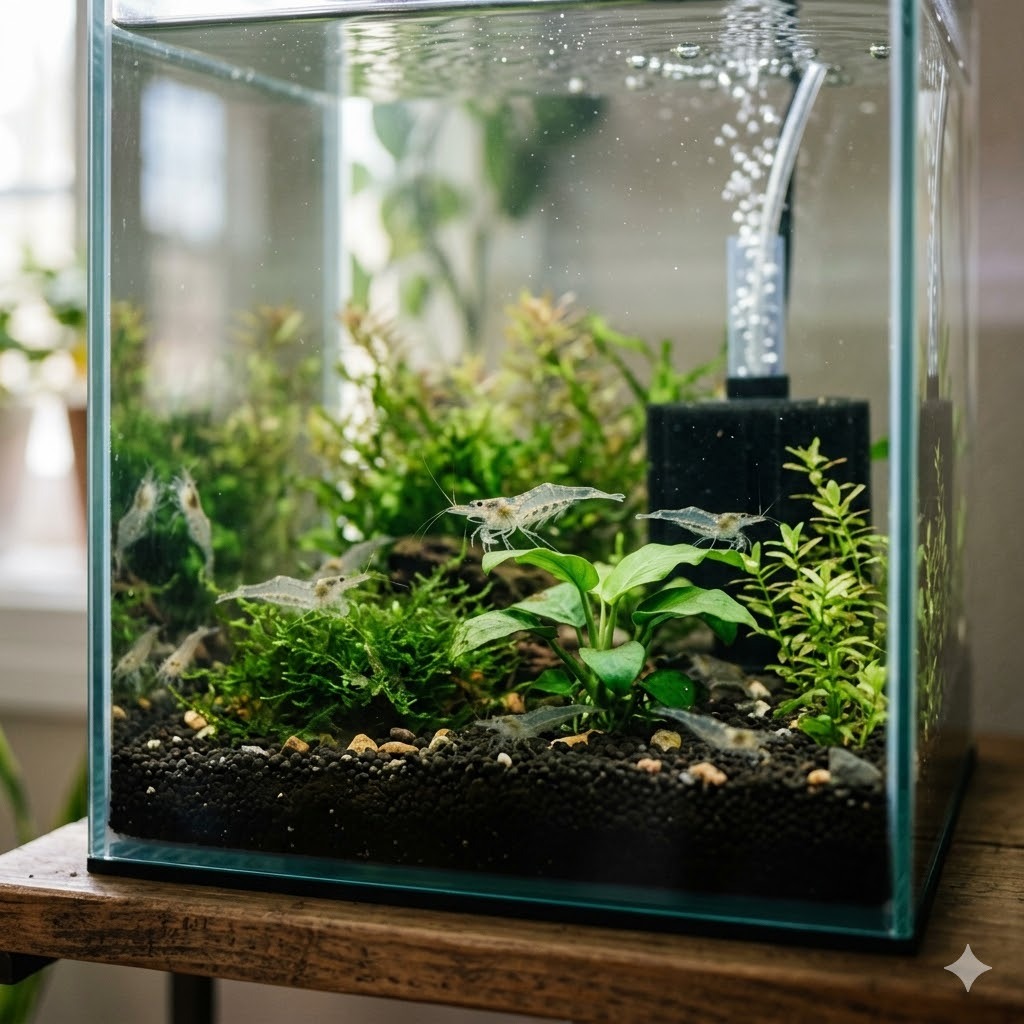
If you are an angler tired of buying live bait by the handful, ghost shrimp are the answer. They are cheap, transparent, tough, and they breed readily in a plain tank, which means you can grow a steady supply at home instead of running to the shop before every trip. They also make excellent feeders for larger fish. For anyone who uses live shrimp regularly, raising your own quickly pays for itself.
Be honest with yourself about what they are, though. Ghost shrimp are not a showpiece like cherry shrimp, and they are not fussy pets. They are a working animal: a functional, disposable bait and feeder crop. Kept for that purpose, they are one of the most rewarding invertebrates to raise at home.
Why raise ghost shrimp
The whole point of ghost shrimp is utility.
- Home-grown live bait. Ghost shrimp are a classic bait for panfish, bass, trout, and many others. Buying them adds up fast; breeding your own means a fresh supply on demand at almost no cost.
- Feeders. Larger aquarium fish relish them. A breeding tank gives you a renewable feeder colony that is far cheaper than store-bought.
- They breed in a bare tank. Unlike fussier shrimp, ghost shrimp will reproduce in simple, unplanted setups. That makes a dedicated bait operation easy to run.
- Cheap to start and stock. They cost little, so a starter batch of a few dozen is affordable, and losses do not sting.
Set your expectations accordingly. Ghost shrimp are short-lived, they die if handled roughly, and quality varies batch to batch since most are wild-caught or mass-bred. They are not a colourful ornamental colony and not a serious source of income. Raise them because they save you money and give you bait whenever you need it.
The tank and setup
You can keep ghost shrimp in two ways: a simple grow-out tank for holding and light breeding, and a separate, gentler breeding tank if you want to raise larvae successfully. More on that below.
For a general holding and grow-out tank:
- A modest tank of forty litres or more holds a good working population. Bigger is more stable and lets you keep more bait on hand.
- Sponge filter. As with all small shrimp, a sponge filter gives biological filtration and oxygen without a dangerous intake. It is the single most useful piece of equipment.
- Some cover. Ghost shrimp are cannibalistic toward moulting and newly hatched individuals, so hides matter. A clump of moss, a few plants, or even a pile of dried leaves and some sponge give the vulnerable ones somewhere to shelter.
- Simple substrate or bare bottom. A bare bottom is easy to clean for a pure bait operation. If you want a more natural, self-feeding tank, add some plants and a thin substrate.
Ghost shrimp handle temperate, room-temperature water well and do not need a heater in most homes. That is part of why they are so easy to keep as a bait crop.
Water and stability
Ghost shrimp are hardier than cherry or amano shrimp, but the same core principle applies: stability matters more than hitting exact numbers. They tolerate a wide range of temperature and hardness as long as conditions do not swing suddenly.
Two rules protect any shrimp tank:
- No copper. Copper is lethal to shrimp at levels harmless to fish. It hides in some fish medications and a few fertilisers, and can leach from old copper plumbing. Keep all copper away from the tank, and be careful if you ever medicate.
- Cycle first. Shrimp cannot survive ammonia or nitrite spikes. Run the nitrogen cycle before stocking so bacteria convert ammonia to nitrite and then to far less harmful nitrate, which you remove with water changes. Our systems and water quality guide walks through cycling if you need it.
Because a bait tank often carries a dense population and gets fed heavily, keep an eye on water quality. Small, regular water changes with dechlorinated, temperature-matched water keep waste in check. Do not let a crowded feeder tank foul - crashes happen fast when the population is high and the food is heavy.
Feeding and daily care
Ghost shrimp are scavengers and will eat almost anything. That makes them easy to feed but also easy to overfeed.
- Offer small amounts of prepared shrimp food, algae pellets, fish flake, or blanched vegetable.
- Feed only what they clear in an hour or two, and remove leftovers.
- In a lightly planted tank they will supplement their diet with algae and biofilm, which reduces how much you need to add.
Overfeeding is the fastest way to crash a bait tank. Excess food spikes ammonia and fouls the water, and a dense shrimp population is unforgiving of dirty water. When in doubt, feed less and change water more.
Daily care is quick: check that shrimp are active, remove any dead ones promptly (they foul water fast in numbers), and keep the population from outgrowing the tank. Harvest for bait as needed - netting gently is fine, but handle them softly, as rough handling kills them.
Breeding and raising the young
Here is where ghost shrimp differ sharply from cherry shrimp, and where most first-timers go wrong. Ghost shrimp will happily produce eggs. A berried female carries a clutch under her tail. But when those eggs hatch, they do not emerge as tiny copies of the adults. They hatch as larvae: minute, drifting specks that float in the water column and are almost invisible.
Those drifting larvae are the challenge. In a normal tank they get eaten by the adults, sucked into filter intakes, or simply lost. To raise them, you need a separate approach.
- Use a dedicated breeding tank. Move berried females into their own tank shortly before they release larvae, then remove the adults so they do not eat the young.
- Gentle or sponge filtration only. The larvae are so small they are easily drawn into any real intake. A gently bubbled sponge filter, or even just an air stone with frequent gentle water changes, is safest.
- Tiny food for tiny mouths. Larvae need very fine food - powdered foods, infusoria, or the biofilm and micro-life in a mature tank. This is the hardest part and where losses concentrate.
- Patience through the drift stage. After some days the surviving larvae settle and start to look like miniature shrimp. Once they do, they are far easier to keep.
Honestly, many anglers skip larval rearing entirely and simply let a well-stocked holding tank replenish itself slowly, buying an occasional top-up. Full larval rearing is doable but fiddly. Decide how much bait you need before committing to a separate breeding tank.
Common mistakes
The usual failures are avoidable once you know them.
- Expecting cherry-shrimp breeding. Ghost shrimp larvae drift and need their own tank and fine food. If you leave them with the adults in a normal tank, they simply vanish.
- Strong filter intakes. These vacuum up larvae and even weak adults. Use sponge filtration.
- Copper exposure. Still lethal here. Keep it away.
- Overcrowding and overfeeding. A dense bait tank fouls fast. Feed lightly, change water regularly, and remove dead shrimp promptly.
- Rough handling. Ghost shrimp are delicate. Net gently and move them quickly to avoid losses.
A responsibility note: ghost shrimp are common in some regions and non-native in others, and released aquarium animals and plants can become invasive. Never dump a tank, leftover bait, or plants into a natural waterway. Dispose of unwanted shrimp responsibly and use bait only where it is legal and local.
Is ghost shrimp right for you?
Ghost shrimp are right for you if you are an angler or fishkeeper who goes through live shrimp regularly and wants a cheap, renewable supply at home. A simple grow-out tank pays for itself quickly, and holding your own bait means you are never caught short before a trip.
They are less suited to you if you want a beautiful ornamental colony - that is cherry shrimp territory - or if you want a truly hands-off breeder, since raising the drifting larvae takes a separate tank and real attention. Many people keep a holding tank for bait and never bother with full larval rearing, and that is a perfectly sensible choice.
If your goal is practical, low-cost live bait and feeders, ghost shrimp are hard to beat. Keep them simple, keep the water clean, and keep copper out, and you will have shrimp on hand whenever you need them.