How to Raise Giant River Prawns at Home
A practical guide to growing out giant river prawns at home - buy juveniles rather than breed, since their larvae need brackish water to survive.
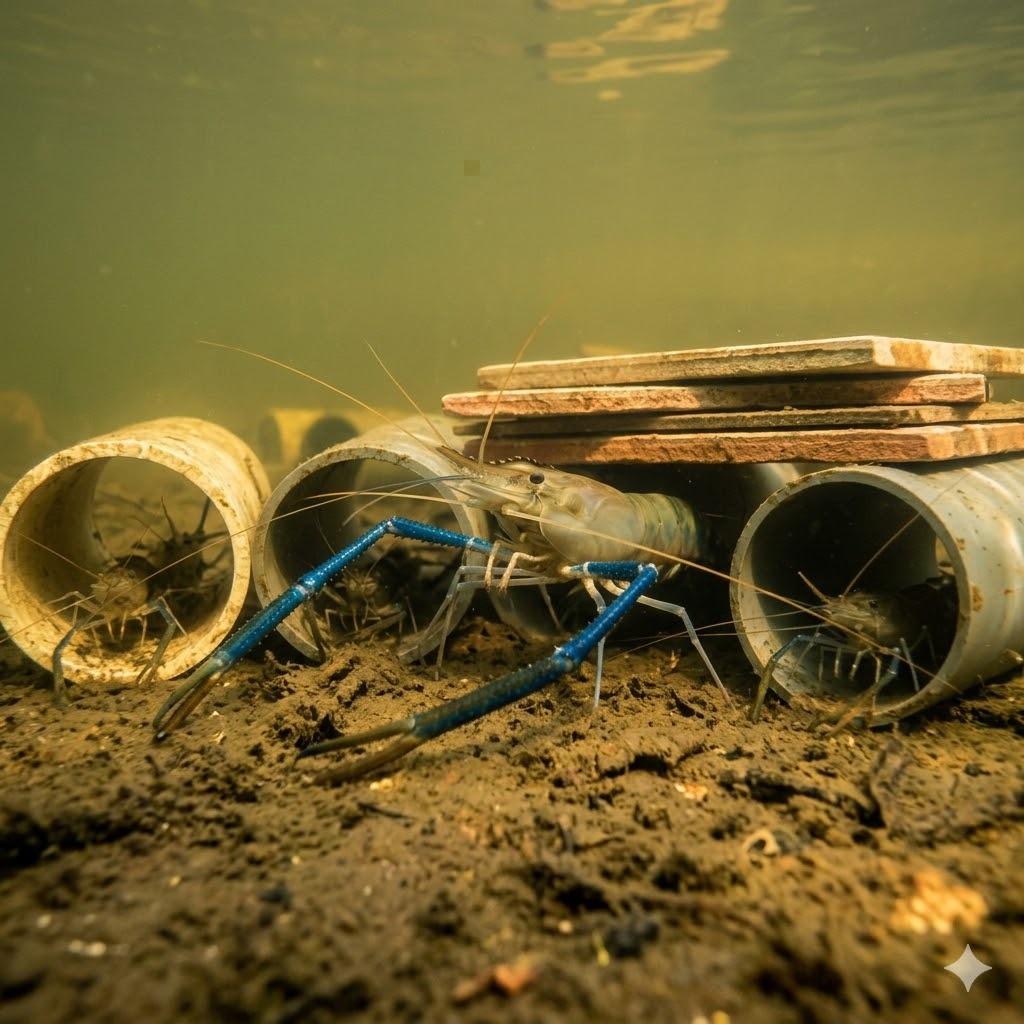
Giant river prawns grow big and fetch a premium, which makes them a tempting home aquaculture project. But they come with a catch that shapes the whole hobby: their young must pass through a brackish-water larval stage to survive, and reproducing that at home is impractical for almost everyone. The honest, workable approach is to buy in juveniles or post-larvae and focus purely on growing them out.
Treated that way - as a grow-out project rather than a breeding one - giant river prawns are a rewarding warm-water crop. Best suited to someone in a warm climate, or willing to run a heated pond or tank, who wants a high-value harvest and is happy to source young stock each cycle instead of closing the loop themselves.
Why raise giant river prawns
The draw is size and value. These prawns grow noticeably larger than most freshwater crustaceans and command a premium on the plate, so a good grow-out gives you a genuinely impressive harvest of large prawns.
Grow-out from juveniles to harvest size typically runs several months in warm conditions - faster than many crayfish - which is part of the appeal. Warmth, food, and space all move that timeline, and crowding slows it.
Be clear-eyed about the model, though. Because home breeding is off the table for most people, this is not a self-sustaining crop the way a yabby pond is. You buy young stock, grow it out, harvest, and buy again. That recurring cost is the honest trade-off for the size and value you get.
It is worth planning your cycles around that model from the start. Because you are buying juveniles, you can time each batch to your warm season, stock a known number, and harvest them together - which actually makes grow-out more predictable than a self-breeding pond that quietly overpopulates. Think of it less as farming a colony and more as running a warm-water crop you plant and harvest, and the recurring stock purchase starts to feel like a feature rather than just a cost.
The system and space
You can grow giant river prawns in a warm pond - lined or earthen - or in large tanks if you keep the water warm and clean. A pond suits them well in a warm climate; tanks make sense indoors or in a greenhouse where you control the heat.
Cover is critical, because prawns are territorial and cannibalise smaller and freshly moulted individuals. A soft, just-moulted prawn is easy prey, so load the system with hiding places:
- Pipe offcuts, mesh tubes, and tiles
- Bundled netting and plastic mesh rolls
- Rock piles and structure spread across the bottom
The more cover, the more prawns survive to harvest. Spreading hides across the whole floor also breaks up territories and cuts the fighting that thins a crowded batch.
Keep a barrier lip or lid on tanks, and firm edges on ponds. Prawns are less prone to walking off than yabbies, but poor water will still send them trying to leave.
Because prawns are so territorial, the layout of your cover matters as much as the amount. Spread hides evenly across the whole floor rather than piling them in one corner, so the population disperses instead of concentrating and fighting over a single good spot. Long, open stretches of bare bottom become no-prawn zones where the strong pick off the weak, so break the space up. A well-distributed floor of cover is one of the simplest, cheapest ways to lift how many prawns reach harvest size.
Water and temperature
Giant river prawns are warm-water animals. They grow best in genuinely warm water, slow down when it cools, and die if it turns cold for long. In a cool climate that means a heated tank or greenhouse pond, and the power to run it is your main ongoing cost alongside restocking.
Note that grow-out itself is freshwater - it is only the larval stage that needs brackish or saltwater. Once you have juveniles, you raise them in warm fresh water, which keeps the day-to-day much simpler than the breeding side.
Oxygen is easy to underestimate. Warm water holds less oxygen, and a pond full of large, feeding, moulting prawns uses a lot. Run strong aeration or water movement and never let the system go still - prawns crowding the surface or the edges are telling you the oxygen is low.
Moulting drives growth. Each prawn sheds its shell to grow larger and pulls calcium from the water to harden the new one. Keep the water hard enough, with adequate calcium, so shells set fast and the animals spend less time soft and vulnerable. Hold ammonia and nitrite near zero with filtration and water changes, following the fundamentals in our systems and water quality guide.
Stocking and feeding
Buy post-larvae or juveniles from a licensed hatchery or aquaculture supplier - this is the practical entry point, since breeding your own is out of reach. Check the legal note below before sourcing, because giant river prawns are non-native and often restricted.
Stock at a sensible density and resist overcrowding. Too many prawns in one system spikes territorial aggression and cannibalism, fouls the water, and stunts growth. Starting lighter and grading as they grow gives you more large prawns at the end.
Feeding is straightforward for an omnivore:
- Sinking pellets formulated for prawns or shrimp
- Vegetable matter such as pumpkin, carrot, and greens
- Occasional protein like earthworms or a little fish
- Natural pond food in an established earthen system
Feed measured amounts and remove leftovers the next day so they do not rot and pull down the oxygen. Underfeeding slightly is safer than overfeeding in a warm system.
Grade by size as they grow. Prawns are territorial and will cannibalise smaller ones, so separating larger from smaller animals protects the little ones and lifts your overall survival and yield.
Health and the common mistakes
Most grow-out losses are avoidable and come down to a few things.
- Cannibalism. The defining prawn problem. Too little cover, too high a density, or hunger, and the big prawns eat the small and freshly moulted ones. Add hides, grade by size, feed steadily.
- Cold. These are tropical animals. Let the water go cold and you lose the batch. Heat and insulate in cool climates.
- Low oxygen. Warm water plus heavy feeding plus weak aeration equals a crash. Aerate hard and keep water moving.
- Moulting deaths. Soft prawns with no hide, in soft or poor water, get eaten or fail to harden. Cover and calcium are the answer.
Handle them as little as possible, never move a soft freshly moulted prawn, and pull out any dead ones promptly.
A subtler mistake is misjudging the harvest window. Prawns grow at different rates, so a batch left too long lets the largest, most territorial animals dominate and cannibalise the rest, shrinking your total yield even as a few individuals get huge. Grading through the grow-out and pulling the biggest prawns as they reach size, rather than waiting for the whole batch to finish together, often gives you more usable prawns overall. Watch the size spread, not just the calendar, and harvest in stages if the population is pulling apart.
Harvesting or growing out giant river prawns
Here is the honest reality on breeding: it is impractical at home. The females carry eggs that hatch into larvae, but those larvae need brackish or saltwater to survive and pass through several stages before becoming freshwater juveniles. Reproducing that brackish larval-rearing at home takes hatchery-grade control over salinity, water quality, and larval feed that is well beyond a normal hobby setup. So do not plan to close the loop - plan to grow out bought stock.
Focus your effort where it pays. Buy healthy juveniles or post-larvae, get them into warm, well-oxygenated, well-covered water, feed them steadily, and grade by size as they grow. Harvest the largest prawns by trap, net, or by draining, take them at a good table size, and then restock for the next cycle. That grow-out rhythm is the realistic and genuinely productive way to raise this species at home.
Is a giant river prawn right for you?
Giant river prawns suit you if you live somewhere warm, or will run a heated system, and you want a large, high-value harvest - and you accept that you will buy in young stock each cycle rather than breed your own. If the grow-out model appeals and the cannibalism control does not scare you off, they are a satisfying crop.
They are the wrong choice if you want a self-sustaining, breed-your-own project, or if a cold climate would make heating and restocking too costly to enjoy. For a self-seeding freshwater crop, a yabby pond is the better fit.
One firm rule before you begin: giant river prawns are non-native and a serious invasive risk in many places, and are frequently regulated or banned. Check your local law before buying or keeping them, obtain any permit required, and never release them into wild waterways, drains, or natural ponds. Growing them out responsibly means keeping every one of them contained.