How to Raise Goldfish at Home
The most forgiving ornamental fish to raise - pond or large tank, filtration, spring spawning and why a bowl is never enough.
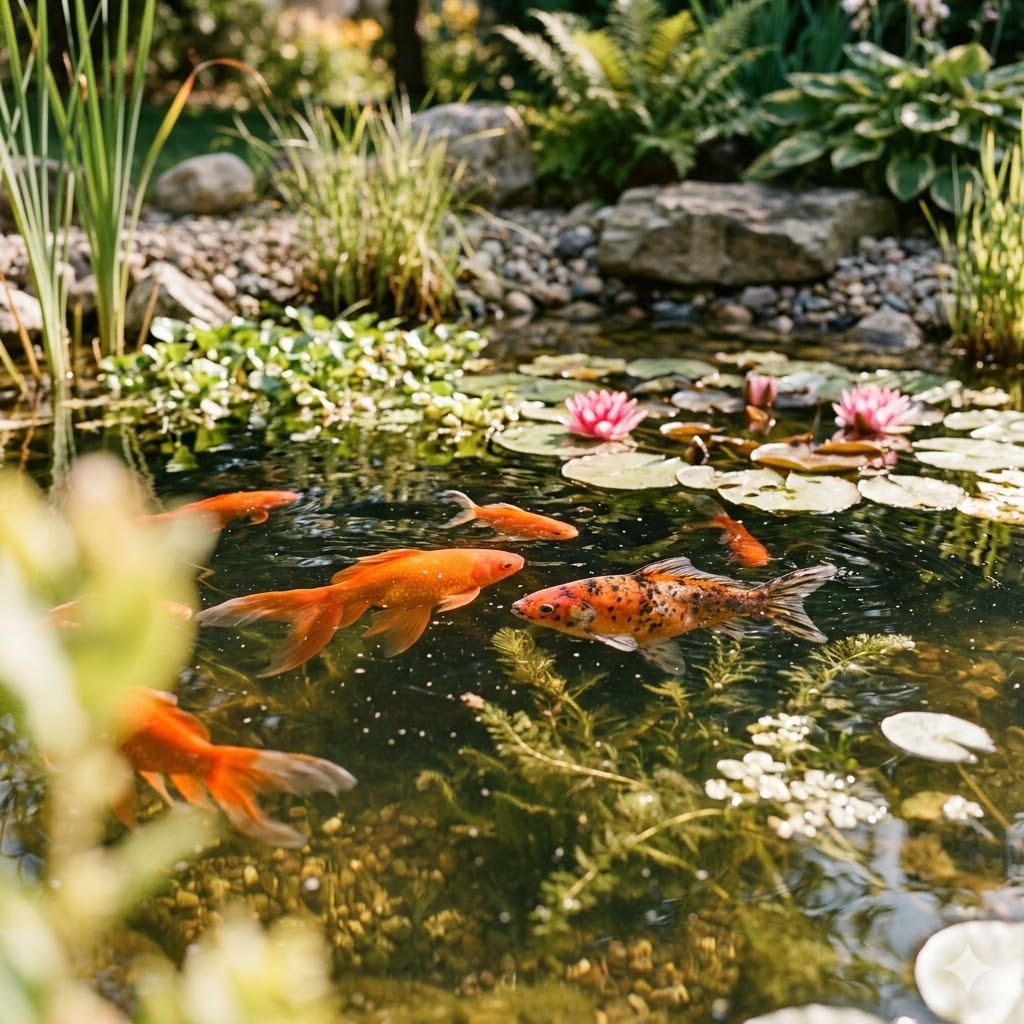
Goldfish are the easiest ornamental fish to start with, and worth raising if you want a cheerful, hardy project that survives a few beginner mistakes. They handle cold and heat, they breed readily in a pond each spring, and they cost little to get going. That makes them the classic first fish for anyone learning the hobby. They suit almost anyone with a bit of outdoor space or room for a large tank indoors.
The one thing to get straight from the start is size and mess. Goldfish grow far bigger than most people expect and they produce a lot of waste, so the picture of a single fish in a bowl is exactly the wrong idea. Give them proper water and filtration and they are wonderfully rewarding. Keep them cramped and they suffer.
Why raise goldfish
Goldfish are the most forgiving ornamental fish there is. They tolerate a wide temperature range, recover from small errors that would kill fussier fish, and stay active and visible rather than hiding. For a beginner, that forgiveness is the whole point - it lets you learn how to run a filter, cycle water and feed sensibly without a fish's life hanging on every decision.
They are also cheerful and interactive. A group of goldfish will crowd the front of the tank or the pond edge at feeding time and quickly learn to associate you with food. Many keepers find them just as engaging as far more expensive fish.
And they breed easily. A group in a pond will often spawn on its own each spring, giving you a first, low-pressure taste of raising fry. You will not sell goldfish for much, but they trade and rehome readily, and the experience of hatching your own fish is a genuine reward.
The honest downside is that "easy" does not mean "no work". Goldfish are messy, they get big, and cheap does not mean disposable. Treat them as a real animal with real needs and they will do well for years.
The pond or tank
Goldfish do best in a pond or a large tank. Both work - the choice is about space and climate. Outdoors, a garden pond gives them room to grow and lets them breed naturally. Indoors, a large aquarium works well if you cannot keep a pond.
What does not work is a bowl or a tiny tank. A bowl has too little water to stay stable, no room for a filter, and not enough oxygen. It is a slow death, not a home. Whatever you choose, err on the large side, because these fish grow.
For a tank, think in terms of plenty of water per fish and a filter rated above the tank's volume. For a pond, more water is always better - it dilutes waste and holds temperature steady. In both cases, filtration matters as much as size. Goldfish are heavy waste producers, and without good mechanical and biological filtration the water fouls fast. Our systems and water quality guide covers how those filter stages work.
- Pond or large tank, never a bowl
- Generous water volume - plan for the size they will reach, not the size you buy
- A filter rated above the volume, running all the time
Water and temperature
Goldfish are temperate fish and one of the most temperature-tolerant you can keep. They handle cold winters and warm summers, which is exactly why they thrive in outdoor ponds across most climates. They do not need a heater.
What they do need is clean water, and that means understanding the nitrogen cycle. Waste and leftover food break down into ammonia, which is toxic. Filter bacteria convert ammonia to nitrite, then nitrite to much less harmful nitrate, which you remove with water changes. A new tank or pond has to grow this bacterial colony over several weeks before it can safely hold fish, so add goldfish gradually and test the water while the system matures. Skipping this cycle is the classic beginner mistake.
Keep the water oxygenated, especially in warm weather when it holds less oxygen and the fish are more active. A little surface movement, a waterfall or an air pump handles it.
In a pond, overwintering is simple. Goldfish slow right down as the water cools and rest through the cold months, eating little. As long as the pond is deep enough not to freeze solid, and a small patch of surface stays open for gas exchange, they come through winter fine. Stop feeding when the water turns cold, because they cannot digest food and the leftovers foul the water.
Feeding and daily care
Feed goldfish a good quality food and give only what they finish in a couple of minutes, once or twice a day in warm weather. They will always act hungry, so feed to appetite rather than to the bag. Overfeeding is the number one cause of cloudy, polluted water.
Scale feeding to temperature. Warm water means more food and faster growth; cool water means less; cold water means none at all. Getting this wrong in autumn, and continuing to feed as the water drops, is a common way to foul a pond just before winter.
Daily care is mostly watching. Healthy goldfish are active, feed well, and have clear skin and open fins. Check the filter is running, top up for evaporation, and test the water regularly while a system is young. A quick daily glance catches trouble early, which is when it is easy to fix.
Breeding goldfish
Goldfish spawn in spring, triggered by warming water and longer days. In a pond, a group of adults will often spawn on their own - the females scatter large numbers of sticky eggs over plants or spawning mops, and the males fertilise them. You may see the fish chasing energetically through the shallows on a warm spring morning; that is spawning.
The problem is that adult goldfish eat their own eggs and fry. To raise the young, move the eggs, the plants or the spawning material to a separate container away from the adults. The eggs hatch in a few days, and the tiny fry need very fine food at first, growing onto larger food as they develop. Interestingly, goldfish fry often start out dark and only develop their orange colour after weeks or months.
Expect big numbers and plan for them. A spawn can produce hundreds of fry, far more than any tank or small pond can raise. Growing them all leads to stunted, unhealthy fish. Decide in advance how you will thin the numbers - rehome, trade or cull - so you keep a manageable group of healthy fish rather than a crowd of poor ones.
Health and the common mistakes
Goldfish are hardy, so when they get sick the cause is nearly always the environment. The common mistakes all come back to too many fish in too little, dirty water:
- The bowl. Too small, no filter, too little oxygen. The single most common way goldfish die young.
- Underestimating size. Goldfish grow far bigger than beginners expect. A setup that suits small fish becomes overstocked as they mature.
- Weak or no filtration. These are messy fish. Without strong filtration the water fouls fast.
- Overfeeding. Excess food rots and pollutes the water, driving everything above.
- Raising every fry. A spawn of hundreds cannot be grown out in a small system. Overstocking fry stunts them all.
One rule reaches beyond your own setup: never release goldfish into wild lakes, rivers or ponds. Released goldfish are a serious invasive problem worldwide - they survive, grow large, breed, stir up mud and outcompete native fish. In many places it is illegal too. If you cannot keep a fish, rehome it to another keeper. Never let it go.
Is goldfish right for you?
Goldfish are right for you if you want a hardy, cheerful, low-cost way into the hobby and you can give them a pond or a decent-sized tank. They forgive the learning curve, they breed easily, and they will do well for years with basic, consistent care.
They are the wrong choice if "easy fish" makes you think "bowl on a shelf". Goldfish need real water and real filtration, and cramming a fish that wants to grow large into a tiny container is where most goldfish keeping goes wrong.
Give them space and a working filter, feed sensibly, and keep the group small enough to stay healthy. Do that and goldfish are exactly what they are famous for - the friendly, forgiving fish that teach you the hobby.