How to Raise Guppies at Home
Guppies breed constantly and teach you selective breeding on a small tank - setup, water, livebearing and how to avoid overstocking.
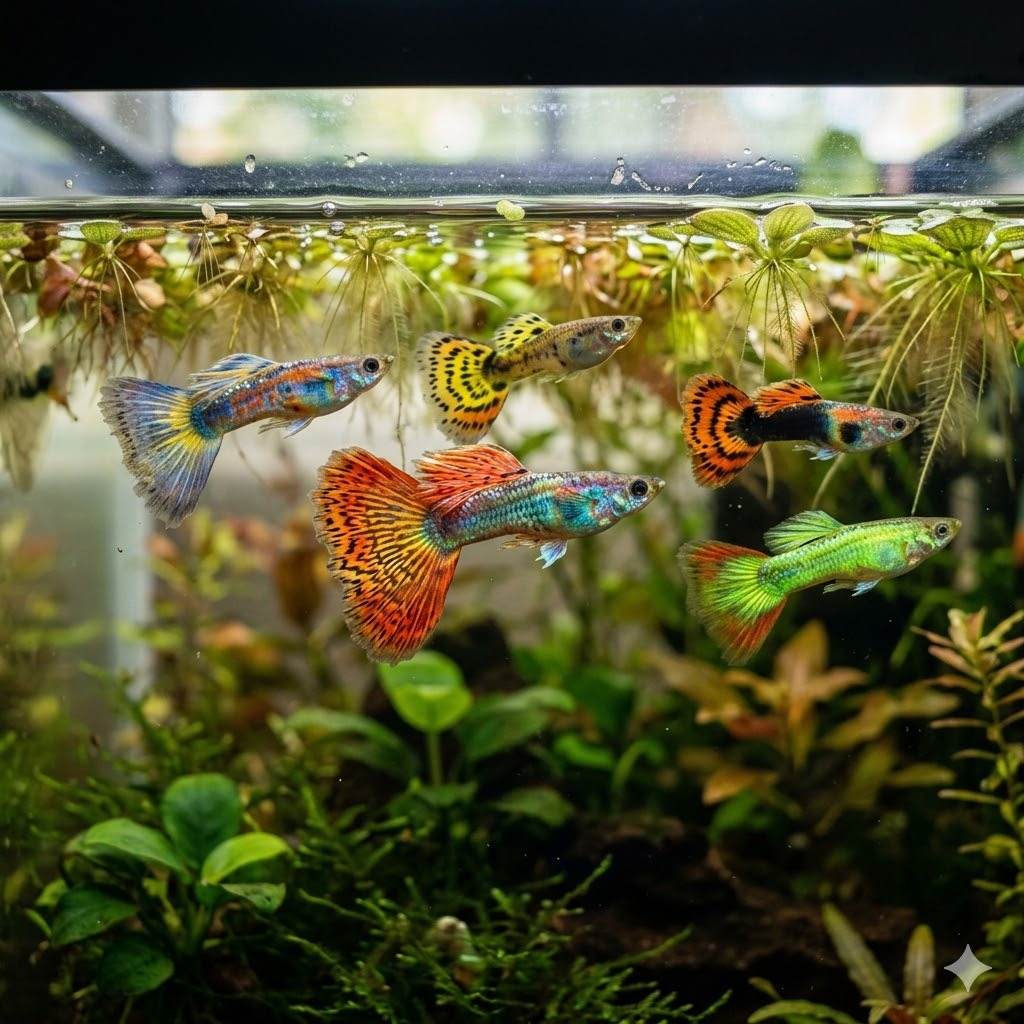
Guppies are worth raising if you want a small, colourful project that teaches you how breeding actually works, without needing a pond or much money. They live happily in a nano tank on a windowsill, they come in an endless range of colours and fin shapes, and they breed whether you want them to or not. That makes them the classic beginner project for learning selective breeding. They suit anyone with a bit of shelf space and the willingness to manage a growing population.
That last point is the honest catch. Guppies do not need encouragement to reproduce - a small group becomes a crowd within weeks. The real skill with guppies is not getting them to breed, it is staying ahead of the numbers.
Why raise guppies
Guppies give you a lot for very little. A small heated tank, a handful of fish and a few plants is all you need to start, and within a couple of months you are watching new generations appear. For learning the hobby, that fast turnover is a gift - you see the results of your choices quickly, which is exactly what selective breeding needs.
They are also endlessly varied. Guppies come in every colour combination and a range of tail shapes, and because they breed so fast you can genuinely shape a line over a handful of generations - selecting for a colour or a fin type and watching it strengthen. Few other fish let a beginner do real selective breeding on a windowsill.
There is a trading side too. Nice guppies are always wanted, and keepers swap, sell and rehome them constantly. You will not build a business on them, but a productive tank easily covers its own costs and gives you fish to trade.
The downside is simply the flip side of all that: they never stop. If you are not ready to manage the population, a guppy tank goes from charming to badly overcrowded fast.
The pond or tank
Guppies are indoor, warm-water fish, so they live in a small heated tank rather than a pond. A modest nano tank is enough to start - the appeal is that they do not demand much space or a big setup.
Even so, do not go too small. A very tiny container has unstable water and no room for fish that multiply the way guppies do. A small but real tank, with a heater and a gentle filter, gives you stable conditions and room for the group to grow before you thin it.
Filtration should be gentle. Guppies are small and not strong swimmers, and long-finned males in particular struggle against a strong current, so a low-flow filter suits them. Live plants help a great deal - they take up waste, oxygenate the water, and floating plants give the fry somewhere to hide, which matters more than beginners realise. Our systems and water quality guide covers filter choices for small tanks.
- Small heated tank, not a pond and not a jar
- Gentle filtration - guppies dislike strong current
- Plenty of plants, especially floating cover for fry
Water and temperature
Guppies are warm-water fish and need a heater to hold a steady, warm temperature. They are otherwise fairly adaptable and tolerate a range of water conditions, which is part of why they are such good beginner fish. What they do not like is swinging temperatures or dirty water.
As with any tank, the nitrogen cycle is the thing to understand. Waste and uneaten food turn into ammonia, which is toxic. Filter bacteria convert ammonia to nitrite, then to far less harmful nitrate, which you remove with regular water changes. A new tank needs several weeks to build this bacterial colony before it is safe to stock, so cycle it first and add fish gradually. In a small tank the water changes faster, so keep up with modest, regular water changes rather than waiting for problems.
Keep the water gently oxygenated - the filter's surface movement usually handles it in a small warm tank. Because guppies breed so fast, the load on a small tank climbs quickly, and staying on top of water quality is the main ongoing job. It is easy to forget that every batch of fry adds to the waste the filter has to process, so what felt like a lightly stocked tank a month ago can be crowded before you notice. Testing the water now and then, rather than waiting for the fish to look unwell, is the habit that keeps a guppy tank healthy through all that breeding.
Feeding and daily care
Feed guppies small amounts of a good quality food once or twice a day, giving only what they clear in a minute or two. They are tiny fish with tiny stomachs, and overfeeding a small tank fouls the water quickly. If you are raising fry, they need finer food and can be fed a little more often, since they grow fast.
Daily care is quick but worth doing. Healthy guppies are active, brightly coloured and constantly on the move. Check the heater is holding temperature, make sure the filter is running, and keep an eye on the population - in a guppy tank, "how many are there now?" is a genuine daily question. Small, regular water changes keep everything stable, and because a small tank shifts quickly, a little maintenance often beats a big clean-up rarely. Watch for males chasing females relentlessly, too - if a female is being harassed by too many males, adding cover or a few more females spreads the attention and keeps her from being worn down.
Breeding guppies
Guppies are livebearers, which sets them apart from koi or goldfish. Instead of laying eggs, the females give birth to live, free-swimming young, and they do it every few weeks. A single female can produce batch after batch, and she can store sperm to keep delivering broods for some time after a single mating. In short, if you have males and females together, you will have fry - constantly.
The fry are born fully formed and swim immediately, but they are also small enough to be eaten by the adults, including their own parents. This is where floating plants earn their place, giving the fry cover to hide in. Some keepers move pregnant females or the fry to a separate container to protect them, but even a well-planted tank will keep a good number alive.
Selective breeding is the fun part and the reason many people keep guppies. Choose the parents you want - a colour, a tail shape - and separate the rest so only your chosen pairing breeds. Over a few fast generations you can genuinely shape a line. The counterweight is population control: you cannot keep everything. Be ready to trade, sell, rehome or cull, because a tank that breeds nonstop overstocks itself in no time.
Health and the common mistakes
Guppies are hardy, so most problems come from the tank rather than the fish. The common mistakes nearly all trace to letting the population run ahead of the water quality:
- Overstocking. The classic guppy mistake - a trio becomes a crowd, and the small tank cannot keep up. Plan for the numbers.
- Not managing the population. If you never thin the group, it multiplies until the tank is overloaded and the fish decline.
- Skipping the cycle. Adding fish to an uncycled tank exposes them to toxic ammonia.
- Overfeeding. Easy to do in a small tank, and it fouls the water fast.
- Strong current. Powerful filters exhaust guppies, especially long-finned males. Keep the flow gentle.
Is guppy right for you?
Guppies are right for you if you want a small, affordable, colourful project and you are genuinely interested in breeding - because breeding is what they do. They are the best beginner fish for learning selective breeding, they fit almost anywhere, and they reward you with new generations within weeks.
They are the wrong choice if you want a fixed, tidy display that stays the same, or if you are not prepared to manage a growing population. A guppy tank left to its own devices does not stay a pleasant few fish - it overstocks itself.
Start with a small group, keep floating plants for the fry, and decide early how you will trade, sell or cull the surplus. Do that, and guppies give you the fastest, friendliest way into real fishkeeping and breeding there is.