Keeping Japanese Trapdoor Snails: The Cold-Hardy Pond Cleaner
A guide to Japanese trapdoor snails - hardy, cold-tolerant snails that clean algae and detritus in ponds and tanks, overwinter under ice, and breed slowly, a favorite natural pond cleaner.
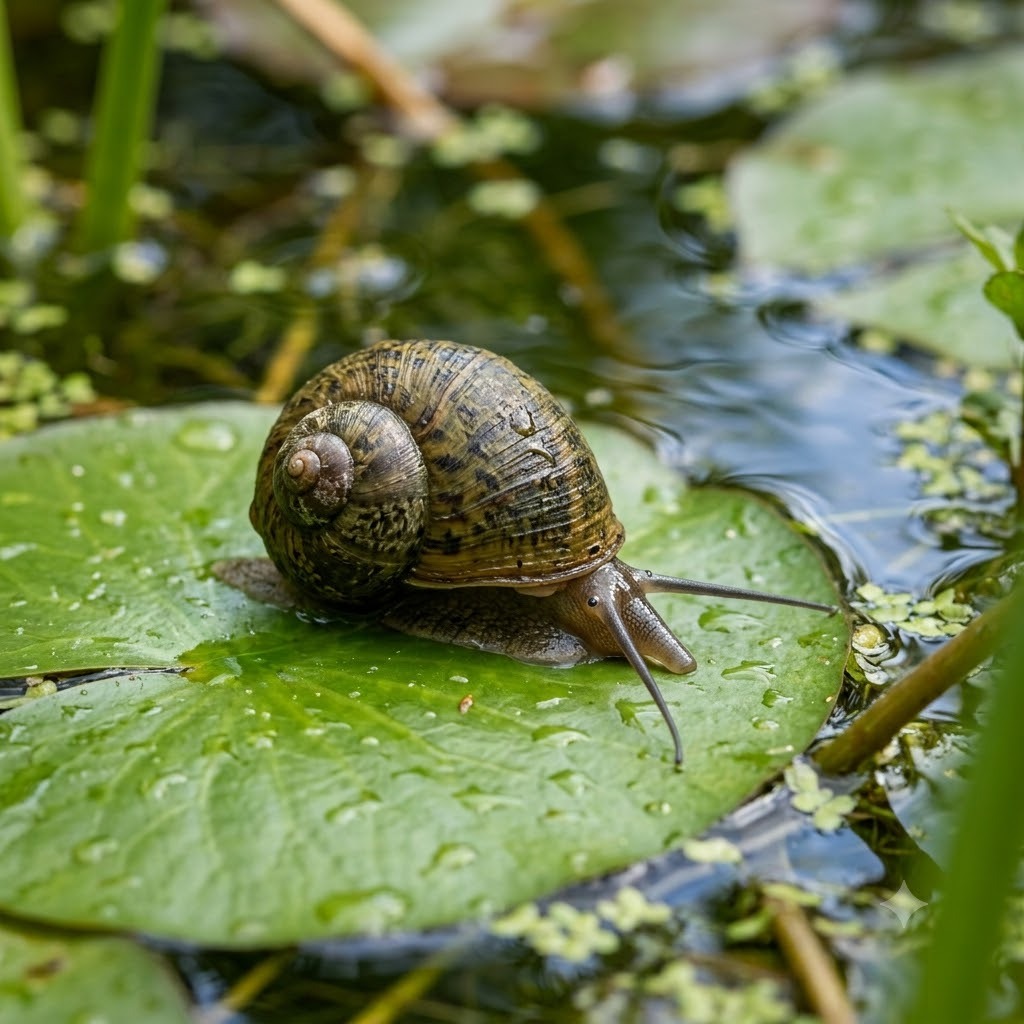
Japanese trapdoor snails are the pond keeper's favorite cleanup crew - hardy, peaceful snails that graze algae and detritus and, crucially, survive cold winters under the ice where tropical snails would die. They bear live young slowly rather than laying clutches of eggs, so they clean without overrunning the water garden, making them a mainstay of outdoor ponds.
Is it right for you?
Trapdoor snails suit anyone with a pond or tank, especially in a cold climate, who wants a hardy natural cleaner that won't explode in numbers or die over winter. They are easy and low-maintenance.
System & Space
They thrive in ponds and water gardens as well as tanks; in a pond deep enough not to freeze solid, they overwinter outdoors. A soft substrate and some algae keep them happy.
Water & Temperature
Remarkably temperature-tolerant, from cool ponds to warm tanks; they handle cold that kills tropical snails. Harder water keeps their shells strong.
Stocking & Feeding
They graze algae, biofilm and detritus, supplemented with sinking foods if algae is scarce; a natural pond feeds them well. They bear live young slowly on their own.
Health & Care
Very hardy; the main hazards are soft acidic water (shell erosion), copper-based treatments, and a pond shallow enough to freeze solid. Otherwise nearly care-free.
Harvest & Enjoying Them
Functional and ornamental - the reward is clearer water and algae control from a snail that survives year-round outdoors.
Getting Started
Add a few to a pond or tank with some algae and hard-enough water; in cold climates ensure the pond is deep enough to avoid freezing solid.
Common Mistakes
A too-shallow pond (freezing solid), soft acidic water, and copper-based medications are the main mistakes.
FAQ
Do they survive winter? Yes - they overwinter under the ice in a deep-enough pond.
Will they overrun the pond? No - they bear live young slowly, unlike egg-laying snails.