Keeping Kribensis: An Easy, Colorful Dwarf Cichlid
A guide to keeping kribensis - a small, hardy, brilliantly colored West African dwarf cichlid, easy to keep and breed, forming devoted parent pairs, ideal for a first cichlid.
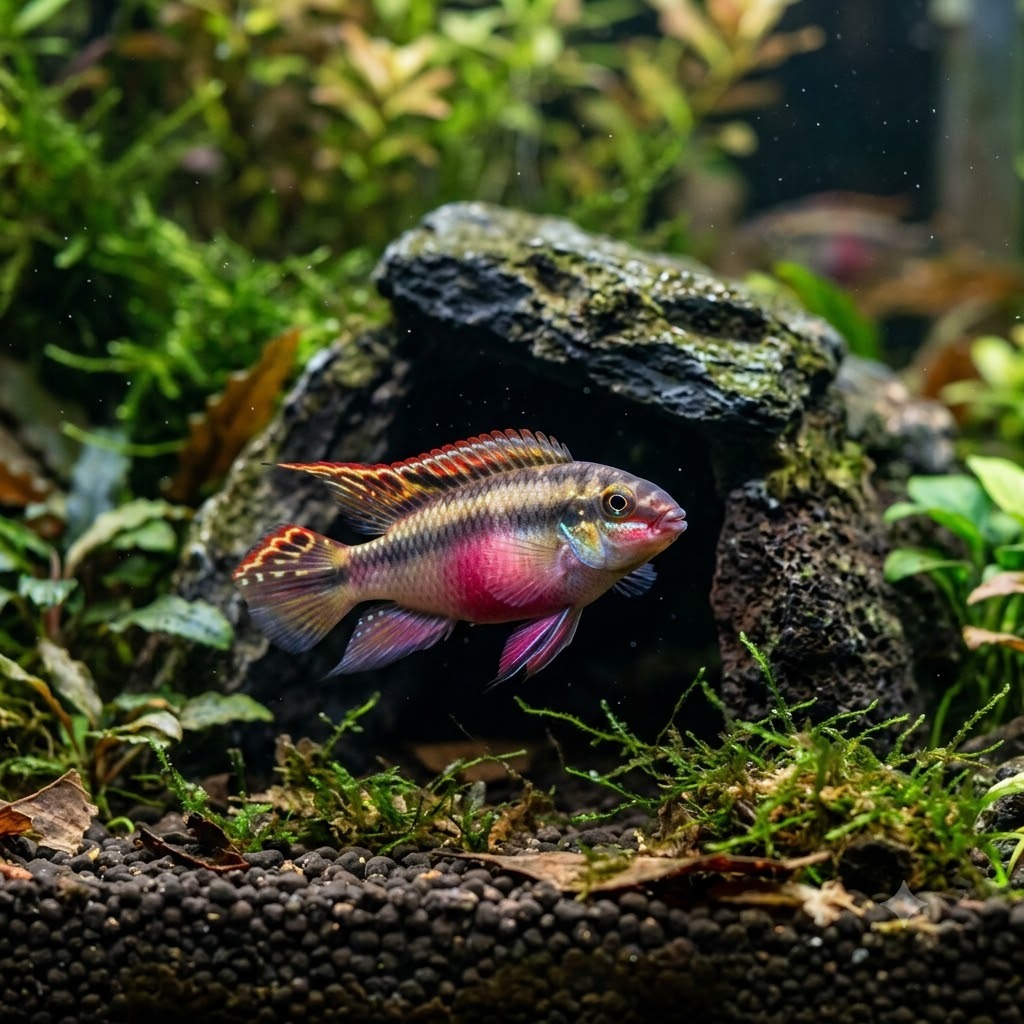
Kribensis are the perfect first cichlid: small, hardy West African dwarfs blazing with color, especially the cherry-red belly of a breeding female. They are easy to keep in a community tank and famously easy and rewarding to breed, forming devoted pairs that spawn in caves and fiercely guard their fry. Few fish offer so much color and behavior for so little trouble.
Is it right for you?
Kribensis suit a keeper who wants their first cichlid, or anyone after a colorful, characterful fish that breeds readily. They are hardy and peaceful for a cichlid, except when guarding fry.
System & Space
A planted community tank with caves or flowerpots to spawn in suits them; they appreciate hiding spots and defined territory. A modest tank is enough for a pair.
Water & Temperature
They like warm water and adapt to a range of hardness and pH, adding to their hardiness. Stable, clean water keeps them colorful and healthy.
Stocking & Feeding
Keep a pair and feed flakes, pellets and frozen or live treats; they are unfussy eaters. Provide a cave and they will pair off and spawn on their own.
Health & Care
Hardy and disease-resistant in clean water; the main issue is territorial aggression when breeding, so give tankmates room and cover. Otherwise very easy.
Harvest & Enjoying Them
Ornamental - the reward is a jewel-colored fish and the fascinating spectacle of cichlid parenting, as the pair leads and guards a cloud of fry.
Getting Started
Add a pair to a cycled, warm, planted tank with caves, and watch them establish territory, spawn and raise fry.
Common Mistakes
No caves to spawn in, crowding tankmates during breeding, and confusing their fry-guarding aggression for a sick fish are the usual mistakes.
FAQ
Easy to breed? Yes - one of the easiest cichlids, with devoted parents.
Peaceful? Mostly - except when guarding fry, when they defend their territory.