Raising Milkfish: A Staple Tropical Pond Fish
A guide to farming milkfish - a hardy, fast-growing tropical staple that grazes natural pond algae, tolerates fresh, brackish and salt water, and feeds much of Southeast Asia.
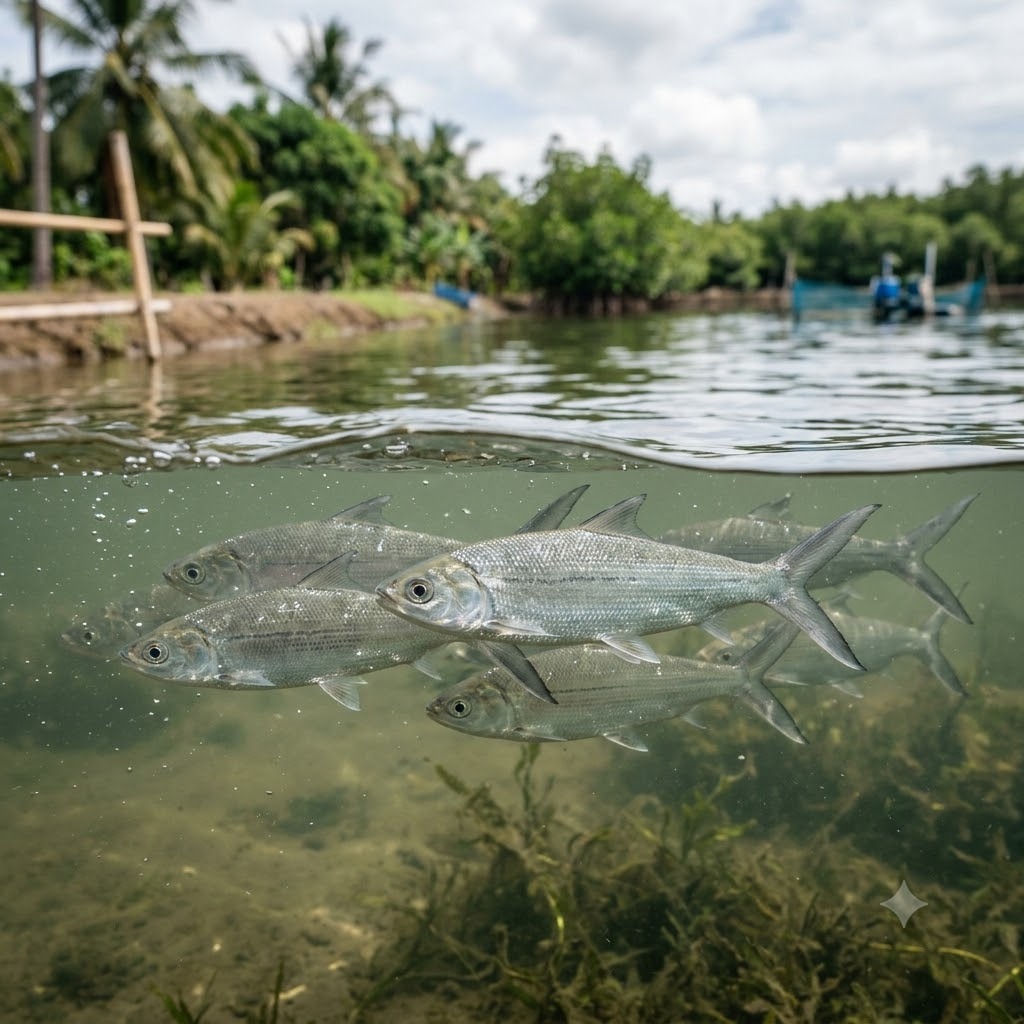
Milkfish, or bangus, is one of the most important aquaculture fish in the tropics, feeding much of Southeast Asia. It is hardy, fast-growing and remarkably adaptable, thriving in fresh, brackish or salt water, and it grazes the natural algae mat of a fertilized pond, so it can be grown with little added feed. For a warm-climate pond, it is a forgiving staple.
Is it right for you?
Milkfish suits a warm-climate grower with a pond who wants a hardy, low-input staple fish. Its adaptability and algae-grazing make it one of the easiest food fish where it stays warm.
System & Space
A fertilized brackish or freshwater grow-out pond is the classic system, growing the natural algae mat they graze; large tanks work too but ponds play to their strengths.
Water & Temperature
They are tropical and need warm water; they tolerate fresh, brackish and full seawater. Pond fertilization to grow algae is the key management task.
Stocking & Feeding
Stock fingerlings and let them graze the pond's natural 'lab-lab' algae mat, supplemented with feed for faster growth. Managing pond fertility is more important than heavy feeding.
Health & Care
Hardy and disease-resistant in a well-managed warm pond; the main tasks are maintaining algae growth and water quality. Avoid overcrowding and cold snaps.
Harvest & Enjoying Them
Milkfish reach market size in months, giving a rich, flavorful (if bony) white flesh that is a staple grilled, fried or deboned.
Getting Started
Set up a warm pond, fertilize to grow the algae mat, source fingerlings from a hatchery, and learn basic pond fertility management.
Common Mistakes
Neglecting pond fertility (their food supply), trying to grow them in cool climates, and overcrowding are the usual mistakes.
FAQ
Do they need much feed? Not necessarily - a fertile pond grows the algae they graze.
Cold climate ok? No - they are a tropical, warm-water fish.