How to Breed Mollies at Home
A beginner guide to raising mollies, the larger hardy livebearer that breeds freely and thrives in harder, mineral-rich water.
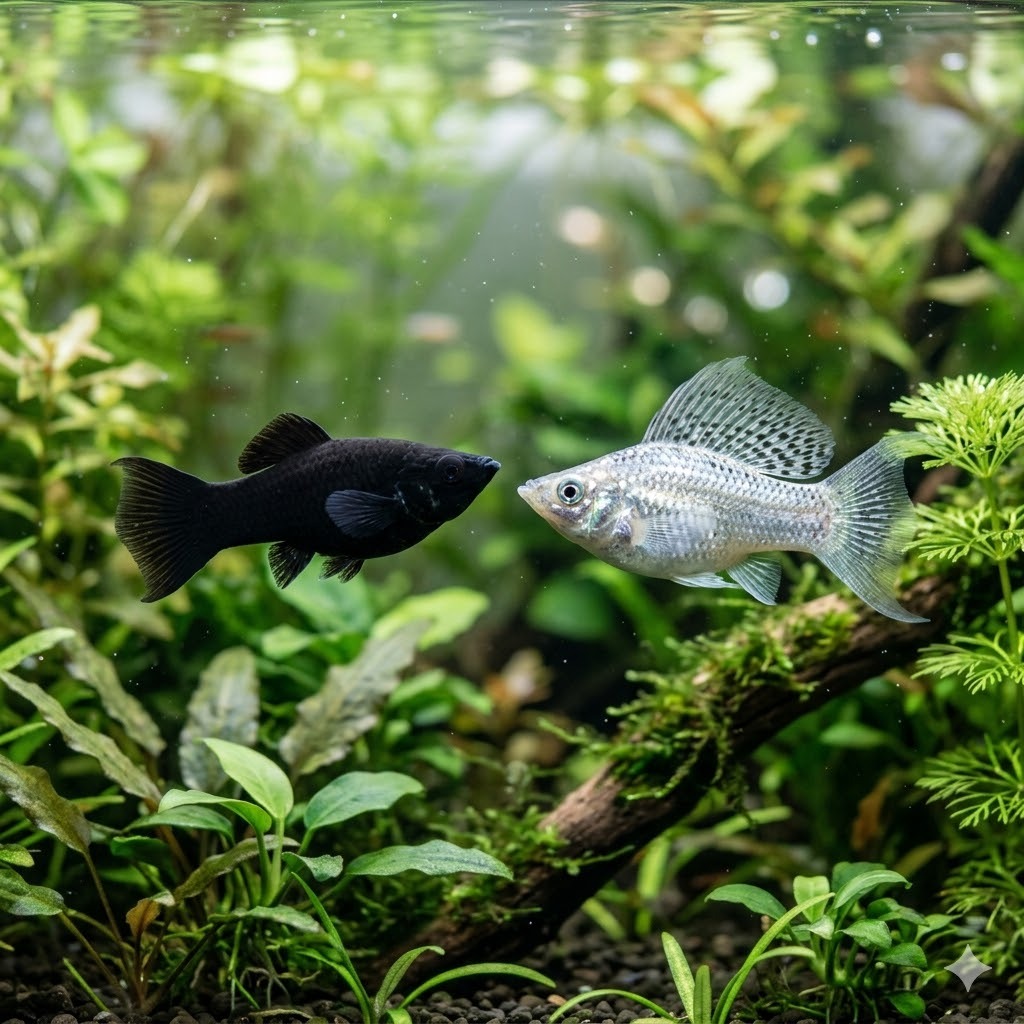
Mollies are the bigger, bolder cousins of the beginner livebearers, and they breed just as freely. Like platies and guppies they give birth to live, free-swimming young rather than laying eggs, and in comfortable conditions a female drops a batch of fry every month on her own. They come in striking forms - the velvety black molly, the tall-finned sailfin, and many colours in between - and their larger size gives them real presence in a tank. For a hardy, productive livebearer with a bit more substance, mollies are a fine choice.
The one thing that sets mollies apart from other easy livebearers is their taste in water. They come from mineral-rich, often slightly brackish habitats, and they genuinely do best in harder water with a good mineral content - many keepers add a little aquarium salt to keep them at their healthiest. Give them the harder, mineral-rich water they prefer and mollies are tough, active, and endlessly prolific. Keep them in soft, acidic water and they tend to sicken. Get the water right and the rest is easy.
Why raise mollies
Mollies earn their place for a few practical reasons.
- Free, steady breeding. As livebearers they reproduce without eggs to tend. A female gives birth to live, swimming fry roughly every month, so a small group keeps producing young on its own.
- Hardy and active. Mollies are tough, energetic fish that handle a range of conditions once the water suits them. Their size and boldness make them lively, visible tank residents.
- Striking varieties. From the classic black molly to the tall-finned sailfin and dalmatian forms, mollies offer real visual variety and interesting results when bred.
- Useful algae grazers. Mollies pick constantly at algae and biofilm, helping keep surfaces and plants tidy between meals.
Be realistic about the limits. Mollies are larger than platies or guppies, so they need more room, and they breed fast enough that overcrowding is a real risk without a plan for the surplus. They are fussier about water than the smaller livebearers, and they are not a food or income source. Keep them because they are a handsome, hardy, prolific fish that rewards getting the water right.
The tank and setup
Mollies are bigger and more active than the other easy livebearers, so they need more space. A tank of around eighty litres or more suits a small breeding group, and the tall-finned sailfin varieties in particular appreciate the extra room and water depth.
The core of a good molly tank is space, mineral-rich water, and plant cover.
- A roomy tank. Give mollies swimming space. They are active and grow larger than platies, so a cramped tank stresses them and fouls quickly. Sailfin mollies especially need a taller, larger tank to develop properly.
- Plenty of plant cover. Dense planting, especially floating plants near the surface, gives newborn fry somewhere to hide from the adults. Without cover, few fry survive.
- A gentle but effective filter. Mollies produce a fair amount of waste for their size, so good filtration matters, but keep the intake guarded or use a sponge filter so fry are not sucked in.
- A sensible sex ratio. Keep more females than males so no single female is constantly chased. Two or three females per male is a good guide.
Mature the tank before adding fish. A cycled tank with established plants gives stable water and the cover fry need.
Water and temperature
Water is where mollies differ most from other livebearers, and it is worth getting right. They come from hard, mineral-rich, often slightly brackish waters, and they are noticeably less tolerant of soft, acidic conditions than platies. Steady conditions matter, but with mollies the type of water matters too.
- Hard, mineral-rich water. Mollies do best in hard, alkaline water with a good mineral content. Soft, acidic water is a common cause of poor health and disease in mollies, so aim for harder water and add minerals if yours is soft.
- A little salt. Many keepers add a small amount of aquarium salt to a molly tank, which the fish tolerate well and which can help their health and resistance to disease. This is optional but often beneficial, especially in a species tank. Note that salt does not suit many other community fish, so consider tankmates before adding it.
- Temperature. Mollies like warm, stable water in the tropical range. A heater keeps things steady in cooler homes. Avoid rapid swings.
- Cycle the tank first. Mollies are sensitive to ammonia and nitrite. Run the nitrogen cycle before stocking so bacteria convert ammonia to nitrite and then to far less harmful nitrate, which you export with water changes. Our systems and water quality guide covers cycling if it is new to you.
Once cycled, keep it simple with small, regular water changes using dechlorinated, temperature-matched water of similar hardness, so the mineral content stays steady.
Feeding and daily care
Mollies are easy to feed and are enthusiastic grazers, spending much of their day picking algae and biofilm off surfaces. That grazing is part of their charm and helps keep the tank tidy.
- Feed a good-quality flake or pellet once or twice a day, offering only what they clear in a couple of minutes.
- Include plenty of vegetable matter - algae-based foods, blanched spinach, zucchini, or peas suit their grazing nature and keep their digestion healthy.
- Offer occasional live or frozen foods like brine shrimp or daphnia to condition breeding adults, but keep the diet largely plant-leaning.
- Feed lightly. Overfeeding fouls the water and, in mollies especially, is linked to digestive trouble.
Fry need small food often - powdered fry food, crushed flake, and baby brine shrimp several times a day grow them quickly.
Daily care is mostly observation. Watch that the fish are active, grazing, and swimming upright, and that fins and colour look healthy. Mollies in unsuitable soft water often show the first signs of trouble as clamped fins or shimmying, so treat that as a prompt to check the water's hardness and quality.
Breeding mollies
Mollies breed as freely as any livebearer, and in the right water they need no encouragement at all. Given males and females in comfortable, mineral-rich conditions, they reproduce continuously. Females store sperm and can produce several batches from a single mating, so a female may keep dropping fry for months.
A pregnant female grows noticeably rounder and develops a dark gravid spot near her rear underside. Roughly every month she gives birth to a batch of live, free-swimming fry - and because mollies are larger, broods can be big. The fry swim and feed from birth, with no egg or larval stage to manage.
As with all livebearers, the parents will eat the fry, so your job is to help the babies survive.
- Give floating cover. Dense floating plants and surface thickets give newborn fry places to hide from the adults. In a well-planted tank a good number survive on their own.
- Consider a breeding box or separate tank. For higher survival, move a heavily pregnant female to a separate planted tank or a breeding box shortly before she gives birth, then return her once the fry are dropped.
- Feed the fry small and often. Powdered food and baby brine shrimp several times a day grow them fast, and larger fry are safer from being eaten.
Because they breed so readily, managing numbers is the real task. Mollies produce large broods, so plan ahead for where the surplus goes before the tank overflows.
Common mistakes
Most trouble with mollies comes from a short list of avoidable errors.
- Soft, acidic water. The most common molly problem. Unlike platies, mollies genuinely struggle in soft water and sicken. Keep water hard and mineral-rich, and add minerals or a little salt if needed.
- Too small a tank. Mollies are larger and more active than other livebearers. A cramped tank stresses them and fouls fast, and sailfins need real space to thrive.
- No cover for fry. Without dense floating plants, adults eat nearly every baby. Plant heavily or use a breeding box.
- Overcrowding. Large, frequent broods overstock a tank quickly. Have a plan for the surplus rather than keeping every generation.
- Overfeeding and poor water. Excess food and neglected maintenance cause most disease. Feed lightly, favour vegetable foods, and keep up water changes.
A note on responsibility: mollies are not native to most places they are kept, and released aquarium fish can survive, breed, and become invasive in warm waters, harming native species. Never release surplus mollies, other fish, or plants into a natural pond, stream, or drain. Rehome extras to other hobbyists or a local shop instead.
Is molly right for you?
Mollies are the right choice for anyone who wants a hardy, prolific livebearer with more size and presence than a platy, and who can provide the harder, mineral-rich water they need. They suit you if you like their striking varieties, want steady monthly broods, and are happy to give them a roomy tank and the right water chemistry.
They are less suited to you if your water is naturally very soft and you are not willing to adjust it, or if you want a small, low-space fish - mollies need more room and firmer water than platies or guppies. And like all livebearers, they breed whether you plan to or not, so an unmanaged tank overcrowds fast.
If you can give them a spacious tank, keep the water hard and mineral-rich, and plan for the surplus, mollies will reward you with one of the most handsome and reliable breeding livebearers in the hobby - a tough, active fish that delivers a fresh batch of young month after month.