How to Keep and Breed Mystery Snails at Home
A beginner guide to keeping big, gentle mystery snails for algae cleanup, and raising or removing their above-water egg clutches at will.
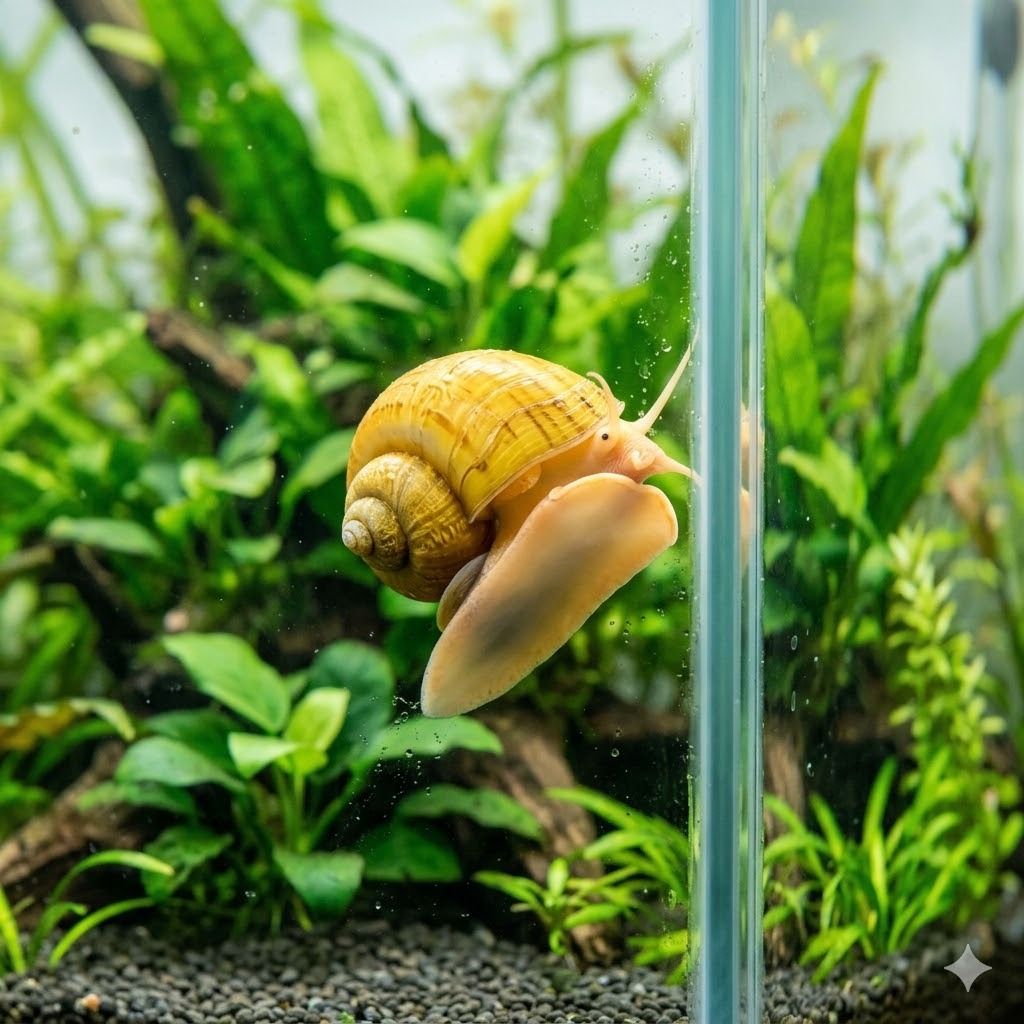
Mystery snails are the easiest first invertebrate for most people. They are big, gentle, and often brightly coloured, and they spend their days grazing algae and leftover food without touching healthy plants. They ask for little, tolerate a range of conditions, and add a surprising amount of character to a tank. If you have never kept an invertebrate before, a mystery snail is a forgiving place to start.
They also breed in a way that puts you fully in control. Mystery snails lay their eggs in a clutch above the waterline, not in the water, so you can choose to raise a clutch or simply remove it. That single quirk makes them one of the few tank animals whose breeding you can switch on or off at will. The catch is that same climbing habit means they need a firm lid and an air gap, or they will wander out of an open tank.
Why raise mystery snails
Mystery snails earn their keep as gentle, effective cleaners.
- Algae and scrap cleanup. They graze soft algae off glass, plants, and decor, and hoover up uneaten food and detritus. They keep a tank tidier without the aggression of some other cleaners.
- Plant-safe. Unlike some snails, mystery snails leave healthy plants alone, grazing only algae and decaying matter. You can keep them in a planted tank without worry.
- Character and colour. They come in golds, blues, ivories, and more, and they are genuinely fun to watch as they cruise the glass and use their long siphon to breathe at the surface.
- Controllable breeding. Because clutches are laid above water, you decide whether to raise the young or remove the eggs. No accidental population explosion.
Be realistic about the limits. Mystery snails are cleaners and pets, not bait or feeders, and they are not an income source. They are also fairly short-lived, typically a year or so, and a large snail produces a fair amount of waste, so they are not a substitute for good tank maintenance. Keep them because they are easy, pleasant, and useful.
The tank and setup
Mystery snails are large and produce noticeable waste, so give them a bit of room and good filtration.
- A reasonable tank size. They do best in a proper tank rather than a tiny bowl, since their waste load needs water volume and filtration to stay in check. A modest community tank suits them well.
- A firm lid and an air gap. This is the most important detail. Mystery snails climb, and they lay eggs above the water, so they need a few centimetres of air between the water surface and the lid, plus a secure cover. Without both, they will climb out and can dry out on the floor.
- Plants, moss, and hides. Live plants and moss give grazing surface and cover. Mystery snails will not damage healthy plants, so plant freely.
- Filtration and gentle flow. A sponge filter or a guarded intake works well. They are not delicate about flow, but gentle, stable conditions suit them best.
Add them to a mature tank with some algae and biofilm to graze. Like all invertebrates, they do poorly in a brand-new, unstable setup.
Water and stability
The core rule holds for snails too: stability matters more than exact numbers. Mystery snails tolerate a range of temperature and hardness, but they dislike sudden swings.
One point specific to snails: they need enough mineral hardness in the water to build and maintain their shells. In very soft water, shells can grow thin, pitted, or eroded. If your water is very soft, some added mineral content helps keep shells strong. Warm, stable water suits them best.
Two rules protect any invertebrate tank:
- Copper is dangerous. Copper is lethal to shrimp and can harm snails too. It hides in some fish medications and a few fertilisers, and can leach from old copper plumbing. Keep it away from the tank.
- Cycle the tank first. Snails cannot survive ammonia or nitrite spikes, and a big snail adds a real waste load. Establish the nitrogen cycle before stocking, so bacteria convert ammonia to nitrite and then to far less harmful nitrate, which you remove with water changes. Our systems and water quality guide covers cycling in detail.
Keep up with small, regular water changes using dechlorinated, temperature-matched water. Because mystery snails produce more waste than tiny shrimp, staying on top of maintenance matters more here.
Feeding and daily care
Mystery snails are grazers and scavengers, and in a mature tank they find much of their own food. Still, being large, they often need a little extra.
- Offer blanched vegetables such as zucchini, spinach, or cucumber, plus the occasional algae wafer or sinking pellet.
- Feed small amounts and remove anything not eaten within a day.
- In a tank with plenty of algae and biofilm, they will supplement heavily on their own.
A well-fed snail has a smooth, growing shell; a hungry one may show a thin or eroded new shell edge, so a little supplementary feeding keeps them healthy. As with any tank, avoid overfeeding, which fouls the water.
Daily care is simple. Check that the snail is active and grazing, that its shell looks healthy, and that it has not parked itself out of the water for too long. An occasionally still or floating snail is usually just resting or trapping air in its shell, which is normal.
Breeding and raising the young
Mystery snails breed in one of the most convenient ways in the hobby, and the whole process is under your control.
You need a male and a female - they are not self-fertilising - so a small group improves your chances. When a female is ready to lay, she climbs above the waterline and deposits a firm, pinkish clutch of eggs on the glass, the lid, or the underside of the cover, in the air gap. This is exactly why the air space above the water matters: without it, she has nowhere to lay.
From there, you choose.
- To raise the young: leave the clutch in place, keeping it warm and slightly humid but not submerged. After a couple of weeks, tiny snails hatch and drop into the water below, where they graze biofilm and grow. Make sure filter intakes are guarded so the babies are not drawn in.
- To prevent breeding: simply remove and discard the clutch before it hatches. Because it is above water and easy to see, this is straightforward and lets you avoid an unwanted population.
This on-off control is a real advantage. You are never surprised by a population boom, and you can decide clutch by clutch whether you want more snails. If you do raise them, expect to end up with more snails than you planned, so have a plan to rehome the surplus.
Common mistakes
Most snail problems are easy to avoid.
- No lid or no air gap. The classic mystery-snail mistake. They climb out and can dry out, and without an air space they cannot lay eggs. Use a firm lid with a few centimetres of air above the water.
- Copper exposure. Harmful to snails and lethal to any shrimp tankmates. Keep it away.
- Very soft water. Leads to thin, eroded shells. Ensure enough mineral hardness for shell health.
- An uncycled or overloaded tank. A big snail adds waste; adding one to a new or crowded tank causes ammonia problems. Cycle first and keep up with water changes.
- Overfeeding. Fouls the water. Feed lightly and remove leftovers.
A responsibility note: mystery snails are non-native in many regions and can be invasive where they establish. Never release snails, eggs, or plants into natural waterways. Rehome surplus snails to other hobbyists and dispose of unwanted clutches in the bin, not outdoors.
Is mystery snail right for you?
Mystery snails are right for you if you want an easy, gentle, plant-safe cleaner with real character, and if you are happy to fit a secure lid with an air gap above the water. They are an excellent first invertebrate: forgiving of beginners, controllable in their breeding, and genuinely enjoyable to watch.
They are less suited to you if you want bait or feeders, a self-multiplying colony you never manage, or a low-waste animal for a tiny unfiltered bowl. Their size means more waste and a need for proper filtration and maintenance.
If you want a hardy, colourful, low-effort cleaner whose breeding you can turn on or off at will, the mystery snail is one of the best choices in the hobby. Just remember the lid and the air gap, keep copper out, and give the water enough hardness for a strong shell.