How to Keep Nerite Snails at Home
A beginner guide to keeping nerite snails, the best algae eaters in the hobby, for a spotless tank that will never be overrun.
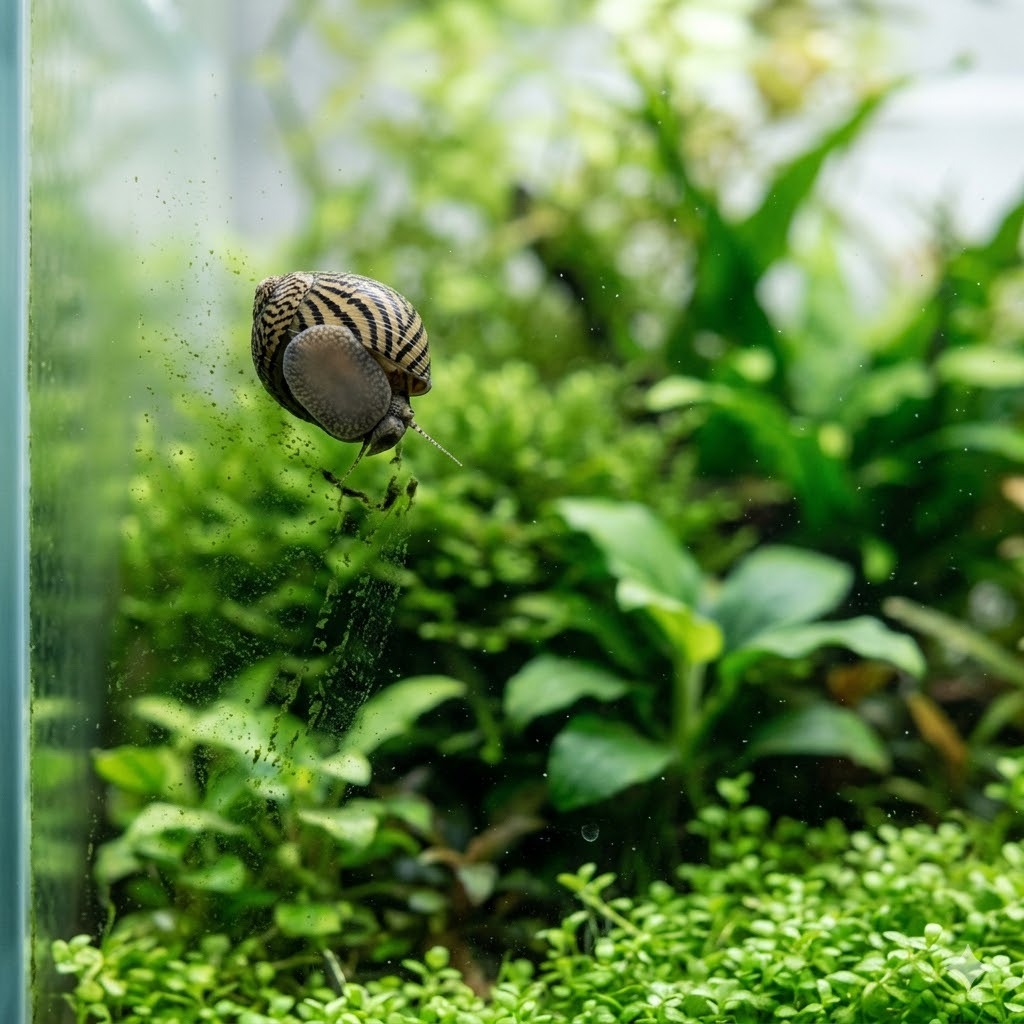
If you want the single best algae eater you can put in a freshwater tank, nerite snails are the answer. These small, hard-shelled snails work over glass, rocks, plants, and decor with a thoroughness no fish can match, scraping off the tough films of green and brown algae that everything else ignores. Add a couple to a mature tank and within days you will see clean tracks appearing across the glass where they have grazed.
The best part is the honesty of it. Unlike most snails, nerites will never overrun your tank, no matter how well you feed them. They breed only in brackish or salt water, so even though the females happily lay eggs in freshwater, those eggs simply cannot hatch. You get a peaceful, hardworking algae eater that stays at exactly the number you added, with no population booms to manage. The only quirk to accept is the small white eggs they leave behind - harmless, but there to stay.
Why keep nerite snails
Nerite snails earn their reputation for a few clear reasons.
- Unmatched algae control. They eat green spot algae, brown diatoms, and soft film off glass, hardscape, and even plant leaves. They handle the tough, stuck-on algae that shrimp and most fish leave behind.
- No population explosion. This is the headline. Because their larvae need brackish water to develop, nerites cannot breed in a freshwater tank. Two snails stay two snails. You get all the cleanup with none of the pest-snail worry.
- Peaceful and plant-safe. They ignore healthy plants, do not bother fish or shrimp, and simply mind their own business grazing surfaces.
- Hardy and long-lived. Once settled in stable water, nerites are tough and can live for a year or more, quietly cleaning the whole time.
Be realistic about the limits. Nerites are pure cleanup animals, not a breeding project or a food source. You buy or trade for them, and they do a job - they will not multiply into a colony for you. And they can be escape artists, so a lid matters. Keep them because they are the most effective, most trouble-free algae eater in the hobby.
The tank and setup
Nerite snails are easy to house because their needs are simple: a cycled, stable tank with some algae to graze and a secure lid on top.
The core of a good nerite tank is a mature surface and a bit of calcium.
- An established tank. Nerites live on algae and biofilm, so they do best in a tank that has been running long enough to grow some. Adding them to a brand-new, spotless tank leaves them with nothing to eat.
- Grazing surfaces. Glass, smooth rock, driftwood, and broad-leaved plants all give them room to work. The more mature surface a tank has, the more they thrive.
- A secure lid. Nerites climb, and they will happily wander above the waterline and out of an open tank. A lid or at least a good rim gap keeps them where they belong.
- Calcium in the water. Like all snails they build their shells from calcium, so moderately hard water keeps shells smooth and thick. In soft water, add a cuttlebone or mineral source to prevent the shell from eroding.
Because they do not breed in freshwater, you simply add the number you want. A common guide is roughly one nerite per ten to twenty litres, adjusted for how much algae the tank grows - too many snails in a clean tank will run short of food.
Water and stability
Nerite snails are hardy and adapt to a wide range of freshwater conditions, but like most tank life they dislike sudden change. Stable, cycled water at ordinary tropical room temperature suits them, across a fairly broad range of hardness and pH.
A few points are worth respecting.
- Cycle the tank first. Nerites cannot survive ammonia or nitrite spikes. Run the nitrogen cycle before adding them so bacteria convert ammonia to nitrite and then to far less harmful nitrate, which you export with water changes. Our systems and water quality guide covers cycling if it is new to you.
- Acclimatise slowly. Nerites can be sensitive to abrupt shifts in water when first introduced. Drip-acclimatise or add them gradually rather than dumping them straight in.
- Keep some hardness. Soft, acidic water erodes their shells over time, showing up as a pitted, worn-looking tip. Add calcium in soft water.
- Avoid copper. Copper is toxic to snails and shrimp. It hides in some medications and fertilisers, so check labels before dosing an invertebrate tank.
Once settled, keep it simple with small, regular water changes using dechlorinated, temperature-matched water. Nerites reward steady conditions with a long, productive life.
Feeding and daily care
In most tanks you never feed nerite snails directly - the algae and biofilm growing on every surface is their food. A tank with a healthy film of algae keeps a small group of nerites well fed on its own.
The honest problem is usually the opposite of overfeeding. Nerites are so effective that they can clean a tank faster than it grows new algae, and then they can slowly starve.
- Watch that there is enough algae to go around. If the glass and rocks are spotless and the snails look inactive, they may need supplementing.
- Offer algae wafers, a blanched slice of zucchini or spinach, or leave a rock in a sunny spot to grow algae as a top-up food.
- Keep a calcium source such as cuttlebone in soft water so shells stay strong.
Daily care is mostly observation. Watch that snails are active and moving, that shells look smooth rather than eroded, and that you have not accidentally added more nerites than the tank can feed. A nerite parked motionless for days, or one that has flipped and cannot right itself, needs a check - gently turn a stuck snail back over so it can move on.
Raising and cleanup
There is no breeding to manage with nerites in freshwater, and that is exactly why they are so popular - but there is one honest quirk to accept: the eggs.
Female nerites lay small, hard, white egg capsules dotted on glass, rocks, driftwood, and decor. These are completely harmless. The catch is that in freshwater the larvae inside cannot develop, so the eggs never hatch. They simply sit there as little white specks until they slowly wear away or you scrape them off.
- The eggs will not hatch. Nerite larvae need brackish or salt water to survive, so your freshwater tank will never produce baby nerites. Two snails stay two snails.
- Eggs are cosmetic only. If the white dots bother you, scrape them off the glass with a razor or algae scraper. On rougher surfaces like driftwood they are harder to remove and easiest to simply ignore.
- They tend to increase when females feel settled. Well-fed, comfortable females lay more. It is a sign of a healthy snail, not a problem to fix.
If you genuinely wanted to breed nerites you would need a dedicated brackish larval setup, which is well beyond a normal freshwater tank and rarely worth it. For almost everyone, nerites are a buy-once cleanup animal, and the tidy trade-off is a few harmless white eggs in exchange for a tank that never gets overrun with snails.
Common mistakes
Most trouble with nerites comes from a short list of avoidable errors.
- Adding too many. Overloading a tank with nerites leaves them short of algae and slowly starving. Stock to how much algae the tank actually grows.
- A spotless, new tank. With no algae to graze, freshly added nerites have nothing to eat. Let the tank mature and grow some film first.
- No lid. Nerites climb out. An open tank loses them to the floor, where they dry up. Keep a lid on.
- Soft water and eroded shells. Without calcium, shells pit and wear. Add a mineral source in soft water.
- Copper exposure and rough acclimation. Copper is lethal, and abrupt water changes stress newly added snails. Read labels and acclimatise slowly.
A note on responsibility: nerite snails are not native to most places they are kept, and although they cannot breed in your freshwater tank, released aquarium animals and plants can still carry hitchhikers and disease into wild waters. Never tip a tank, its plants, or unwanted snails into a natural waterway or drain. Rehome surplus to other hobbyists instead.
Is nerite snail right for you?
Nerite snails are the right choice for almost anyone who wants a spotless tank without the worry of a snail population getting out of hand. They suit you if you value serious algae control from a peaceful, plant-safe animal, and if you can accept a few harmless white eggs as the trade-off for a snail that will never overrun your tank.
They are less suited to you if you wanted a breeding colony or a source of live food - nerites do neither in freshwater. And they are not a fix for a tank with no algae, where they will simply go hungry.
If you can keep a lid on the tank, hold a little calcium in the water, and stock them to match how much algae you grow, nerite snails will reward you with the cleanest glass and hardscape in the hobby - the best algae eater there is, with none of the pest-snail baggage.