How to Breed Platies at Home
A beginner guide to raising platies, the easy, peaceful livebearer that drops young every month and makes the perfect first breeding project.
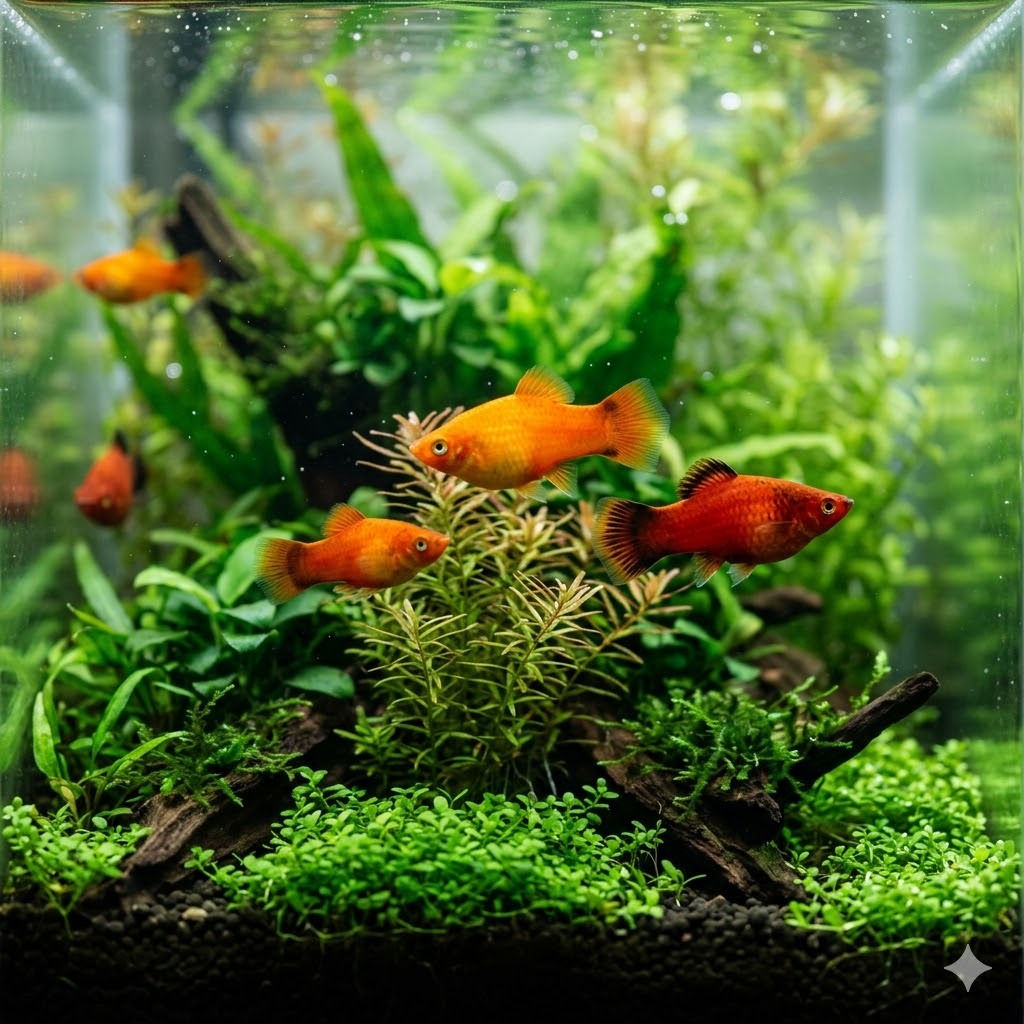
If you want to breed fish and you have never done it before, platies are the place to start. These small, cheerful livebearers give birth to live, free-swimming young rather than laying eggs, and in a comfortable tank a female drops a batch of fry roughly every month with no help from you at all. They come in a rainbow of colours, get along with almost everything, and forgive the kind of beginner mistakes that would sink a fussier fish. For a first breeding success, nothing is easier.
The one thing to understand up front is that platies eat their own fry. It is not cruelty, just instinct - to the parents, tiny fry look like food. That single fact shapes how you breed them: your job is not to make them reproduce, which happens on its own, but to give the babies somewhere to hide so enough of them survive. Get that right and a small group of platies will happily populate a tank for you month after month.
Why raise platies
Platies earn their place as a first breeder for a few practical reasons.
- Effortless breeding. They are livebearers, so there are no eggs to fertilise or protect. A female simply gives birth to fully formed, swimming fry, and she will do it again and again in good conditions.
- Peaceful and hardy. Platies are calm community fish that rarely bother tankmates, and they tolerate a wide range of conditions. They shrug off beginner errors that would kill more delicate species.
- Colour and variety. Reds, oranges, yellows, blues, and patterned varieties like wagtails and mickey mouse platies mean a colourful tank and interesting results when you breed them.
- Low cost and space. A modest tank, a gentle filter, and some plants are all it takes. They are inexpensive and easy to source.
Be realistic about the limits. Platies breed so readily that an unmanaged tank can quickly become overcrowded, so you need a plan for the surplus. They are not a serious food or income source. Keep them because they are a genuinely rewarding, low-stress introduction to breeding fish, and because a tank of colourful platies is simply pleasant to watch.
The tank and setup
Platies are undemanding, which is exactly why they make such a good starter fish. A tank of around forty to eighty litres comfortably houses a small breeding group with room for fry to grow.
The core of a good platy tank is space, plants, and gentle filtration.
- A community-sized tank. Give them room. Platies are active swimmers and a bigger tank stays more stable and handles a growing population better than a cramped one.
- Plenty of plant cover. This is the most important feature for breeding. Dense planting - especially floating plants and thickets near the surface - gives newborn fry somewhere to hide from the adults. Without cover, few fry survive.
- A gentle filter. A sponge filter or a filter with a guarded intake keeps the water clean without sucking up fry. Strong flow stresses the fish and endangers babies.
- A sensible sex ratio. Keep more females than males - a common guide is two or three females per male - so no single female is constantly harassed by the males.
Mature the tank before adding fish. A cycled tank with established plants gives you stable water and the cover fry need from day one.
Water and temperature
Platies are wonderfully tolerant, which is a big part of their beginner appeal. They accept a broad range of hardness and pH, and they do not demand precise numbers. As with most fish, steady conditions matter more than chasing an exact ideal.
They do prefer water on the harder side and a comfortable tropical temperature.
- Temperature. Platies like warm, stable water in the tropical range. A small heater keeps things steady in cooler homes. Avoid rapid temperature swings, which stress the fish and can trigger disease.
- Hardness. Like most livebearers, platies do best in moderately hard, slightly alkaline water. Very soft, acidic water is less suited to them, though they are adaptable.
- Cycle the tank first. Platies cannot survive ammonia or nitrite spikes. Run the nitrogen cycle before stocking so bacteria convert ammonia to nitrite and then to far less harmful nitrate, which you export with water changes. Our systems and water quality guide covers cycling if it is new to you.
Once cycled, keep it simple with small, regular water changes using dechlorinated, temperature-matched water. Platies are forgiving, but clean, steady water keeps them healthy and breeding.
Feeding and daily care
Platies are easy to feed because they eat almost anything and are natural grazers. In a planted tank they nibble algae and biofilm between meals, which helps keep surfaces tidy.
- Feed a good-quality flake or small pellet once or twice a day, offering only what they clear in a couple of minutes.
- Vary the menu with occasional blanched vegetables and small live or frozen foods like brine shrimp or daphnia, which condition breeding adults and colour them up.
- Feed lightly. Overfeeding fouls the water and is a far bigger risk than underfeeding, since platies happily graze algae on their own.
Fry need feeding too, and they need small food. Finely crushed flake, powdered fry food, or freshly hatched brine shrimp suit their tiny mouths. Feed them small amounts several times a day and they grow quickly.
Daily care is mostly observation. Watch that the fish are active, eating well, and swimming normally, and that pregnant females look healthy. A quick daily look catches problems early, from a bullied fish to the first signs of disease.
Breeding platies
This is where platies shine, because they do almost all the work themselves. Given a male and females in comfortable conditions, they breed continuously. Females store sperm and can produce several batches of fry from a single mating, so a female bought already pregnant will often keep dropping young for months.
A pregnant female grows visibly rounder and develops a dark "gravid spot" near her rear underside. Roughly every month she gives birth to a batch of live, free-swimming fry - anywhere from a handful to dozens. There is no egg stage and no larval drifting to manage; the fry swim and feed from the moment they are born.
Your only real job is to keep the fry from being eaten.
- Give floating cover. This is the key. Dense floating plants and thickets near the surface give newborn fry somewhere to hide from hungry adults, including their own mother. In a well-planted tank, a good number survive naturally.
- Consider a breeding box or separate tank. For maximum survival, move a heavily pregnant female to a separate planted tank or a breeding box just before she gives birth, then return her once the fry are dropped so she cannot eat them.
- Feed the fry small, often. Powdered food and baby brine shrimp several times a day grow them fast, and bigger fry are safer from being eaten.
Because they breed so freely, the real skill is managing numbers, not encouraging them. Plan ahead for where surplus young will go before the tank overflows.
Common mistakes
Most trouble with platies comes from a short list of avoidable errors.
- No hiding places for fry. Without dense plant cover, the adults eat nearly every baby. Plant heavily or use a breeding box.
- Overcrowding. Platies breed so fast that an unmanaged tank quickly overstocks, fouling the water. Have a plan for the surplus and do not keep every generation.
- Too many males. A high ratio of males relentlessly harasses females. Keep more females than males to spread the attention.
- Overfeeding and dirty water. Excess food and poor maintenance cause most disease. Feed lightly and keep up regular water changes.
- Ignoring temperature swings. Sudden drops stress platies and invite disease. Use a heater and keep conditions steady.
A note on responsibility: platies are not native to most places they are kept, and released aquarium fish can survive, breed, and become invasive in warm waters, outcompeting native species. Never release surplus platies, other fish, or plants into a natural pond, stream, or drain. Rehome extras to other hobbyists or a local shop instead.
Is platy right for you?
Platies are the right first breeding fish for almost anyone. They suit you if you want a colourful, peaceful, hardy community fish that will reward a little patience with a steady supply of live young, and if you are happy to plant the tank well and plan for where the babies go.
They are less suited to you if you want a tank where nothing multiplies, or if you cannot rehome surplus fish - platies breed whether you intend them to or not, so an unmanaged tank overcrowds fast. And they are not a food or income source, just a pleasant hobby.
If you can cycle a tank, add plenty of floating cover, and think ahead about the surplus, platies will give you one of the easiest and most satisfying breeding successes in the whole hobby - living proof that you can raise fish, delivered a fresh batch every month.