Keeping Rabbit Snails: A Charming Slow-Breeding Cleaner
A guide to keeping rabbit snails - large, charming freshwater snails from Sulawesi that clean algae and detritus, breed very slowly, and won't overrun the tank like other snails.
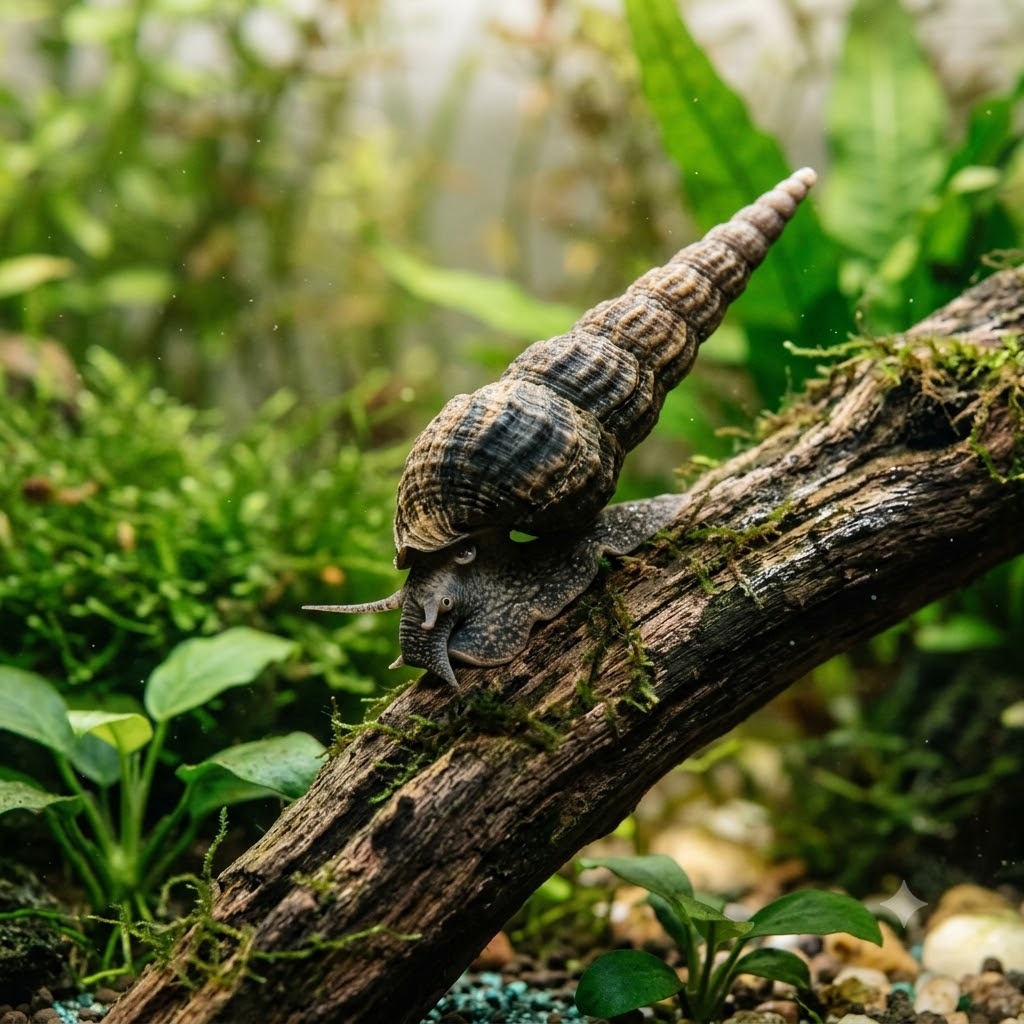
Rabbit snails are the gentle giants of the snail world - large freshwater snails from Sulawesi with long spired shells and endearing, rabbit-like faces. They graze algae and detritus like other cleanup snails, but unlike most, they breed extremely slowly, bearing just a young or two at a time, so they never explode into the plagues that give aquarium snails a bad name.
Is it right for you?
Rabbit snails suit anyone who wants an attractive, useful cleanup snail without a population explosion. They are peaceful, hardy and slow to breed, ideal for planted community tanks.
System & Space
A stable planted tank with warm, hard water and a fine substrate to burrow in suits them; they do well in nano and community tanks alike.
Water & Temperature
They prefer warm water and harder, alkaline conditions (which keep their shells strong); soft, acidic water erodes the shell. Stable parameters keep them thriving.
Stocking & Feeding
They graze algae, biofilm and detritus, supplemented with sinking foods and blanched vegetables; a mature planted tank largely feeds them. They breed slowly on their own.
Health & Care
Hardy and undemanding as long as the water is hard enough to protect their shells; soft water and copper (in some medications) are the main hazards.
Harvest & Enjoying Them
Ornamental and functional - the reward is a peaceful, attractive cleaner that controls algae and detritus without overrunning the tank.
Getting Started
Add a few to a mature planted tank with hard water and a soft substrate, and let them graze and slowly reproduce.
Common Mistakes
Soft, acidic water (shell erosion), copper-based medications, and expecting fast breeding are the main mistakes.
FAQ
Will they overrun my tank? No - they breed very slowly, unlike most snails.
Do they eat plants? They prefer algae and detritus, generally leaving healthy plants alone.