How to Raise Ramshorn Snails at Home
A beginner guide to keeping a self-sustaining colony of ramshorn snails as free tank cleanup, live food, and a low-effort first invertebrate.
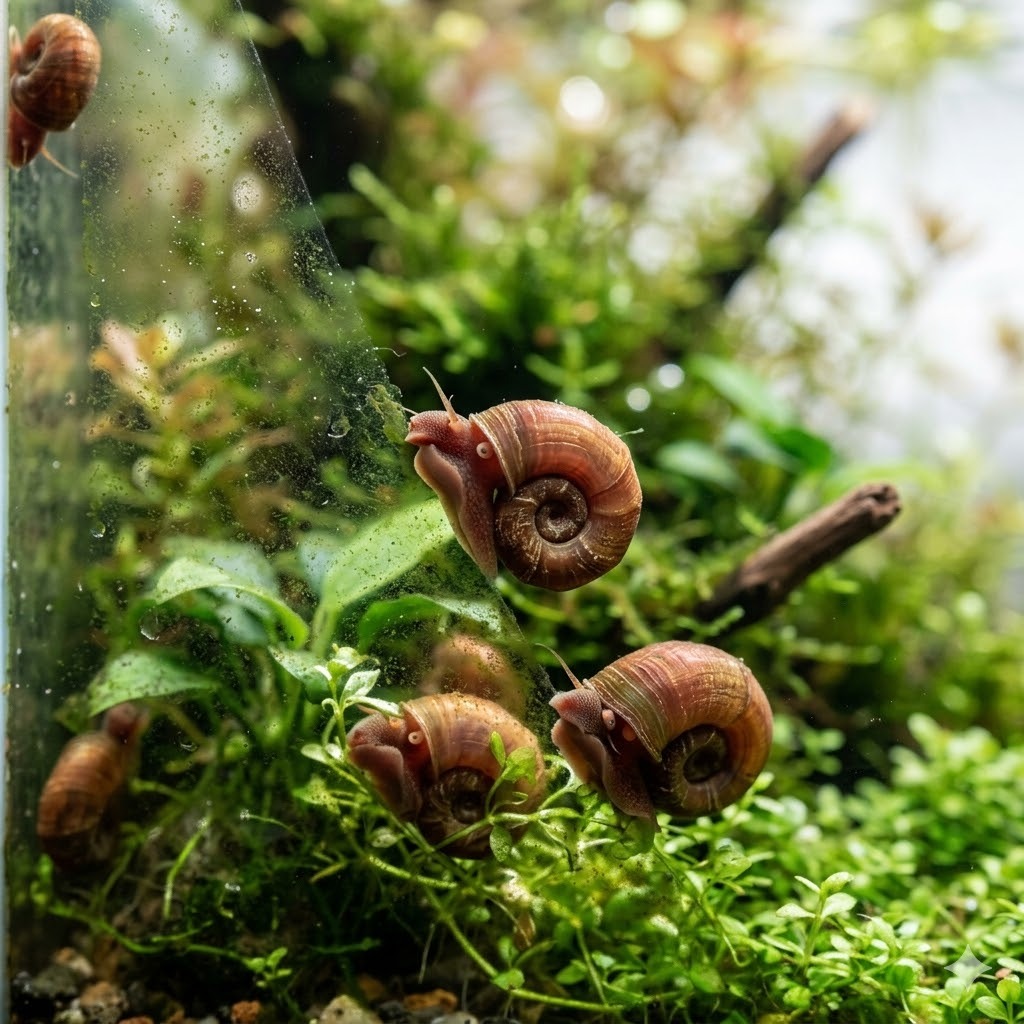
If you want a living creature that costs nothing, breeds on its own, and works around the clock cleaning your tank, ramshorn snails are hard to beat. These little flat-coiled snails glide over glass, plants, and substrate all day, grazing algae, scraping biofilm, and mopping up food your fish miss. Drop a few into a stable tank and you will soon have a self-renewing colony that tidies surfaces, breaks down waste, and doubles as live food for larger fish.
The honest catch is that "breeds on its own" cuts both ways. Ramshorns multiply as fast as you feed them, and a tank that gets overfed can go from a handful of snails to a wall of them in a few weeks. That is not a disease or a plague to panic over - it is simply a signal that there is too much food around. Control the food and you control the snails. Get that one idea right and ramshorns become one of the most useful, least demanding animals you can keep.
Why raise ramshorn snails
Ramshorn snails earn their keep for a few practical reasons.
- Cleanup. They graze soft algae, biofilm, and uneaten food across every surface, including the glass and the underside of leaves that fish and shrimp ignore. In a planted tank they keep things visibly tidier.
- Waste breakdown. By eating leftover food and decaying plant matter, they help process waste before it fouls the water. They are part of the tank's cleanup crew, not a burden on it.
- A living colony and free live food. Because they breed readily, a starter group becomes dozens within a couple of months. Surplus snails are excellent live or crushed food for pufferfish, loaches, cichlids, and many pond fish.
- Almost no cost or space. They need no special gear. Any settled tank with a bit of algae will support them, and they cost nothing once you have a few.
Be realistic about the limits. Ramshorns are soft-bodied and easily crushed, so they will not survive with dedicated snail-eaters unless that is the point. And while a colony is genuinely useful, it is a background helper, not a headline pet. Keep them because they quietly do useful work and give you free live food along the way.
The tank and setup
Ramshorn snails are undemanding, which is much of their appeal. They do well in almost any freshwater tank that is cycled and not too cold, from a nano bowl to a large community tank.
The core of a good ramshorn tank is stable water and a bit of surface to graze.
- An established tank. A tank that has been running for a few weeks has the algae and biofilm ramshorns feed on. They struggle to colonise a brand-new, sterile setup because there is nothing to graze yet.
- Plants and hardscape. Live plants, driftwood, and rocks give more grazing surface and more places for a colony to spread. Ramshorns rarely damage healthy plants and will mostly work over decaying leaves and algae film.
- Gentle filtration. Any filter works, but a sponge filter is friendly to the smallest snails and keeps flow gentle. Snails are not fussy about current.
- Calcium in the water. Snails build their shells from calcium, so water that is at least moderately hard keeps shells thick and smooth. In very soft water, shells can grow thin and pitted. A cuttlebone or a piece of limestone rock helps if your water is soft.
You rarely need to add ramshorns on purpose - they famously arrive as hitchhikers on new plants. If you want them deliberately, a few from another hobbyist's tank will start a colony within weeks.
Water and stability
Ramshorn snails tolerate a wide range of conditions, which is why they turn up almost everywhere. Stable, cycled water at ordinary room temperature suits them, and they handle a fair spread of hardness and pH. As with most tank life, steady conditions matter more than hitting exact numbers.
They do have a few real requirements worth respecting.
- Cycle the tank first. Like any tank animal, snails cannot survive ammonia or nitrite spikes. Run the nitrogen cycle before relying on a colony so beneficial bacteria convert ammonia to nitrite and then to far less harmful nitrate, which you export with water changes. Our systems and water quality guide covers cycling if it is new to you.
- Keep some hardness. Soft, acidic water slowly dissolves snail shells, leaving them thin and eroded at the tip of the coil. If your water is very soft, add a mineral source to protect the shells.
- Avoid copper. Copper is toxic to snails and shrimp alike. It hides in some fish medications and a few fertilisers. Check labels before dosing a tank that holds invertebrates.
Once cycled, keep things simple. Small, regular water changes with dechlorinated, temperature-matched water keep conditions steady. Ramshorns are forgiving, but they still prefer a tank that does not swing wildly from week to week.
Feeding and daily care
Here is the single most important thing to understand: you almost never feed ramshorn snails directly. In a normal tank they live entirely on algae, biofilm, leftover fish food, and decaying plant matter. The population you end up with is set by how much spare food is floating around.
- If you want fewer snails, feed the tank less. With little surplus food, the colony stops expanding and settles at a small, useful size.
- If you want more snails - say, to farm them as live food - simply feed more, or drop in a piece of blanched vegetable like zucchini or spinach and watch them gather.
- A calcium source such as cuttlebone keeps shells strong in soft water and is the only "supplement" they usually need.
This makes population control refreshingly simple. There is no need for chemicals or snail traps. If numbers climb higher than you like, cut back the food, scoop out the excess snails, and the colony shrinks to match. A tank overrun with ramshorns is almost always a tank that is being overfed - fix the feeding and the snails sort themselves out.
Daily care is mostly observation. Watch that snails are active and gliding, that shells look smooth rather than pitted, and that the water stays clear. Snails clustered at the surface gasping can signal poor water quality, so treat that as a prompt to test and do a water change.
Breeding ramshorn snails
Breeding ramshorns takes no effort at all - the challenge is usually slowing them down, not encouraging them. They are hermaphrodites, so any two snails can reproduce, and a single snail may even produce young alone. In warm, well-fed water they lay small, clear jelly-like clutches of eggs stuck to glass, plants, and decor. The eggs hatch into miniature snails in a couple of weeks, and those grow up to breed within a month or two.
Your only real job is to manage the pace.
- Feed to set the population. As above, food is the throttle. A lean tank stays at a modest, useful colony; a well-fed one booms.
- Harvest the surplus. If you keep them as live food, simply scoop or net snails as you need them. Crushing a few against the glass also draws fish that pick them off.
- Add snail-eaters if needed. Assassin snails, loaches, and pufferfish will keep numbers in check naturally, though that turns your colony into a food source rather than a stable population.
Because they breed so easily, ramshorns are a great confidence-builder for anyone new to breeding tank life. You genuinely cannot fail to get young - the skill is in choosing how many you want.
Common mistakes
Most trouble with ramshorns comes from a short list of avoidable errors.
- Overfeeding the tank. The number one cause of a "snail explosion." Leftover food fuels breeding. Feed less and the colony shrinks on its own.
- Panicking about numbers. A crowd of snails is a symptom, not a plague. There is no need to nuke the tank with chemicals - just cut feeding and manually remove the excess.
- Soft water and thin shells. Without enough calcium, shells erode and snails weaken. Add a mineral source in soft water.
- Copper exposure. Some medications and fertilisers are lethal to snails. Read labels before dosing an invertebrate tank.
- An uncycled tank. Adding snails before the tank is cycled and grown in exposes them to ammonia and leaves them nothing to graze. Let the tank mature first.
A note on responsibility: ramshorn snails are not native to many places they are kept, and released aquarium snails, plants, or shrimp can become invasive and hard to remove from a waterway. Never tip a tank, its plants, or unwanted snails into a natural pond, stream, or drain. Rehome surplus to other hobbyists or use them as fish food instead.
Is ramshorn snail right for you?
Ramshorn snails are the right choice for almost anyone who wants free, self-renewing tank cleanup with no ongoing cost. They suit you if you like the idea of a living cleanup crew that also produces live food, and if you are comfortable managing a population by adjusting how much you feed rather than expecting a fixed, hands-off number.
They are less suited to you if you want a tidy, unchanging display where nothing ever multiplies, or if the thought of scooping out excess snails now and then bothers you. Ramshorns are a colony, not a single pet, and they respond to how you run the tank.
If you can accept that food controls the population and keep a little calcium in the water, ramshorn snails will reward you with one of the most useful, lowest-effort creatures in the whole hobby - a tireless little cleanup crew that costs nothing and feeds your fish for free.