Warmouth
The warmouth is a chunky, big-mouthed member of the sunfish family that fishes more like a tiny bass than a typical panfish.
🗓️ Last reviewed: July 2026
Overview
The warmouth is a chunky, big-mouthed member of the sunfish family that fishes more like a tiny bass than a typical panfish. Where bluegill and redear are dainty and cautious, the warmouth is bold, aggressive, and built like a little brawler, with a stout body and a mouth large enough to inhale prey that other sunfish could never eat. It thrives in warm, weedy, muddy water that many anglers overlook, and it will attack a worm or small jig with surprising violence. For panfish anglers who enjoy a hard strike and a scrappy fight on light gear, the warmouth is a rewarding and often plentiful target hiding in the mucky backwaters and stump fields of the South and beyond.
Identification & Appearance
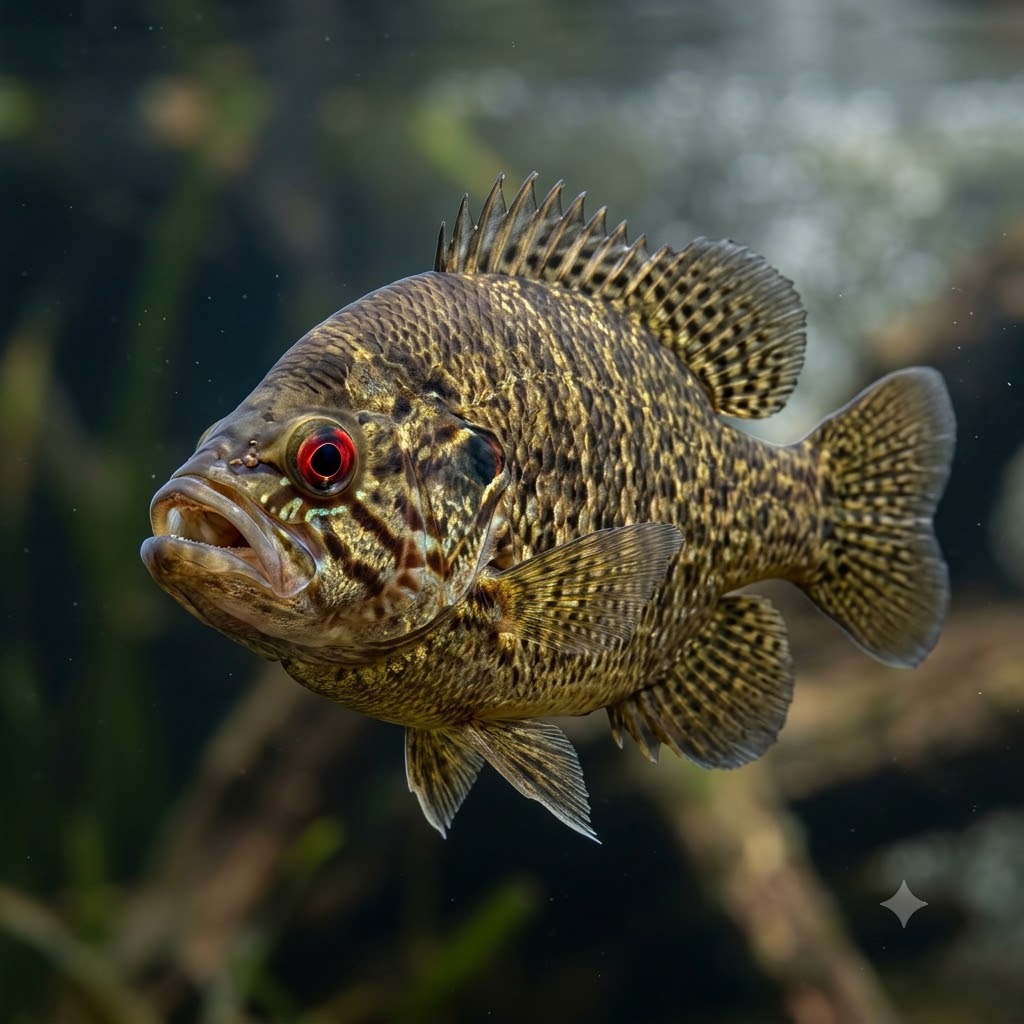
The warmouth is a thick, deep-bodied sunfish with mottled dark-brown, olive, and gold coloring that lets it blend into stained, weedy water. Its most distinctive features are a large mouth - unusually big for a sunfish, giving it the nickname "goggle-eye" alongside its prominent red eye - and three to five dark reddish-brown streaks radiating back from the eye across the gill cover. The body carries irregular dark blotches and bars rather than clean vertical bars. A small patch of teeth on the tongue is a technical identifier used by biologists. Anglers most often confuse it with the green sunfish or rock bass, but the big mouth, red eye, and cheek streaks set the warmouth apart.
Range & Habitat (US waters)
Warmouth are native to the eastern and central United States, especially abundant across the Southeast and the Gulf Coast states, and range up through the Mississippi drainage and into the Great Lakes region. They are a warmwater fish that favors sluggish, heavily vegetated, often muddy or tannin-stained water. Prime habitat includes swamps, sloughs, oxbows, backwater ponds, weedy lake margins, and the slow, mucky sections of rivers and canals. They tolerate low-oxygen, warm, silty conditions better than most sunfish, which lets them thrive in soft-bottomed, cover-choked water where finicky panfish are scarce. They relate tightly to cover such as stumps, roots, brush, and vegetation.
Behavior & Feeding
The warmouth is an aggressive ambush predator that lurks in cover and strikes hard at anything edible that passes close. Its large mouth allows a broad diet: it eats aquatic insects and their larvae, crayfish, small fish and minnows, snails, and worms. Crayfish and small forage fish are especially important, and a warmouth will readily take prey nearly as wide as its own head. It is most active in low light and during warm conditions, feeding through much of the day when water is warm. Solitary and territorial by nature, warmouth tend to hold in individual ambush spots rather than roaming in large schools the way bluegill do, so covering water and probing each piece of cover pays off.
Best Seasons & Times to Catch
Warm weather is warmouth weather. Late spring and summer are the peak seasons, when warm water has the fish feeding actively and moving shallow to spawn and guard nests. The spawn, in the warm months, concentrates fish in shallow cover and makes them especially aggressive and easy to target. Fall offers steady fishing as the fish feed before cooler weather. Winter slows them considerably, since they are a true warmwater species, though they can still be caught in the warmest sheltered pockets on mild days in the South. On a daily basis, morning and evening low-light periods and overcast, warm days produce the most consistent action.
Where to Find Them - Reading the Water
Fish the cover in warm, still water. Warmouth hold tight to stumps, submerged logs, root wads, brush piles, weed beds, undercut banks, and dock pilings in slow, mucky water. Look for the darkest, weediest, most tangled backwaters - the kind of swampy pockets that bass anglers pass to reach open water. Each isolated piece of cover may hold a warmouth waiting to ambush, so pitch your bait right against the wood or into the pocket in the weeds. In ponds and canals, work the shaded, brushy margins. The messier and more overgrown the spot, the more likely a warmouth is tucked inside it.
Tackle & Rigs
Light spinning or a simple cane-pole and bobber setup both shine for warmouth. A light or ultralight spinning rod of 5 to 6.5 feet with 4 to 8 lb line handles them well and makes the fight enjoyable while still muscling fish out of cover. The classic and deadly rig is a worm on a small hook fished under a bobber, adjusted so the bait hangs just above or beside the cover. A small split-shot or a light jighead lets you probe deeper pockets. Because warmouth live in snaggy cover, slightly heavier line than you might use for open-water bluegill helps you pull hooked fish free of the wood and weeds.
Best Baits & Lures
Live bait is the top choice for warmouth, and few things beat a lively worm or nightcrawler. Small minnows, crickets, grubs, and small crayfish also work extremely well and match the natural diet. Among artificials, small jigs - marabou, soft-plastic grubs, and tube baits on light jigheads - are excellent, as are tiny inline spinners and small crankbaits that imitate minnows and crayfish. Dark and natural colors suit the stained water warmouth prefer, though a touch of bright color can help in murky conditions. The key is a small offering fished right in the cover where these aggressive fish are waiting to pounce.
Techniques - How to Fish for It
Precision and patience around cover are what catch warmouth. Pitch a worm-and-bobber rig tight to a stump or into a weed pocket and let it sit, twitching it occasionally to draw a strike. Because warmouth hold in individual ambush spots, work methodically from cover to cover rather than fan-casting open water. With small jigs, cast to the edge of wood or weeds and hop the bait slowly along the bottom, feeling for the sharp thump of a strike. When you catch one, work that same piece of cover again, but expect to move on to the next stump for the next fish. Set the hook with a firm lift and steer the fish away from snags quickly.
Common Mistakes
The most common mistake is fishing open water instead of getting the bait tight into cover - warmouth rarely stray from their ambush spots. Another is using line too light for the snaggy habitat, which leads to break-offs when a hooked fish dives into wood or weeds. Anglers also fish too fast, moving past cover before a warmouth commits; these fish reward a bait that sits and tempts. Overlooking the muddy, swampy backwaters in favor of prettier open water means missing the best warmouth habitat entirely. Finally, expecting schools like bluegill leads to frustration, since warmouth are more solitary and must be picked off spot by spot.
Size Records & Eating Quality
Warmouth are a modest-sized sunfish. A typical catch runs roughly 4 to 8 inches, and a fish approaching or passing 10 inches is a notably large one worth remembering. Despite their small size, they are considered good eating, with sweet, flaky white flesh in the sunfish tradition, and they are popular for the frying pan across the South. Because they are aggressive and often abundant in the right water, they can provide a fine mess of panfish for a meal. As with all panfish, keeping a reasonable number for the table while releasing the rest helps sustain the fishery.
Pros & Cons (as a target species)
Pros: aggressive and willing biters that hit hard, fun on light tackle, thrive in overlooked swampy water so there is little competition from other anglers, good eating, and often abundant where conditions suit them. Cons: modest size limits the fight and the fillet yield, their snaggy cover-choked habitat causes break-offs and lost rigs, they are more solitary than schooling panfish so numbers require covering water, and the muddy, buggy backwaters they prefer are not the most comfortable places to fish.
Best Suited For
The warmouth suits panfish anglers who enjoy an aggressive strike and don't mind poking around swampy, weedy cover to find fish. It is well suited to bank and small-boat anglers working ponds, canals, and backwaters, and to anyone who fishes a simple worm-and-bobber rig. It is a great fish for a relaxed outing where the goal is steady action and perhaps a meal of panfish. Anglers who like exploring overlooked, mucky water will find the warmouth a rewarding hidden gem.
FAQ
Why is the warmouth called a "goggle-eye"? The nickname comes from its large, prominent red eye. The same name is used regionally for the rock bass, which shares the big-eyed look, so local usage can be confusing.
How is a warmouth different from a green sunfish? Both are big-mouthed sunfish, but the warmouth has distinct dark reddish streaks radiating back from its red eye across the gill cover and a more mottled, blotchy body, while the green sunfish has cleaner markings and turquoise flecks.
What is the best bait for warmouth? A live worm or nightcrawler is hard to beat, fished under a bobber tight to cover. Small minnows, crickets, and small jigs also work very well.
Where do warmouth live? In warm, slow, weedy, often muddy water - swamps, sloughs, backwater ponds, and the sluggish sections of rivers and canals. They hold tight to stumps, brush, and vegetation.
Are warmouth good to eat? Yes. They have sweet, flaky white flesh like other sunfish and are popular for frying, especially across the South where they are common.