How to Catch American Lobster
American lobster are cold-Atlantic clawed lobsters taken in baited traps on rocky ground, a rewarding but heavily regulated catch that needs a recreational licence and careful measuring of the carapace.
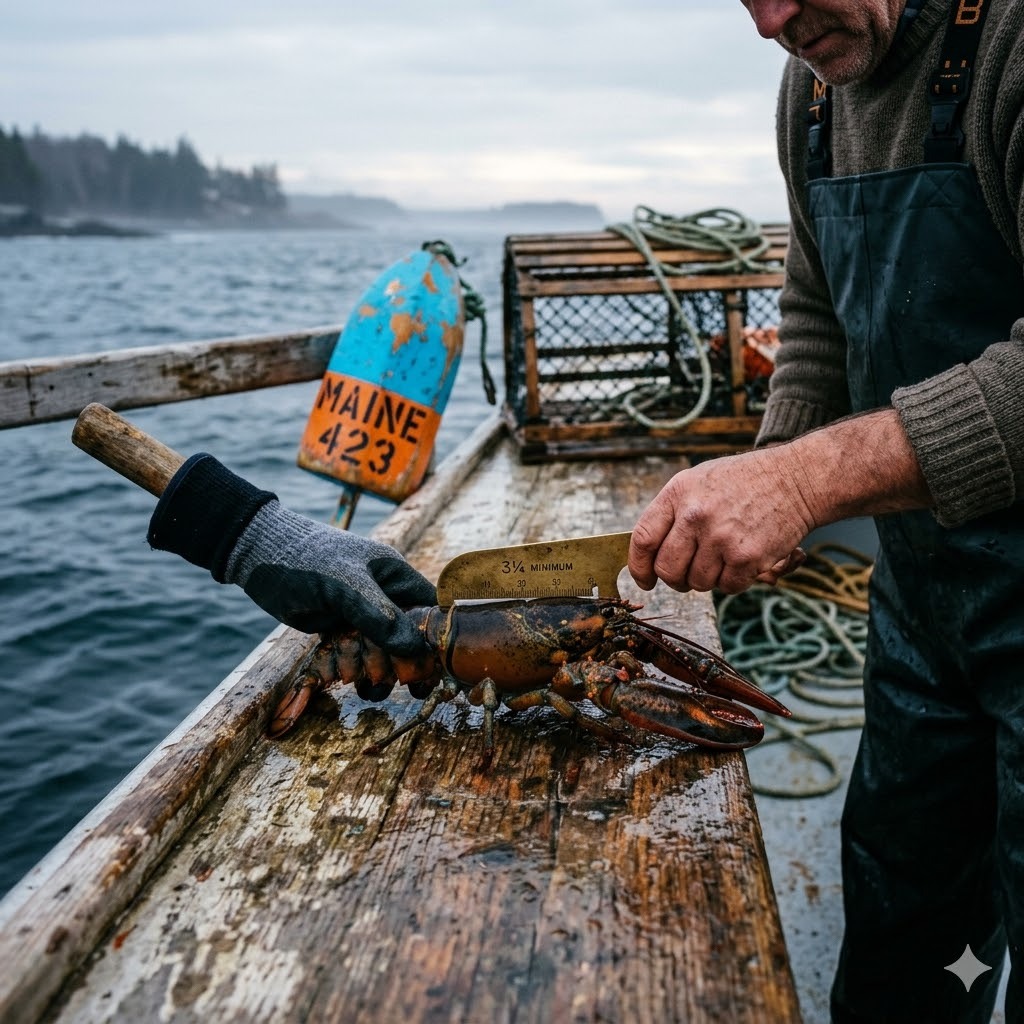
A recreational lobster licence is required in most areas, with strict minimum and maximum sizes, trap limits, and mandatory release of egg-bearing and V-notched females. Rules are enforced - know them exactly.
American lobster is one of the few genuinely prized shellfish that an ordinary person can, with the right licence and a bit of effort, actually catch. These are the big, clawed, cold-water lobsters of the Atlantic coast - the classic lobster of the northeastern shoreline, with two heavy claws, a muscular tail and dark, mottled shells that turn bright red when cooked. Unlike snow crab or king crab, this is a species that recreational fishers really do pursue, usually with a small number of baited traps set from a boat or, in some spots, from a dock or pier.
It is not a beginner free-for-all, though, and I want to set expectations honestly. Lobster fishing is tightly regulated for good reasons, the gear takes some learning, and the rules about what you can keep are strict and genuinely enforced. Get those parts right and it is one of the most satisfying catches there is. Get them wrong and you risk both fines and the health of a fishery that a lot of coastal communities depend on. This guide walks you through the practical side and, most importantly, the law.
Why go for American lobster
The obvious answer is the meat. Sweet, firm tail meat and rich claw meat make American lobster a genuine luxury, and catching your own turns an expensive restaurant treat into something you pulled from the sea yourself. There is real pride in that, and the eating is as good as it gets in cold-water shellfish.
Beyond the plate, there is the pleasure of the process. Baiting and setting traps, learning your ground, reading where lobster like to hide, and coming back to haul a pot never quite loses its excitement - you genuinely do not know what is inside until it breaks the surface. It is hands-on, seasonal and rooted in one place, which is exactly what a lot of people want from fishing. It sits at an intermediate level: not the hardest shellfish to pursue, but one that rewards patience and punishes carelessness with the rules.
Where and when to find them
American lobster live on the cold Atlantic sea floor and strongly favour structure. Rocky bottoms, boulder fields, ledges, kelp and any broken ground that gives them holes and crevices to shelter in are where you want your traps. Flat, featureless sand and mud holds far fewer lobster, so learning to place pots on or near rocky ground is half the game. They tend to sit deeper in the colder months and move shallower as the water warms, so in many areas the productive recreational season is the warmer part of the year - but this varies hugely by location.
Timing is driven as much by law as by biology. Many places have defined seasons, closed periods and area rules, and these exist to protect the stock during breeding and moulting. Lobster are also more active feeders at night and around changing light, so pots often fish best when left to soak overnight. Because seasons, closures and even permitted areas are all set locally, check your local rules before you set a single trap - do not assume the season that applies one bay over applies to yours.
How to catch them
The standard recreational method is the baited trap, or pot. A lobster pot is a wire or wooden cage with funnel-shaped entrances that let a lobster crawl in toward the bait but make it hard to leave. You bait it with oily fish - the stronger smelling, the better - drop it onto rocky ground, and mark its position on the surface with a buoy on a line so you can find and haul it later. That buoy is not optional: it is how you locate your gear and, often, how the authorities identify whose trap it is, so mark it as your local rules require.
Leave the pot to soak, then haul it up by the line, hand over hand or with a small hauler, and open it to see what you have. Rebait, reset, and repeat. Some regions also allow catching lobster by hand while diving, but trapping is the common recreational route and the one most rules are written around. Whichever way you go, handle lobster carefully - those claws are strong enough to hurt you, so grip a lobster across the back of the body, behind the claws. For general advice on ropes, buoys, gloves and trap handling, see our gear page.
Handling, cleaning and cooking
Keep your lobster alive and cold until you cook it. A live lobster held in a damp, cool container, or in a proper holding bag in the water, stays in good condition; a lobster that dies and sits warm spoils fast and should not be eaten. Do not store live lobster in fresh water or sealed in a bag with no air - both will kill it and ruin the meat.
Cooking is refreshingly simple. Most people boil or steam American lobster: a few minutes per portion in well-salted boiling water, or steamed over simmering water, until the shell is bright red and the meat is opaque and firm. Do not overcook it, because long heat toughens that lovely tail meat. Once cooked, twist off the tail and claws, crack the shell, and the meat lifts out in big, clean pieces. Melted butter and lemon is the classic and honestly hard to beat. If you want to turn a haul into a full spread, our catch-and-cook guide takes you through it from trap to table.
Safety and the law
This is the most important section on the page, so give it your full attention. American lobster is a heavily regulated species, and the rules are strict, specific and enforced. In most places you will need a recreational lobster licence before you set any gear, and there are usually limits on how many traps you may fish. Do not skip this step - fishing lobster without the right licence is a real offence.
The size rules are where people most often trip up, so learn them properly. Lobster are measured by the carapace - the main body shell, measured from behind the eye socket to the back of the body - not by the whole lobster from claw to tail. There is typically a minimum carapace size, and for American lobster often a maximum size as well, protecting both young lobster and the large breeding animals. You will need a proper lobster gauge to measure accurately, and anything outside the legal range must go straight back. On top of that, egg-bearing females, with visible eggs held under the tail, must be released, and in many fisheries a female that has been "V-notched" - marked with a notch cut in her tail flipper to identify her as a proven breeder - must also be released even if she has no eggs at that moment. Learn to spot both.
Do not trust any exact numbers from a general page, including this one. Minimum and maximum carapace sizes, trap limits, seasons and licence requirements are all set locally and do change - so check your local limit with the authority that manages your waters, and carry your gauge. On the food-safety side, keep lobster cold and alive until cooking, cook it thoroughly, and remember shellfish is a common serious allergen. Our full shellfish safety guide covers all of this in more depth and should be read before you start, and the wider Shellfish and Crustaceans section has more species worth trying.