How to Catch Atlantic Surfclams
Atlantic surfclams are large clams of wave-swept beaches, the source of clam strips and chowder, gathered by recreational diggers from the surf zone at low tide, especially after storms.
The surf zone is the hazard - never turn your back on breaking waves and mind the tide. Licence, size and daily limits apply; harvest only from open, certified-safe beaches. Shellfish is a serious allergen; cook thoroughly.
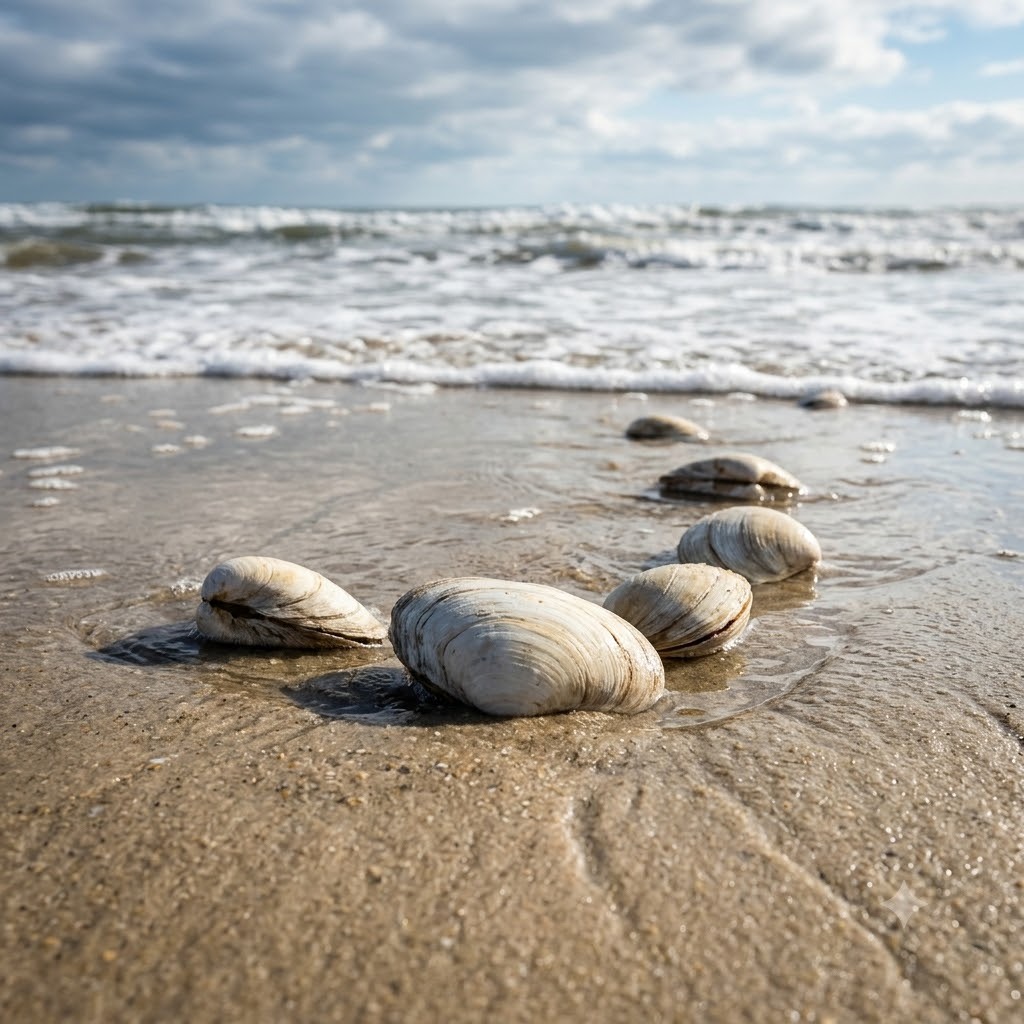
Atlantic surfclam is the big clam behind the clam strips and chowder you already know. It lives out on open, wave-swept beaches in the surf zone, and while commercial dredges take most of them, a recreational digger can gather plenty by hand at low tide - especially after a storm, when heavy surf tosses them up onto the sand. Each one is a large clam full of firm, sweet meat worth the walk.
Why go for them
Size and versatility - these are big clams, so a modest number makes a lot of chowder, fritters or breaded strips, and the meat is firm and sweet. Gathering them is simple beach work, and there is a real pleasure in walking a fresh, storm-tossed beach and coming home with a bucket of clams for the pot.
Where and when to find them
Surfclams live buried in the sand of open, wave-exposed beaches, in and just below the surf zone. The best time to gather them is a low tide right after a storm or period of big surf, which loosens and casts them up onto the sand and into the wrack line, where you can pick them up or dig them shallowly.
How to catch them
After rough weather, walk the surf line and wrack for cast-up clams, or dig the shallow surf zone with a rake or by hand where you see them. Wear waders and keep a constant eye on the waves. Measure any near the limit, keep only legal clams, and do not let the surf or a rising tide catch you out.
Handling, cleaning and cooking
Purge the clams in cool seawater, then shuck or steam them open. The firm meat is classic for chowder, clam fritters and breaded fried clam strips; the tougher parts are best chopped or ground. Rinse away any sand, cook thoroughly, and discard any clam that will not close before cooking or open after.
Safety and the law
The surf itself is the main danger - never turn your back on breaking waves, watch the tide, and do not wade beyond your footing. Get the required licence, observe size and daily limits, and gather only from open, certified-safe beaches, heeding biotoxin and pollution closures. Cook thoroughly; shellfish is a serious allergen. See our shellfish safety guide.