How to Catch Channeled Whelk
Channeled whelks are large predatory sea snails of sandy bays, the classic 'scungilli' of Italian-American kitchens - caught in baited whelk pots or at low tide, with firm meat for salads and sauces.
Check size and limits, which apply to whelks in many states, and gather only from clean, certified-safe water. The meat needs proper cleaning and cooking; shellfish is a serious allergen, so cook thoroughly.
The channeled whelk is the big sea snail behind scungilli - the firm, savoury shellfish of Italian-American seafood salads and sauces. A slow-moving scavenger of sandy bays and flats, it homes in on crushed crab and fish, which makes it catchable in simple baited pots or by hand at low tide. The meat is firm and needs a little know-how to cook tender, but a haul of whelks turns into a genuinely special dish that most people only ever buy from a deli case.
Why go for them
They make a distinctive, prized dish - scungilli salad and whelk in tomato sauce are old-country favourites you can make from scratch - and catching them is accessible, needing only a baited pot or a low-tide walk. For anyone who loves that firm, savoury shellfish and wants to gather their own, whelks are a rewarding, underfished target.
Where and when to find them
Channeled whelks live on sandy and muddy bottoms in bays, sounds and estuaries, plowing slowly in search of clams and carrion. They are most active and catchable in the warmer months, sometimes coming shallow enough to pick up at low tide, and otherwise taken from slightly deeper water in baited pots.
How to catch them
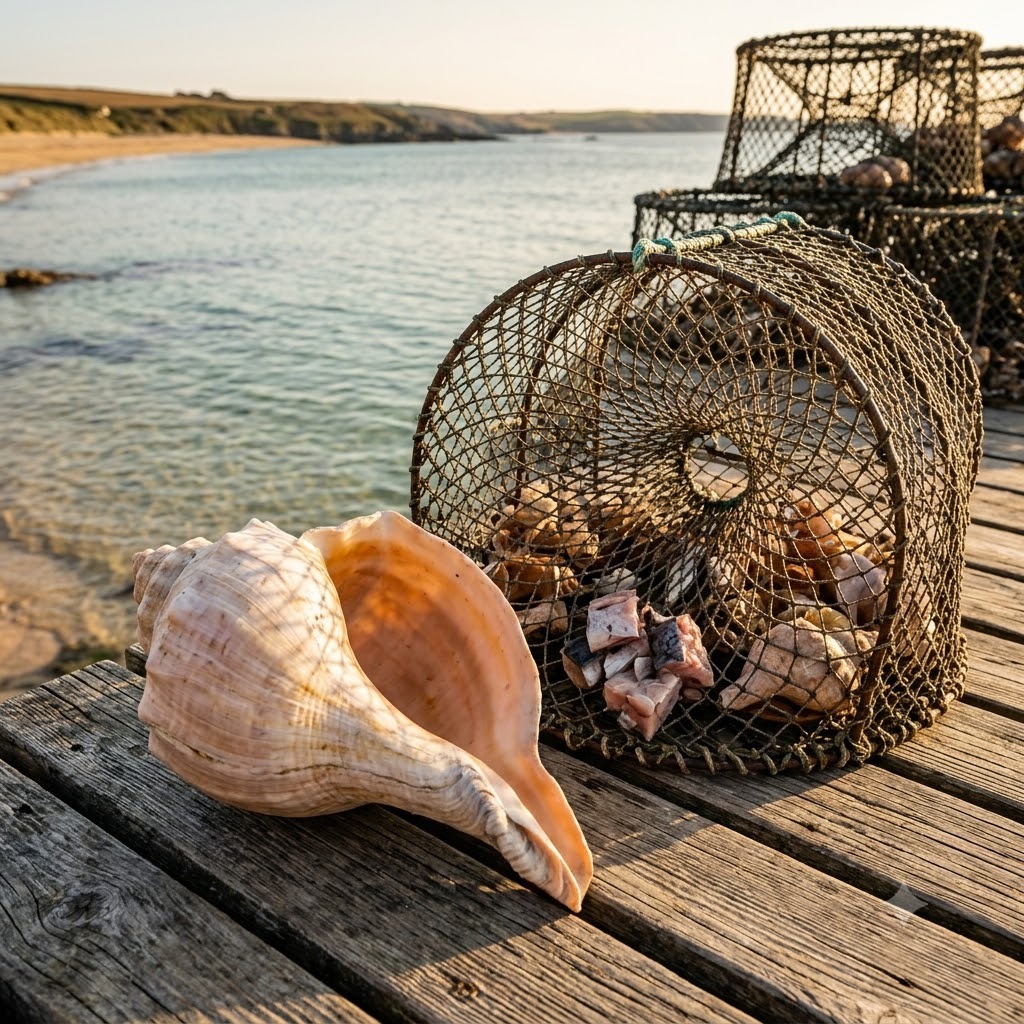
The common method is a baited whelk pot - a trap loaded with crushed crab or fish - set on sandy bottom and left to soak, then hauled and emptied. In some spots you can also simply pick whelks off the flats at low tide. Bait strongly, since whelks find food by scent, and measure your catch where size limits apply.
Handling, cleaning and cooking
Blanch or boil the whelks to release the meat, then pull it from the shell, remove the operculum and guts, and clean the firm foot. Because it is dense, slice it thin and cook briefly, or simmer it long and slow: the classic uses are a chilled scungilli salad with lemon and oil, or whelk simmered in tomato sauce. Cook thoroughly.
Safety and the law
Whelks are regulated in many states with minimum sizes and limits, so check your local authority and measure your catch. Gather only from clean, open, certified-safe water, heeding closures. Clean and cook the meat thoroughly, and remember shellfish is a serious allergen. See our shellfish safety guide.