How to Gather Cockles
Cockles are small heart-shaped clams sitting just under the surface of sandy flats, raked or scratched out by the bucketful at low tide - easy, traditional and beginner-friendly.
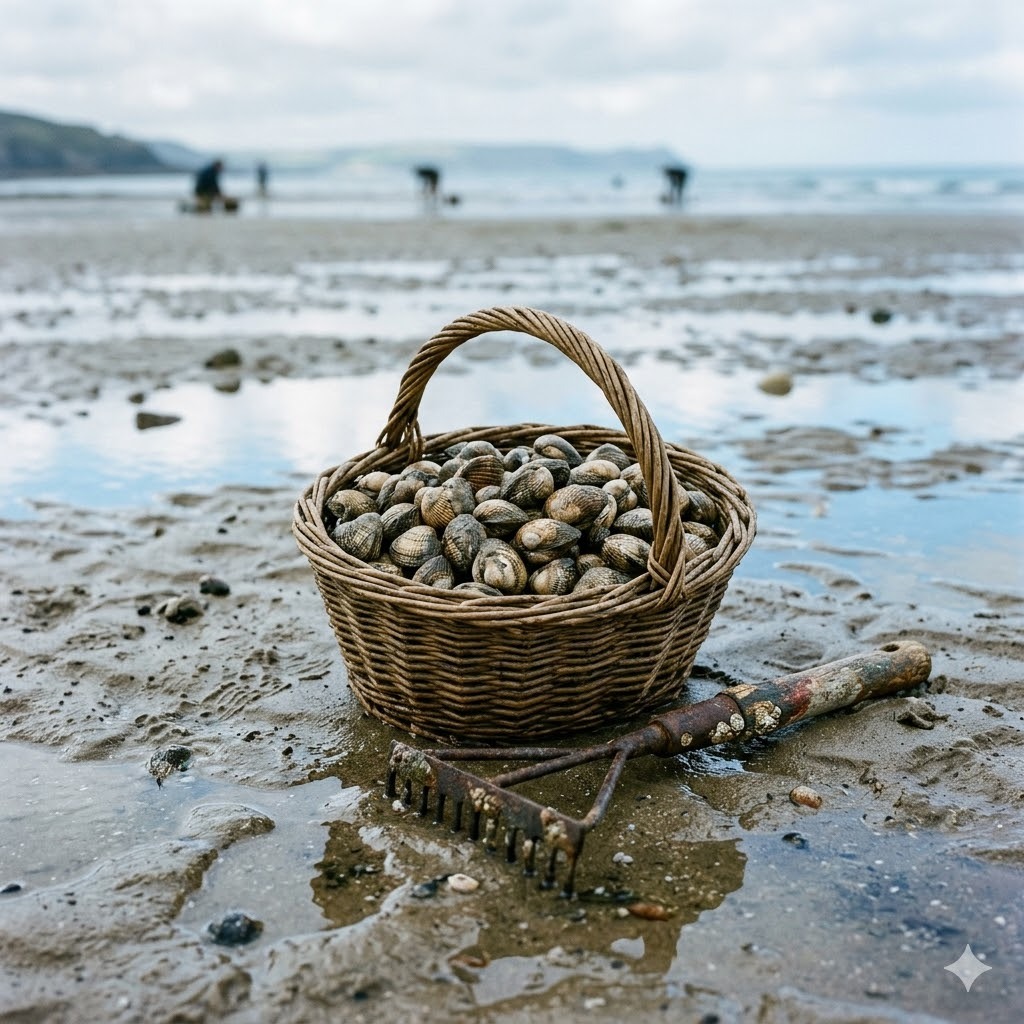
🔴 Only gather from open, approved flats and check biotoxin advisories. Follow local size and quantity limits, which exist in many areas.
Cockles are about the friendliest introduction to shellfish gathering there is. These small, round, heart-shaped clams live in huge numbers just beneath the surface of sandy and muddy flats, and because they sit shallow rather than burrowing deep, you do not need much more than a rake, a bucket and a low tide to fill a meal. It is honest, simple, traditional gathering that families have done for generations around the coasts of Europe and beyond.
That accessibility is exactly why cockles make such a good beginner outing. There is no race against a fast-digging clam, no heavy hole to excavate - just steady, satisfying work scratching through the top layer of sand at low water. That said, "easy to gather" does not mean "safe to eat without checking," and the safety section at the end is the part you must not skip.
Why go for cockles
Cockles are good, plain eating. The meat is small but sweet and tender, and because you gather them by the bucketful, a modest effort produces plenty. They are a staple of traditional coastal cooking - steamed open, tossed through pasta or rice, pickled, or simply eaten warm with a little vinegar and bread. If you enjoy simple seafood that tastes of the shore, cockles deliver.
The gathering itself is relaxed and sociable. It suits all ages and abilities, needs very little kit, and gets everyone out onto a wide, open flat at low tide. There is something genuinely pleasant about a slow morning working the sand with a rake, filling a bucket, and coming home with supper. For anyone who wants to try gathering shellfish for the first time, cockles are the natural place to start.
They are also widespread. Cockle beds are common on sheltered sandy estuaries and bays around Britain, Ireland and much of Europe, so most people near a suitable coast have a bed within reach.
Where and when to find them
Cockles like sheltered, sandy and slightly muddy flats - the kind of ground you find in estuaries, bays and tidal harbours rather than on wild surf beaches. They gather in beds, so where you find one cockle you usually find many. Local knowledge helps enormously; a well-known cockle flat will keep producing year after year.
Timing follows the tide. You want a good low tide that uncovers a wide stretch of the flat, and you work the exposed sand while it is drained. The bigger spring low tides give you the most ground and the most time, but cockles sit shallow enough that you do not need the extreme lows that clams like geoducks demand. A tide table keeps you safe and productive.
Finding them is easy: cockles live in the top few centimetres of sand, so a light scratch with a rake or your fingers turns them up. On some beds you can even see the small breathing holes or feel the shells underfoot. Work an area, move along, and let the bucket fill. Settled weather and a calm, well-drained flat make for the best conditions.
How to catch them
The traditional tool is a simple short-tined rake, sometimes with a basket or mesh built onto the head so the sand falls through and the cockles stay behind. Many gatherers just use an ordinary garden rake or even their hands, scratching through the top layer of sand and picking the cockles out as they surface. There is no special technique beyond working steadily and methodically across the bed.
Take a bucket and a mesh bag. As you gather, it pays to grade your catch: keep the larger cockles and put the small, undersized ones straight back into the sand so they can grow on. This is not only good practice for the future of the bed, it is often the law (see below).
A few sensible habits make the day better. Work with the drained sand rather than in standing water where you cannot see. Rinse the worst of the sand and mud off your catch in clean seawater as you go. And do not strip a single small patch bare - spread your effort across the bed. For advice on rakes, buckets, boots and bags for shore gathering, see our gear guide.
Handling, cleaning and cooking
Cockles hold a lot of sand, so purging them well is the single most important step in preparation - grit will ruin an otherwise lovely dish. Rinse them first to wash off the outside mud, then leave them to purge in clean seawater or salted water for several hours, ideally with a change of water. During that time they filter and spit out the sand trapped inside. Discard any that are cracked, or that stay wide open and do not close when tapped, as those are dead.
Keep them cool and alive until you cook them - a damp cloth in a cool bag works well on the way home. To cook, the classic method is to steam them in a covered pan with a little liquid until the shells pop open; any that stay firmly shut after cooking should be thrown away. Once opened, the little morsels of meat can be eaten as they are, dressed with vinegar or lemon, or stirred through pasta, risotto, soups and stews. They cook in moments, so do not overdo them. For more ideas and a full walk-through of preparing your catch, see our catch and cook guide.
Safety and the law
This is the most important part of the guide, so read it before you gather. Cockles are bivalves - filter feeders that pump large volumes of seawater through their bodies and concentrate whatever is in that water. That includes harmful bacteria such as those linked to sewage pollution, and, more dangerously, natural marine biotoxins produced by algal blooms: the toxins behind paralytic shellfish poisoning (PSP), often called "red tide," and domoic acid, which causes amnesic shellfish poisoning.
Cooking does not destroy these biotoxins. A cockle carrying them is dangerous no matter how well you cook it, and you cannot see, smell or taste the toxin. For that reason the firm rule is simple: only gather cockles from waters that are officially open and approved for shellfish harvesting, and check the current advisory every single time before you go. Estuaries near towns are frequently classified for pollution, and beds are opened or closed based on testing. A flat that was fine last month may be closed today - never assume.
On top of the biotoxin and pollution rules, cockle beds are usually managed. Expect a minimum size limit, so you return small cockles to the sand, and often a daily quantity limit on how many you may take, sometimes with a permit or licence requirement and restrictions on commercial-scale gathering. These rules protect the bed for the future. Learn and follow your local regulations before you start.
Finally, mind the ground and the tide. Estuary flats can hide soft mud, and the tide can flood in across flat ground faster than you expect, so keep track of the water and do not get cut off. For the full detail on shellfish biotoxins, pollution classifications, closures and staying safe, read our shellfish safety guide, and see the main shellfish section for other species to try.