How to Catch Crayfish (Crawfish)
Freshwater mini-lobsters you can trap or hand-net from streams, ponds and ditches - easy to start, family-friendly, and perfect for a backyard boil.
⚠️ Many crayfish are invasive - never move live crayfish between waters or release them, and know which species and waters are legal. Check local rules.
Crayfish are the freshwater cousins of lobsters, and catching them is about as accessible as fishing gets. They live in streams, ponds, drainage ditches and slow rivers across much of the world, hiding under rocks and in muddy banks. You do not need a boat, expensive tackle or years of experience. A cheap trap, a bit of bait and a warm evening are enough to get started, which is why crayfishing is such a good way to bring children into the outdoors.
The catch is small individually - a good crayfish gives you a bite or two of sweet tail meat - so this is a numbers game. Gather a decent bucketful and you have the makings of a proper boil, the kind of messy, hands-on meal that people gather around a table for. Just as important, and we will come back to this, is that many crayfish are invasive troublemakers, so how and where you catch them matters as much as the catching itself.
Why go for crayfish
The appeal starts with how easy it is. Crayfish are abundant, they are hungry, and they are not fussy. You can catch them with kit that costs very little, and the technique is simple enough that a child can master it in an afternoon. That low barrier makes crayfishing a brilliant family activity and a gentle introduction to reading water and understanding where creatures live.
The eating is the other half of the draw. Crayfish tail meat is sweet, firm and clean-tasting, somewhere between prawn and lobster. Cooked in a spiced boil with corn, potatoes and sausage, they turn a modest catch into a feast. In some regions crayfish are also a controlled invasive species, which means gathering them can be genuinely helpful to local waterways - you get a meal and the ecosystem gets a break, provided you follow the rules on which species and waters are permitted.
There is also a practical bonus for anglers. Crayfish make excellent bait for bass, catfish, perch and other predators. If a session produces more than you want to eat, the surplus rarely goes to waste. Just remember that using live crayfish as bait is tightly regulated in many places precisely because of the invasive-species problem.
Where and when to find them
Crayfish like slow to moderate water with plenty of cover. Look for rocky-bottomed streams, the margins of ponds and lakes, drainage ditches, and the quiet edges of rivers. They shelter under flat stones, submerged logs, undercut banks and thick weed during the day, coming out to forage as the light fades. Muddy-bottomed ditches often hold burrowing species that dig chimney-like holes at the water's edge.
Warm weather is prime time. Crayfish are most active from late spring through early autumn, when water temperatures are up and they are feeding hard. They slow right down in cold water, so winter sessions are usually a waste of effort. Within a day, dusk and the first hours of darkness are the most productive, though on overcast days you can catch them well into the afternoon.
Clean, well-oxygenated water tends to hold the best crayfish. That said, before you go anywhere, you must confirm the water is one where crayfishing is legal and that the species present is one you are allowed to take. Some native crayfish are protected, while some invasive ones are the target - and the two can look similar. Local rules vary enormously, so check first and see our full guidance at /shellfish/safety/.
How to catch them
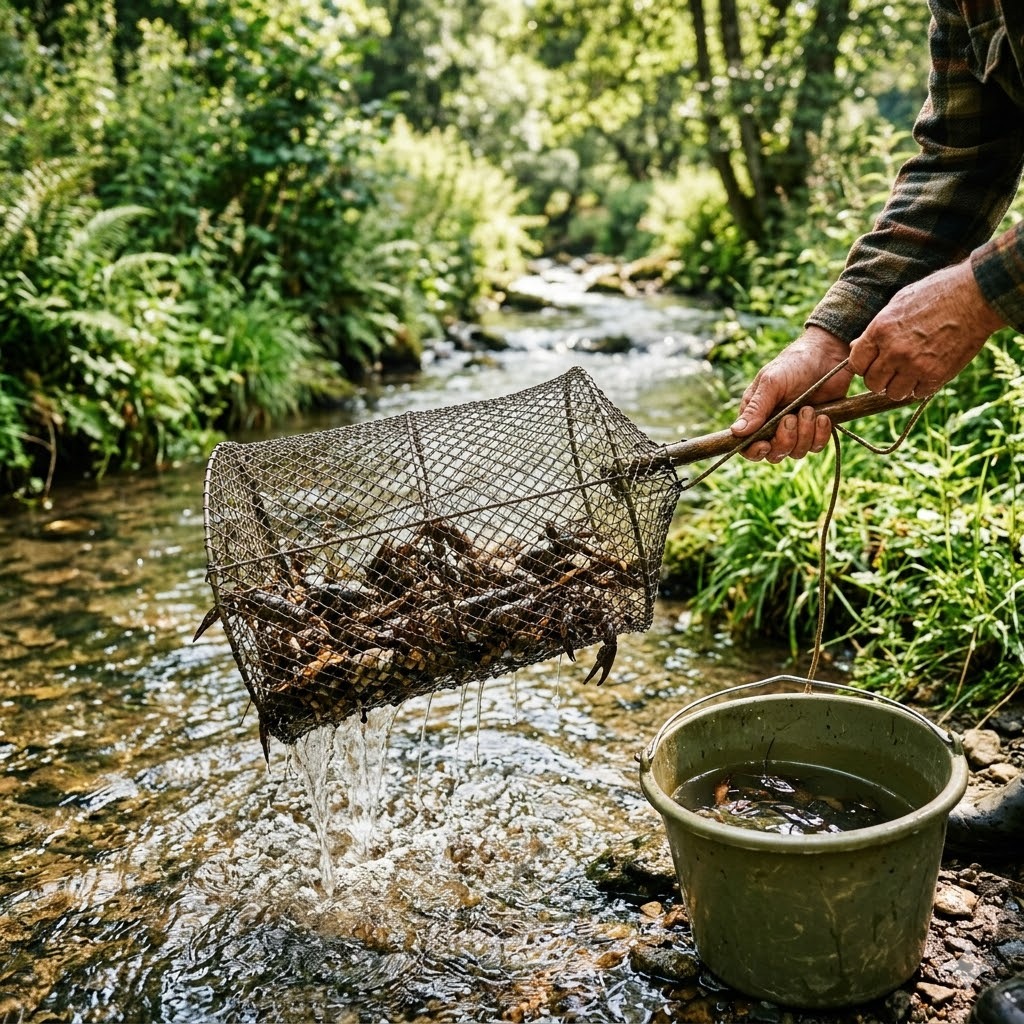
The classic method is a baited trap. Wire mesh traps with funnel entrances are cheap and effective: bait them with a chunk of oily fish, chicken, or a tin of cat food with holes punched in it, drop them into likely spots, and leave them for a few hours or overnight. Weight the trap so it stays put, tie off the line to something solid on the bank, and mark the location. Check and rebait as needed. In waters where traps are not permitted, this method is off the table, so confirm the rules first.
Hand-netting is the more active, family-friendly approach. Wade slowly through a rocky stream, turn over flat stones one at a time, and hold a small net downstream of each rock. Crayfish shoot backwards when disturbed, so they swim straight into a net placed behind them. It is hands-on, wet and enormously fun for children, though you should wear sturdy footwear against sharp rocks and the crayfish's own nippy claws.
The simplest method of all needs almost no gear: tie a piece of bait to a length of string, lower it into the water near cover, and wait. A crayfish will grab the bait and hang on stubbornly as you lift it slowly to the surface, where you scoop it up with a net. It is slow but strangely addictive, and it is how many people first learn to catch them. Whichever method you use, handle crayfish from behind, thumb and finger on the back of the shell, to keep your fingers clear of the claws.
Handling, cleaning and cooking
Keep your catch alive and cool until you are ready to cook. A bucket with a little water and a lid, kept in the shade, works fine for a few hours. Discard any that have died before cooking, as with all shellfish.
Before cooking, purge them. Place the live crayfish in clean, cool fresh water for a few hours, changing the water once or twice. This lets them flush out mud and grit from their gut and gives cleaner-tasting meat. Some people add salt to the purge water, but plain clean water does the job. Rinse them well afterwards.
Cooking is where crayfish shine. The traditional method is a boil: bring a large pot of heavily seasoned water to a rolling boil - a proper crayfish or crawfish boil mix, or your own blend of salt, cayenne, bay, garlic and lemon - drop the live crayfish in, and cook for a few minutes until they turn bright red. Many people then let them soak off the heat to absorb flavour. Add corn, small potatoes and smoked sausage to the same pot for a complete meal. To eat, twist the tail from the head, peel back the shell, and pull out the meat. Sucking the flavour from the heads is part of the ritual for the initiated. For more on turning a catch into a meal, see our catch-and-cook guide.
Safety and the law
This is the section that matters most, and for crayfish it is mostly about the environment rather than your health. Many crayfish are aggressive invasive species that carry diseases fatal to native crayfish and cause real damage to waterways. The single most important rule is this: never move live crayfish between different waters, and never release them anywhere, including back into a different part of the same system. Moving them spreads invasive populations and disease. What you take out, you eat or dispose of properly - it does not go back in the water alive.
You must also know your species and your waters. In many regions it is illegal to catch, keep or even handle certain crayfish, while others are actively encouraged as invasives. Native, protected crayfish and invasive ones can look alike to a beginner, so learn to tell them apart or ask a local authority before you take anything. Trapping is banned or licensed in some places, both to protect native crayfish and to prevent accidental capture of other wildlife such as otters and water voles. Check whether you need a licence, whether traps are allowed, and what the seasons and limits are.
On the health side, crayfish are generally safe eating when caught from clean water, cooked thoroughly and purged first. Avoid gathering from water that is polluted, stagnant or fed by farm or industrial runoff. Cook them fully - never eat them raw or undercooked - and discard any that died before the pot. Wear footwear when wading, watch for sharp rocks and slippery banks, and mind those claws.
For the full rundown on shellfish safety, closures and local rules, read /shellfish/safety/ before every trip. You can browse more species in the shellfish section, and find nets, traps and waders in our gear guide.