How to Gather Geoduck
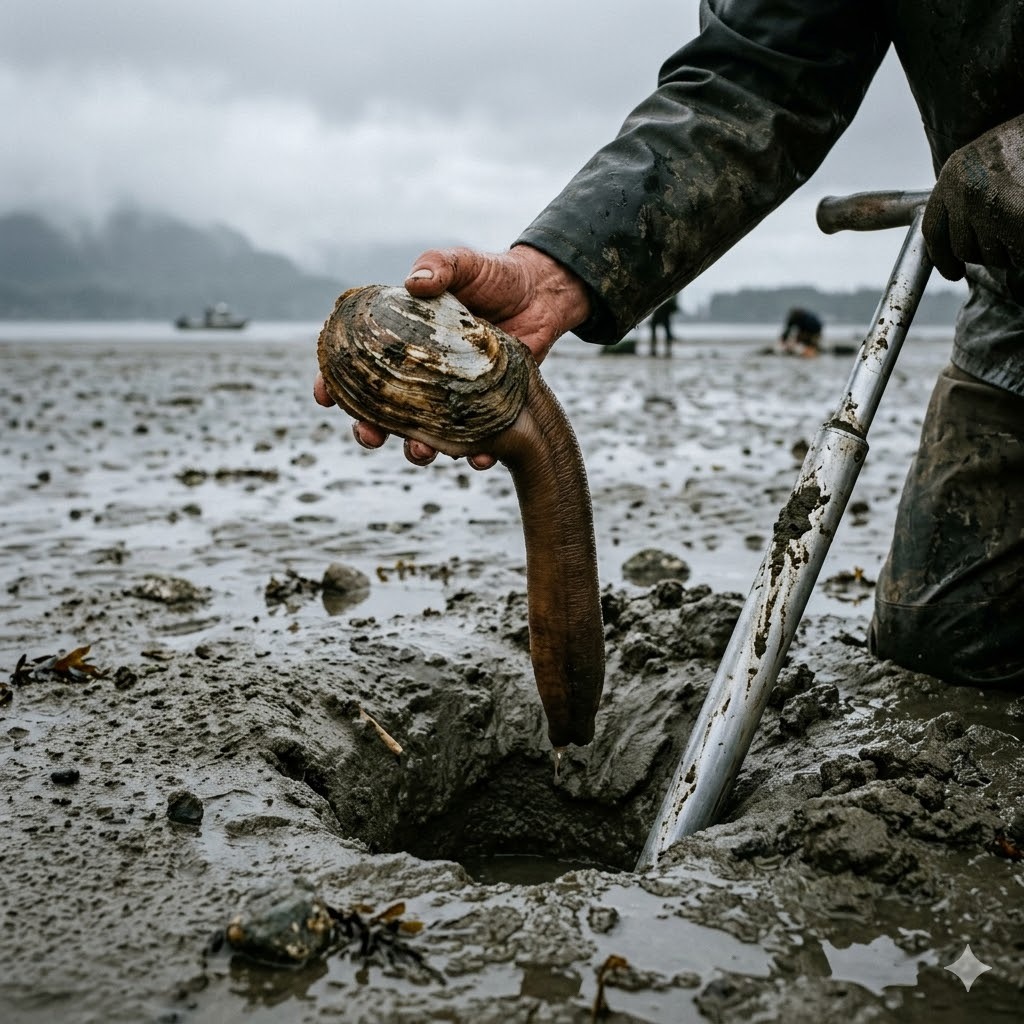
The geoduck is a giant Pacific clam buried a metre or more deep, dug only at the lowest tides in a strenuous, sometimes dangerous race against the incoming water.
🔴 Only dig on open, approved beaches and check biotoxin (PSP/domoic) closures. Deep holes near an incoming tide are genuinely dangerous - fill them in and watch the water.
The geoduck (pronounced "gooey-duck") is the giant of the clam world and one of the most demanding shellfish you can gather by hand. It buries itself deep in the sand and mud of the Pacific Northwest, sitting a metre or more below the surface with only the tip of its long siphon, or "neck," reaching up to the water. Digging one out is hard physical work in a narrow window of time, which is exactly why it sits firmly in the advanced category.
This is not a casual bucket-and-rake outing. To reach a geoduck you dig a deep, water-filling hole against the clock, because the very low tides that expose the beds do not last long and the sea will return. Done properly it is rewarding and produces a huge amount of sweet meat from a single animal. Done carelessly it is exhausting at best and genuinely dangerous at worst. Go in knowing what you are taking on.
Why go for geoduck
The main draw is the sheer quantity and quality of meat. A single geoduck yields far more than an ordinary clam, and the meat is prized: the siphon is crisp and sweet, often eaten thinly sliced and raw or lightly seared, while the softer body meat suits chowders and stir-fries. For anyone who loves shellfish, one successful dig can fill a meal for several people.
There is also the challenge itself. Digging a geoduck is a proper test of timing, reading the beach, and old-fashioned effort. It draws people who enjoy the process as much as the reward - the low-tide dawn start, the hunt for the show, and the satisfaction of easing a huge clam out of the ground without breaking it. If you already gather easier clams and want a serious step up, this is it.
Geoducks are a Pacific Northwest speciality, native to the tidal flats of that region, so this is a local pursuit tied to specific beaches and tides rather than something you will find worldwide.
Where and when to find them
Geoducks live low on the tidal flats, in the sandy and muddy ground that is only uncovered by the biggest low tides. That means you are limited to the largest spring low tides of the month, and often to particular times of year when those extreme lows fall in daylight. A tide table is not optional here - you plan the whole trip around the single lowest point of the tide, and you get very little working time.
On the exposed flats, look for the geoduck's "show": the tip of the siphon, or a dimple, hole or slight depression in the sand where the neck has withdrawn. A gentle tap or the vibration of your steps can make the siphon retract and reveal the spot. Because the clam sits so deep, the show is your only clue to something a metre down.
The best conditions are calm, settled weather on a big daylight low tide, ideally with a group so you can share the digging and keep watch on the water. Cold, early starts are the norm. Because the beds sit at the very bottom of the tidal range, you are working at the point where the sea will come back first and fastest, which is central to the safety picture below.
How to catch them
The classic tool is a "clam gun" in the geoduck sense - a wide, open-ended tube or a bottomless bucket - used to hold back the collapsing sand walls while you dig. Some diggers use a large tube pushed down over the show; others dig by hand and shovel and use the tube to line the hole. Either way, the job is to sink a deep shaft down to the clam faster than the wet sand can slump back in.
Once you find the show, work fast. Set your tube over the spot and dig out the sand and water from inside it, pushing the tube deeper as you go. The hole fills with water constantly and the walls want to collapse, so this is a continuous, strenuous effort. When you finally reach the clam body far down, reach in and ease it out gently.
The one technical rule that matters most: do not pull the neck. The siphon is long and stretchy, and if you haul on it the clam simply pulls back or the neck tears, and you lose the animal and make a mess. You dig down to the body and lift from there, freeing the whole clam. Patience at the bottom of the hole is what turns effort into a catch. For advice on tubes, waders and the physical kit this takes, see our gear guide.
Handling, cleaning and cooking
A geoduck is large, so handling it is straightforward once it is out - keep it cool and damp for the trip home, and cook it fresh. As with any clam, discard one that is clearly dead, badly damaged or unresponsive.
Cleaning takes a few steps because of the size. The usual method is to blanch the clam briefly in hot water, which loosens the tough skin on the siphon so you can peel it away cleanly, exposing the pale meat beneath. You then separate the siphon from the body, split and clean out the body, and rinse everything well to remove grit and the dark digestive parts.
For the plate, the crisp siphon is often sliced thin and eaten raw, quickly seared, or dropped into hot broth for seconds - it toughens if overcooked. The softer belly meat is better minced or diced into chowders, fritters and stir-fries. In short, treat the two parts differently. For step-by-step preparation and recipe ideas, see our catch and cook guide.
Safety and the law
Read this section before anything else. Geoducks are bivalves - filter feeders that pump seawater through their bodies and concentrate whatever it contains. That includes harmful bacteria and, more seriously, natural marine biotoxins from algal blooms: the toxins behind paralytic shellfish poisoning (PSP), associated with "red tide," and domoic acid, which causes amnesic shellfish poisoning.
Cooking does not remove these biotoxins. A contaminated clam is dangerous however you prepare it, and you cannot see, smell or taste the toxin. Because of that, the firm rule is to gather geoducks only from waters that are officially open and approved for shellfish harvesting, and to check the current advisory every single time before you go. Authorities test and open or close beaches based on toxin and bacteria levels, and a beach that was safe last month can be closed today. Never assume.
You will also need to follow local licensing, size and daily-limit rules, which exist to keep the fishery sustainable. Learn them before you dig.
The physical danger with geoducks is real and specific, because you dig deep holes low on the flats right where the incoming tide arrives first. Two things matter above all. First, fill in your holes when you are finished - an open, water-filled geoduck hole is a serious hazard to others walking the flats, and can trap a foot or leg. Second, watch the water constantly and never dig so long that the returning tide cuts you off; the sea can come back across flat ground surprisingly fast, and a deep hole is a bad place to be caught. Go with others, keep an eye on the tide, and leave with time to spare. For the full guidance on shellfish biotoxins, closures and staying safe, read our shellfish safety guide, and browse the main shellfish section for other species.