How to Catch Jackknife Clams
Jackknife clams are long, narrow, fast-burrowing razor-type clams of sand and mud flats, with sweet tender meat, gathered by fast digging or the classic pour-salt-in-the-burrow trick.
The shells are sharp and can cut - handle with care. Licence, size and limits apply, and biotoxin closures matter for these filter feeders. Cook thoroughly; shellfish is a serious allergen. Mind soft flats and the tide.
The jackknife clam is the trickster of the flats - a long, slender, razor-shaped clam that can dig itself down through wet sand faster than you can grab it. That escape act is exactly what makes catching them fun: it turns a low-tide dig into a quick-reflex game, whether you race them with a narrow spade or use the classic trick of pouring salt into their burrow to make them pop up. The reward is sweet, tender, delicate meat that many rate among the best of the clams.
Why go for them
They are a genuinely fun, skilful catch - the salt trick and the quick grab make jackknife clamming more of a game than a chore - and the meat is excellent, sweet and tender, superb quickly fried or in chowder. For diggers who like a bit of challenge and finesse, they are a favourite.
Where and when to find them
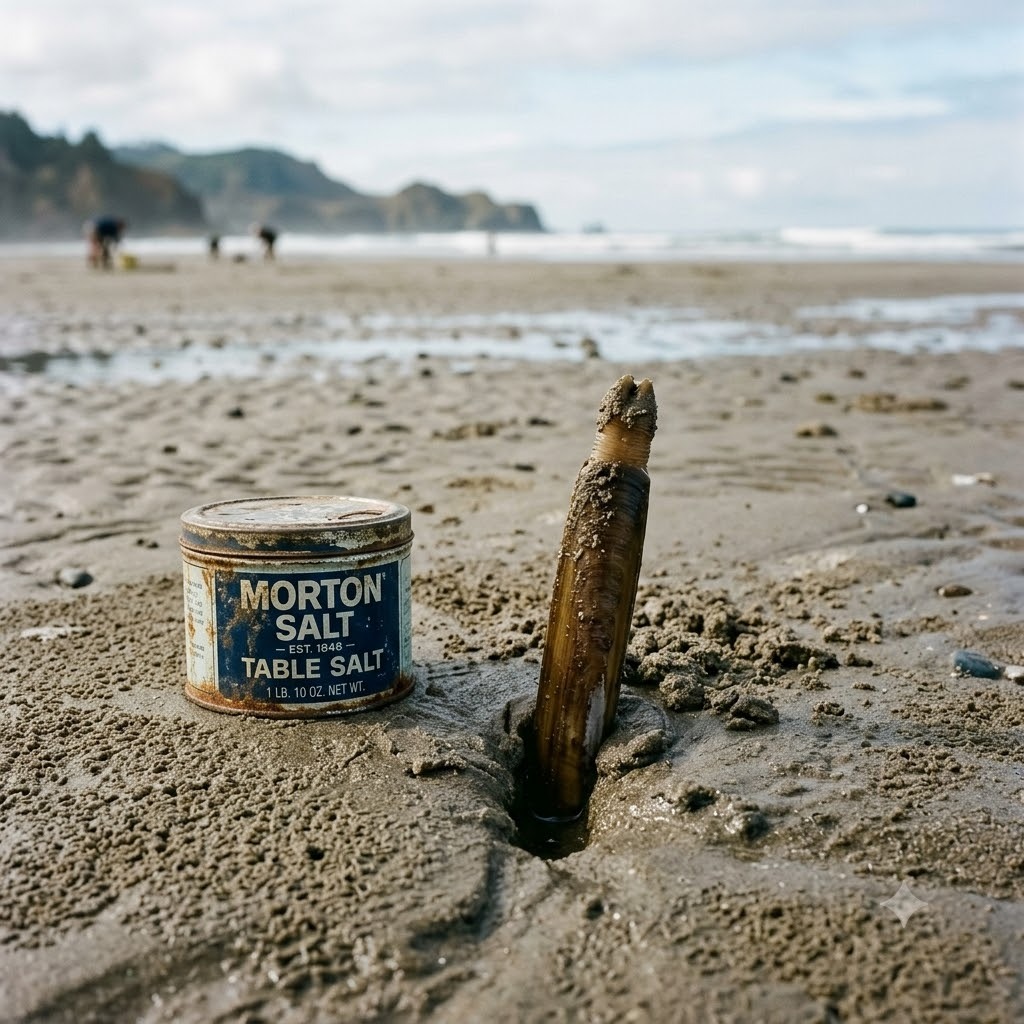
Jackknife and razor-type clams live in firm sand and sandy mud flats, standing vertically in deep burrows marked by a keyhole- or dumbbell-shaped hole. Work them on a good low tide, walking the flat and watching for the tell-tale holes or the small squirt they make when you step nearby.
How to catch them
Two methods: dig fast beside the burrow with a narrow spade or clam gun and grab the clam before it descends, or pour a little salt into the keyhole hole, which irritates the clam into rising partway out so you can seize it firmly and pull steadily. Either way, be quick and hold on. Keep only legal clams and refill your holes.
Handling, cleaning and cooking
Rinse and purge the clams, then shuck them and clean the digger foot and body - a quick blanch helps open them. The tender meat is best cooked briefly: lightly floured and fried, quickly grilled, or added at the end to chowder and pasta. Do not overcook, and discard any clam that will not close before cooking.
Safety and the law
The thin shells are sharp, so handle clams and shucked shells carefully. Get the required licence, observe size and daily limits, and heed biotoxin and pollution closures, since these filter feeders can concentrate toxins. Watch soft flats and the tide. Cook thoroughly; shellfish is a serious allergen. Read our shellfish safety guide.