How to Catch Jonah Crab
A heavy-clawed Atlantic rock crab, often a bonus in lobster pots or found among jetty rocks, prized for its big, meaty claws rather than its body.
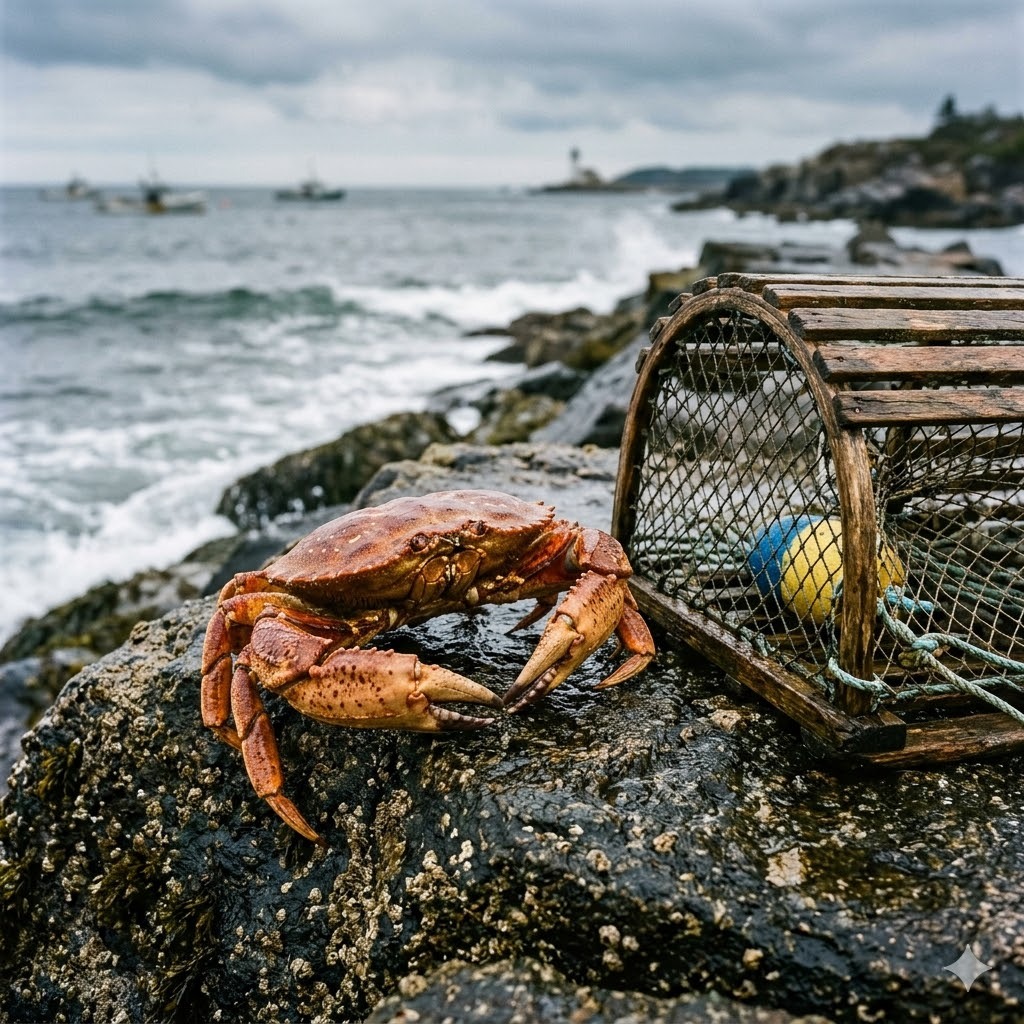
Follow local size limits and egg-bearing-female rules. The claws are powerful - handle from the rear.
The Jonah crab is a tough, heavy-clawed crab of the North Atlantic, found over rocky bottom, ledges, jetties and reefs from the mid-Atlantic up into the colder northern waters. It is a solid, unglamorous animal - reddish-brown, blunt-clawed and slow-moving - but those big claws hold excellent meat, and for many crabbers on the Atlantic coast the Jonah is a welcome catch in its own right, or a happy bonus that turns up while they are after something else.
The one thing that shapes this pursuit is that the Jonah is usually a by-catch or an opportunist's crab rather than a dedicated target. It most often appears in lobster and crab pots set for other species, or it is hand-caught among rocks by someone poking about a jetty at low tide. That makes it an intermediate pursuit - not because the crab is hard to catch, but because you generally take it alongside other fishing and its powerful claws demand careful handling. It suits anglers already setting pots, rock-hoppers who enjoy working a jetty, and anyone who values a claw-heavy crab.
Why go for Jonah crab
You go for Jonah crab for the claws. They are large, meaty and firm, with sweet white meat that many rate close to more famous crabs. Because Jonahs so often turn up as a bonus in gear set for lobster or in a hand-search along the rocks, they can feel like a catch you got for free.
Be honest about expectations. The body meat is modest compared with the claws, so most people focus on the claws and legs. Jonahs are also slower and less abundant in easy shore reach than some estuary crabs, so a dedicated session for them can be patchy. Treat them as a valued part of a mixed day rather than a guaranteed haul on their own.
What you get:
- Big, meaty claws with sweet, firm white meat
- A crab that often comes as a bonus in lobster or crab pots
- A rewarding rock-hopping hand-catch along Atlantic jetties
- A tough, cold-water species that keeps and cooks well
Where and when to find them
Jonah crabs live on hard bottom: rocky ledges, boulder fields, reefs, jetties and breakwaters in cool Atlantic water. They favour structure where they can wedge into crevices, so the ground you want is rocky and broken, not clean sand. Along the shore, jetties and rip-rap breakwaters are the most accessible spots; from a boat, rocky bottom and ledges hold them in numbers.
For timing, Jonahs are present year-round on their rocky ground, though they can move to different depths with the seasons. From shore, the tide is what opens the door: a good low tide exposes more of a jetty's lower rocks and crevices, letting you hand-search ground that is underwater most of the day. Aim for the bottom of a spring low tide for the best access. If you are pot-fishing, a running tide helps the crabs feed and find your bait.
To read the ground, look for deep crevices, overhangs and gaps between boulders at and just below the low-tide line - that is where a Jonah tucks itself in. Where the rock is heaviest and most broken, the crabs are most likely to be hiding.
How to catch them
There are two main ways to take Jonahs, and both fit the "opportunist" character of the crab.
The baited pot is the reliable method. Jonahs readily enter lobster and crab pots baited with oily fish, and many are caught this way as a bonus while pot-fishing for lobster. If you are setting pots on rocky bottom, expect Jonahs to turn up - bait with strong-smelling fish, soak the pot, and haul it to sort your catch. This is the most consistent way to get them.
Hand-catching among the rocks is the other approach, and it suits a low tide on a jetty. Work slowly along the exposed lower rocks, looking into crevices and under overhangs. When you spot a crab, reach in and take hold from the rear, thumb and finger across the back of the shell behind the legs, keeping well clear of the claws - a Jonah's claws are strong enough to give you a serious pinch. Stout gloves are strongly recommended. Lift the crab out and check it before deciding to keep it.
For pots, gloves, a gauge and the rest of the kit, see our gear notes. Whichever way you catch them, keep a lidded bucket handy and handle every crab from behind.
Handling, cleaning and cooking
Handle Jonahs with real care - the claws are their defining feature and their weapon. Always grip from the rear, well clear of both claws, and wear gloves. Keep your catch cold and, ideally, alive until you cook it: store them in a cooler kept cool and damp, not sealed underwater where they suffocate. Any crab that has died before cooking should be discarded.
Because the claws are the prize, cleaning is largely about getting to the claw and leg meat cleanly. Two or three honest cooking methods:
- Boiled whole. Drop live crabs into a well-salted rolling boil and cook until the shells turn colour. Cool, then crack the claws and legs for the meat.
- Steamed. Steaming over seasoned water keeps the claw meat sweet and firm, and is easy to get right.
- Claws cracked and picked. However you cook them, the reward is in cracking the big claws carefully and lifting out the meat in whole pieces for crab cakes, rolls or simply with butter.
Cook thoroughly and eat fresh. For more on turning a catch into a meal, see our catch and cook guide.
Safety and the law
Jonah crab is straightforward to catch but, like all shellfishing, comes with rules you must know first - and with a genuine handling hazard in those claws. Check your local regulations before you go; our shellfish safety page explains how to find current limits and closures for your area.
The points that matter most for Jonah crab:
- Licence and gear rules. A fishing or shellfish licence is often required, and there may be rules on the number and type of pots you can set. Check what your area requires.
- Minimum size. There is usually a minimum size measured across the shell. Check your local minimum, carry a gauge, and return undersized crabs unharmed.
- Egg-bearing females. A female carrying eggs has a spongy mass under her tail flap. In most places it is illegal to keep egg-bearing females - release every one gently, and check your local rule on females generally.
- Bag limits. There is often a daily catch limit. Check your local limit.
- Powerful claws. The real day-to-day hazard here is the claws, which can crush a fingertip. Always handle from the rear, wear gloves, and never grab a Jonah across the front.
- Water quality. Only harvest from waters open for shellfishing and never after a pollution advisory.
Know the size limit and the egg-bearing rule, respect those claws, and the Jonah is a satisfying, meaty bonus to any Atlantic rock-fishing day. More background is on the main shellfish section.