How to Catch King Crab
King crab is a giant cold-water crab landed almost entirely by tightly regulated commercial boats, so treat it as a bucket-list market delicacy rather than a catch you can go and make yourself.
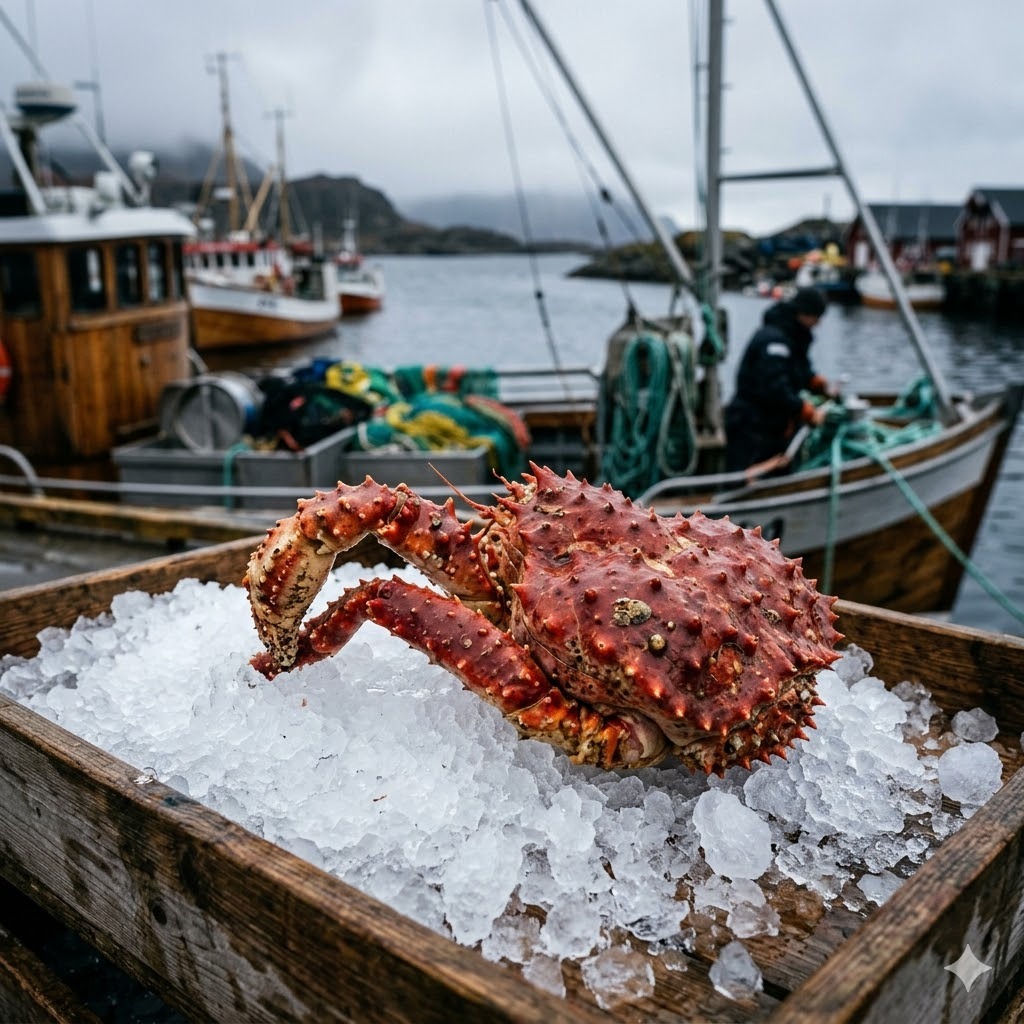
Recreational harvest is very limited and heavily managed. This is not a beginner shore fishery.
King crab is the crab everyone pictures when they imagine a real feast: enormous, spiny, armoured, with legs so long and thick that a single one can be a meal in itself. It is a spectacular animal and the meat is genuinely worth the fuss. But I am going to be honest with you straight away, because it is the single most important thing on this page - king crab is not a catch you can realistically go out and make. This is one of the most tightly regulated commercial fisheries in the world, and for the ordinary person it is a delicacy you buy, not a species you gather.
That is not me being discouraging for the sake of it. King crab live in cold, deep water, they are managed under strict quotas because their populations are fragile, and the fishery is limited to licensed commercial vessels in most places. Some of those fisheries have been closed entirely in recent seasons to protect collapsing stocks. So the useful, honest version of "how to catch king crab" is really "how to understand, buy and cook king crab well" - and that is what this guide gives you.
Why go for king crab
The reason king crab has such a reputation is the eating. The leg meat is thick, firm, sweet and comes out of the shell in big, generous pieces. There is very little that beats a plate of freshly steamed king crab legs with melted butter. It is a genuine bucket-list food, the kind of thing you plan a special meal around rather than eat on a Tuesday.
There is romance in the fishery too. King crab is bound up with the culture of the coldest, roughest fishing grounds on earth, and that mystique is part of why it commands such high prices. But it is worth being clear-headed about what you are actually buying into. The thrill of king crab, for you and me, is the meal and the story - not the catching. The catching is a dangerous, quota-limited commercial job done by professionals, and no honest guide should suggest otherwise.
Where and when to find them
King crab live on the floor of cold northern seas, generally in deep water, on sandy, muddy and mixed bottoms. They move seasonally with temperature and their breeding and moulting cycles, sometimes gathering in dense aggregations that the commercial fleet targets, but even at their shallowest they are far beyond the reach of anyone fishing from shore. This is deep, cold, boat-and-winch territory.
That is why there is no shore-fishing season to tell you about. The dates that matter for king crab are the commercial opening dates set by fisheries managers, and those are decided by quota and stock surveys, not by anything you can act on as a recreational angler. In the handful of places with any limited recreational or subsistence king-crab access, the managing authority publishes exact zones, depths and seasons, and those override anything you read here. If you are not in one of those specific places, treat king crab as a species you will only ever meet at the counter.
How to catch them
For understanding rather than instruction, here is how king crab are actually landed. Commercial boats fish very large, heavy steel pots - big enough to climb inside - baited with oily fish and dropped onto the deep sea floor. The pots soak for a day or more, then are hauled back with powerful hydraulic gear because their size, weight and depth make anything else impossible. On deck the crabs are sorted, undersized and female crabs are thrown back, and only legal males are kept alive in flooded holds.
This is genuinely one of the most hazardous jobs in fishing: freezing water, heavy swinging gear, ice on every surface, and long hours. It is not something to attempt casually, and in almost all waters it is simply illegal without a commercial licence. If you happen to live in a rare area that allows limited recreational pots for king crab, you would use a heavy baited pot, a long line, a strong marker buoy and a capable boat - and you should learn it hands-on from someone already doing it legally, never from a page. General pot and rope basics live on our gear page, but the deep cold-water specifics demand a local mentor and the right permit.
Handling, cleaning and cooking
This is the part almost every reader will actually use, so here is how to do king crab justice at home. It is nearly always sold already cooked and frozen, usually as split legs and clusters. That is exactly how it should be - it was cooked fresh at sea or dockside to protect the quality - so your job is to reheat gently, not to cook from raw.
Thaw frozen legs slowly in the fridge overnight rather than blasting them, then warm them through by steaming over simmering water for a few minutes, or by a short dip in boiling water, just until hot in the centre. Do not overcook: the meat is already cooked, and extra heat only makes it stringy and dulls the sweetness. Split the shell along its softer edge with kitchen scissors or a light cracker and the big pieces of meat lift straight out. Serve simply, with melted butter and lemon, and let the crab do the talking. If you want to build a full meal around it, our catch-and-cook guide covers technique and sides.
If you ever handle live king crab, remember it is a powerful animal with a hard spiny shell that can cut you, so wear gloves and keep clear of the legs. As with any crab, keep it cold and alive right up to cooking, and never eat one that died and sat un-chilled.
Safety and the law
This section is the heart of the page, so please read it. King crab is a tightly managed commercial species, and that management exists because the stocks are genuinely fragile - some fisheries have been shut down completely to let populations recover. Harvesting king crab without the correct commercial permit is a serious legal matter almost everywhere, not a grey area.
For nearly everyone reading this, the honest and lawful path is the simplest one: buy your king crab from a reputable source, do not try to catch it. If you are in one of the rare places that permits any recreational take, you must hold the correct licence, obey the exact season and zone, keep only legal-size males, and return females and undersized crabs unharmed. Do not trust any specific size or bag number you read online, including here - check your local limit with the authority that manages the fishery, because those numbers are set locally and change.
Then there is basic food safety: crab spoils quickly once dead, so keep it cold, cook it fully, and when in doubt throw it out. Shellfish is also a common serious allergen, so take that seriously when serving guests. Our shellfish safety guide goes deeper on spoilage, allergies and the law, and is worth reading before you handle any shellfish at all. When you are done here, the wider Shellfish and Crustaceans section lists species that ordinary anglers can actually catch - which, honestly, king crab is not.