How to Gather Pacific Oysters
A beginner's guide to hand-picking large wild Pacific oysters off rocks and flats at low tide, plump and superb grilled, with the biotoxin and bacteria safety that oyster gathering absolutely demands.
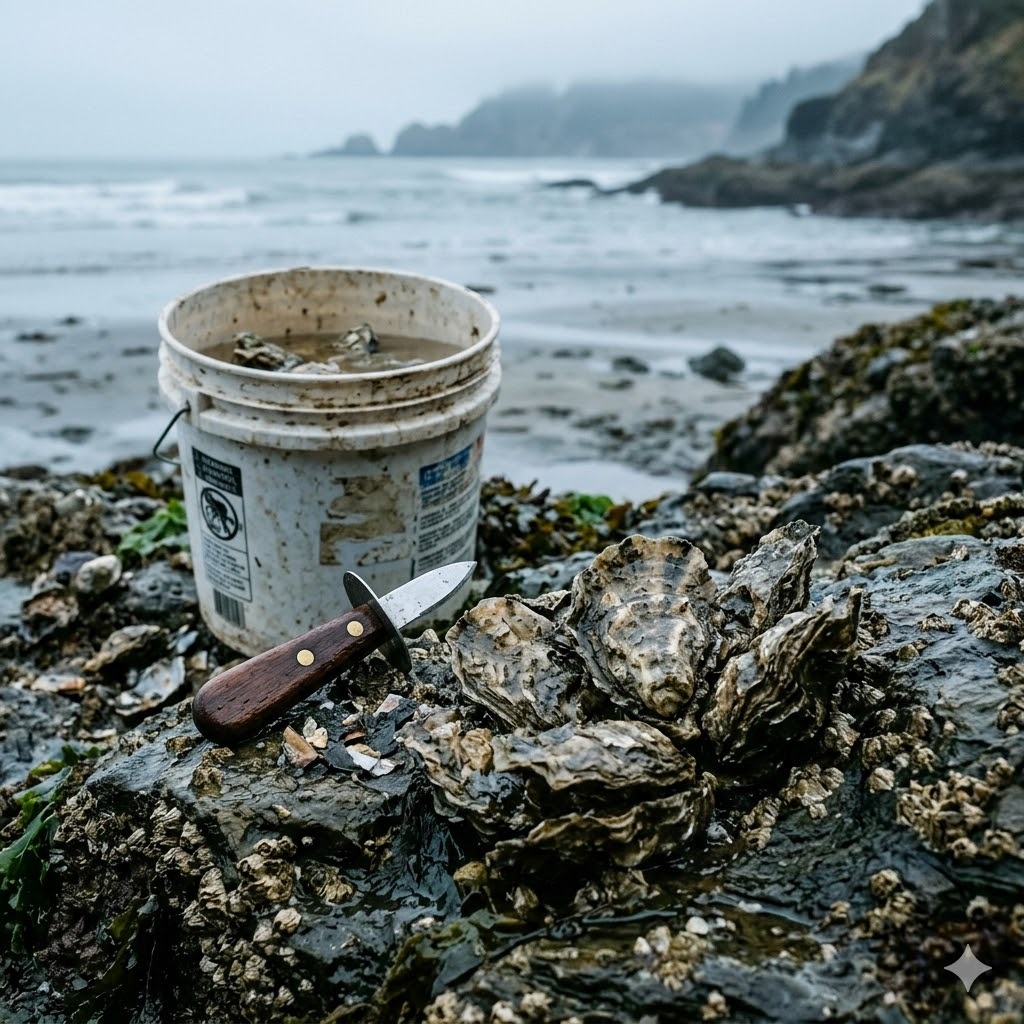
🔴 Take only from open, approved beaches and always check biotoxin and water-quality advisories. Some areas require a permit or limit numbers. The shells are razor-sharp.
The Pacific oyster is the big, frilly-shelled cousin that has spread far beyond its native range and now blankets rocks and tidal flats along the US West Coast, across much of Europe and beyond. Where it takes hold it is often abundant - sometimes to the point of being treated as an invasive nuisance - which makes it one of the easiest wild oysters for a beginner to find and gather. On a good low tide you can fill a bag by hand in an hour, no boat or specialist kit required.
It is also outstanding eating. Pacific oysters grow plump and full, and they are hard to beat grilled or baked on the half-shell over coals until the shells pop and the meat firms in its own briny liquor. But the same biology that makes any oyster a delicacy makes it a hazard: these are filter feeders that concentrate whatever is in the water. This guide covers finding, gathering, shucking and cooking them - and, most importantly, the safety and legal rules that decide whether an oyster is a treat or a trip to hospital. That last section is the one to read first.
Why go for Pacific oysters
The headline reason is abundance. In many areas Pacific oysters have colonised the intertidal zone so thoroughly that they carpet rocks, jetties and flats, cementing to hard surfaces and to each other in great crusted sheets. That density means a beginner can walk out at low tide and gather a generous meal by hand without hunting hard for a productive spot.
They are also large and generous on the plate. A good wild Pacific oyster fills the shell, and its size makes it especially suited to cooking on the half-shell: grilled over coals with a knob of butter or a splash of sauce, they are one of the great simple pleasures of a shoreline cook-up. Raw is the classic option too, though - as always with oysters - raw is the highest-risk choice and depends entirely on clean, open water.
Because they are so plentiful and so firmly attached, they are forgiving to gather. You are not chasing a fast-moving or well-hidden animal; you are picking a stationary one off the rocks. That makes Pacific oysters a natural entry point into shellfish gathering, and a good place to build the habits that carry across the whole Shellfish and Crustaceans section.
Where and when to find them
Look for hard intertidal ground that is exposed at low tide: rocky shores, boulder fields, jetties, pilings and firm tidal flats, often in and around estuaries and sheltered bays. Pacific oysters favour the mid-to-lower intertidal, so the further the tide drops, the more you expose. Their large, sharply frilled, layered shells are easy to spot once you have your eye in, and where you find one you will usually find dozens.
As with any intertidal harvest, the tide is your timetable. Aim for a low tide - ideally one of the bigger spring tides around the new and full moon - and arrive while the water is still falling so you have working time on the exposed ground. Always check your tide tables and plan your exit before you commit, because rocky flats and soft margins can cut you off quickly once the tide turns.
Seasonally, cooler months are generally the better bet, for both quality and safety. Warm summer water softens spawning oysters and, far more importantly, is when bacteria such as Vibrio and harmful algal blooms are most likely to be present. Cooler water tends to mean firmer oysters and lower biological risk - but that is a tendency, never a guarantee, and it never replaces checking the official status of the exact water you are gathering from.
How to gather them
Gathering is straightforward. At low tide, walk the exposed rock or flat and pick oysters that are of good eating size, either twisting a single free by hand or levering a clump loose with a blunt tool. Because Pacific oysters cement so firmly, a sturdy blunt bar or the back of a heavy knife helps you pop them off cleanly rather than shattering the shell. Sturdy waterproof, cut-resistant gloves are essential from the very first oyster - the frilly shells are viciously sharp.
Even where the species is abundant or considered a nuisance, gather responsibly. Take good-sized oysters, leave small ones to grow on, and break clusters gently so you can return undersized shells to the shore. Spread your picking across a wide area rather than stripping one patch bare. Keep your keepers cool and damp: a bucket with a wet cloth over the top, or a shaded mesh bag, keeps them alive on the walk back.
Some areas allow open, generous gathering of Pacific oysters, while others require a permit and set a daily limit even where the oysters are plentiful - so confirm the local rules before you fill a bag (more on this below). Live oysters should be closed, or should close when tapped; discard any that gape and will not respond. Good boots or wading shoes protect your feet on the same razor shells that make gloves non-negotiable.
Handling, cleaning and cooking
Back home, scrub each oyster under cold running water to clear mud and grit from the deep folds of the shell. Discard any that are gaping and will not close, any that are cracked, and any that smell sour rather than clean and briny. Store the live ones cold, covered with a damp cloth in the fridge - not sealed in water or an airtight bag, which will kill them - and eat them promptly.
To shuck, hold the oyster cupped-side down in a thick glove or folded towel, work the tip of a proper oyster knife into the hinge at the narrow end, and twist to pop it. Slide the blade along the top shell to cut the muscle, lift the lid, and keep the liquor in the bottom shell. The large size of Pacific oysters makes them relatively easy to open once you have the knack, but never substitute a bare hand and a kitchen knife - a glove and a real oyster knife prevent the injuries that send people to A&E.
Their plumpness makes Pacific oysters superb on the half-shell over coals: set them cupped-side down on a hot grill, add butter or a dressing, and lift them off as the shells open and the edges curl. Baked, battered and fried, or dropped into a stew, they are equally good. Raw on the half-shell is the purist's route - but read the safety section below before you choose raw, because it depends entirely on clean, open water. For more ways to take a shore harvest to the plate, see the catch and cook guide.
Safety and the law
This section outweighs everything above it. Oysters are among the most dangerous shellfish to gather because, as filter feeders, they pump enormous volumes of seawater through their bodies and concentrate whatever it contains. That includes bacteria such as Vibrio, which thrives in warm months and can cause severe illness, and biotoxins from harmful algal blooms - the "red tide" group responsible for paralytic shellfish poisoning (PSP). A contaminated oyster looks, smells and tastes completely normal, so you cannot judge safety by the animal itself.
Only ever gather from waters that are officially open and classified as approved for shellfish by the relevant authority, and check that status every single time you go - not once a season, every trip. Classifications open and close with rainfall, sewage overflows, algal blooms and water temperature, so ground that was safe last week may be closed today. Learn how to check your local shellfish sanitation programme or fisheries body, avoid gathering near storm drains, marinas, sewage outfalls or after heavy rain, and if you cannot confirm the water is open, do not gather there.
Know the limits of cooking. Thorough cooking kills bacteria such as Vibrio, which is why "when in doubt, cook" is the honest rule for any oyster from warmer water. But cooking, freezing and lemon juice do nothing to destroy the biotoxins that cause PSP - a biotoxic oyster cannot be made safe by heat. Only the official open/closed classification, which tracks algal blooms, protects you from that, which is why raw oysters from warm or closed water can be genuinely dangerous. When in any doubt, cook them; if the doubt concerns a bloom or a closure, do not eat them at all.
Then the ordinary rules. Even where Pacific oysters are abundant, many areas still require a recreational shellfish licence or permit and set size and daily bag limits, so confirm the regulations for your exact location before you gather. Wear cut-resistant gloves throughout, mind the rising tide and your footing on rock and soft flats, and take only what you will use. For the full detail on biotoxins, bacteria, closures and how to read advisories, see the dedicated shellfish safety guide, and get cut-resistant gloves, a proper oyster knife and wading footwear from the gear page before you head out.