How to Catch Sea Scallops
An honest look at wild sea scallops - overwhelmingly a commercial dredge fishery - and the advanced, cold-water dive gathering that recreational access, where it exists at all, actually requires.
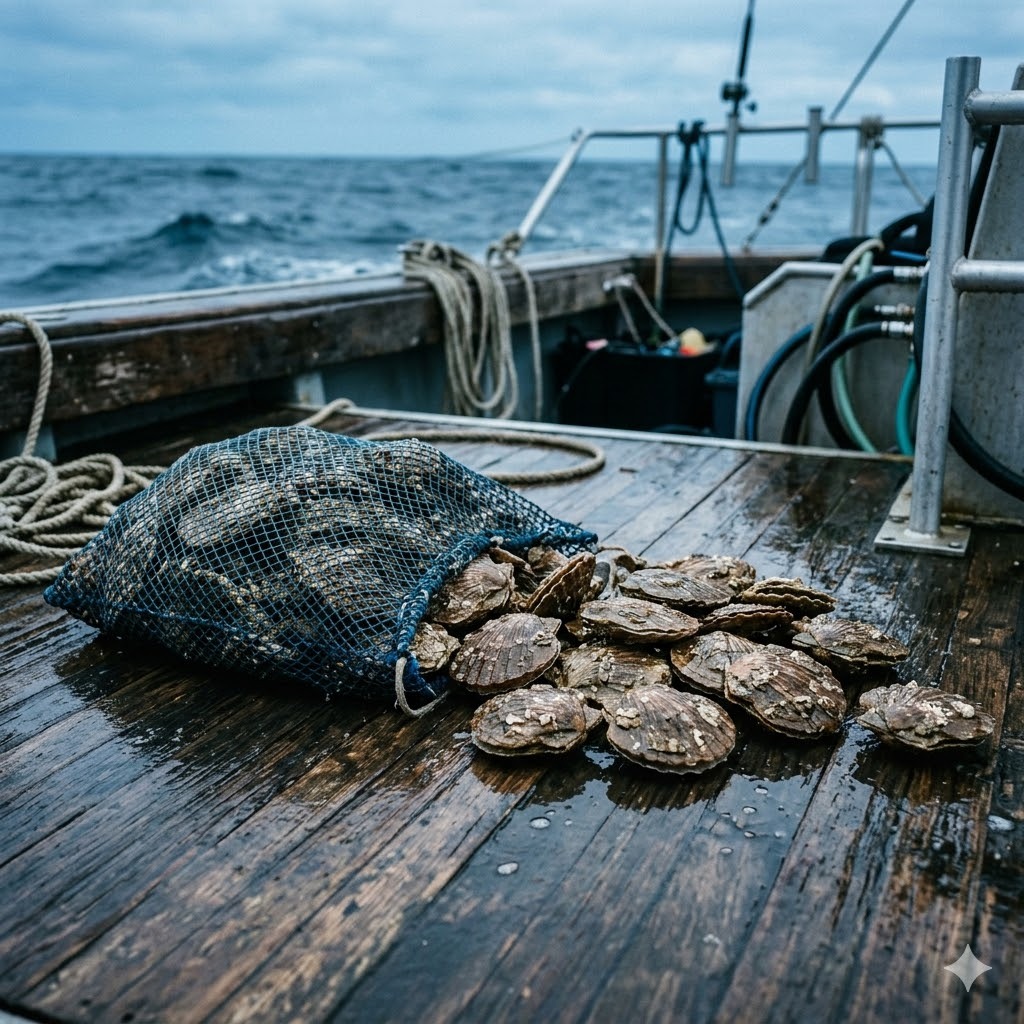
Recreational rules and access vary and diving to depth carries real risk. Only dive within training and never alone. Check any local harvest limits.
The sea scallop is the big, sweet, restaurant-grade scallop most people know from the plate rather than the shore. It lives in deeper, colder offshore water than the shallow-water species you can wade for, and the honest truth is that almost every sea scallop you have ever eaten came out of the water on the end of a commercial dredge, not a recreational bucket. This is first and foremost a market delicacy and a commercial fishery, and any guide that pretends otherwise is misleading you.
Recreational access to wild sea scallops exists in some places but is limited, and where it exists it usually means one thing: scuba diving to hand-pick them off the bottom in cold, deep water. That is a serious undertaking - a step change in risk and skill from picking mussels off a rock at low tide - and it is not something to attempt without proper dive training and experience. This guide is honest about all of that. It covers why people go for them, where and when they live, how dive gathering actually works, and how to handle the catch, but the section that matters most is the last one, on safety and the law.
Why go for sea scallops
The reward is the eating. Sea scallops are large, with a thick, sweet, tender white muscle that sears beautifully and is prized in kitchens the world over. A hand-picked scallop, shucked fresh, is about as good as seafood gets, and for divers who already have the training, gathering your own from the seabed is a genuinely special experience that no market purchase can match.
There is also the appeal of the dive itself. For an experienced cold-water diver, a scallop dive combines a purposeful task with time on a rich, living seabed, and the hands-on selectivity of picking individual scallops by hand stands in sharp contrast to the blunt sweep of a commercial dredge. You take only what you want, leave the rest undisturbed, and see exactly what you are gathering.
But it is worth being clear-eyed: for most people, the realistic way to enjoy a sea scallop is to buy one. The recreational route is open only to trained divers, in specific places, under specific rules, and it carries real risk. If you are not a competent, current cold-water diver, this species belongs in the "market delicacy" column, and there is no shame in that. The shallower shellfish in the wider Shellfish and Crustaceans section are far more sensible places for a beginner to start.
Where and when to find them
Sea scallops live on the open seabed offshore, typically on firm sand, gravel or shell bottom in cold, deeper water - well beyond the reach of anyone on foot. Unlike intertidal shellfish, they are never exposed by a falling tide; you have to go to them, underwater. They lie on or just under the surface of the bottom, and an experienced eye learns to pick out their rounded, fan-ribbed shells among the seabed clutter.
Because access means diving, the conditions that matter are diving conditions rather than tide charts: good underwater visibility, manageable currents, and water you and your equipment are rated for. Depth, cold and current all rise sharply the further offshore you go, which is a large part of why this is an advanced pursuit. Boat support is effectively mandatory, since you are diving well away from shore.
Seasonally, where a recreational scallop dive fishery exists it is usually tightly defined by an open season, and it may be closed entirely for much of the year to protect the stock and to manage biotoxin risk. The open windows, the areas and the depths that are permitted vary enormously by region, so the real answer to "when" is "only when and where the regulations specifically allow it" - which you must confirm before planning any trip.
How to gather them
Where recreational gathering is permitted, the method is hand-picking on scuba. A diver descends to the seabed with a mesh catch bag and picks individual scallops of legal size by hand, placing them in the bag and working a patch of bottom methodically. It is selective and low-impact by nature: you choose each scallop, take only good-sized ones, and leave the small ones and the surrounding seabed undisturbed.
This is not casual snorkelling. It typically means deeper, colder water, decompression awareness, current management and careful gas planning, all while doing a task with your hands and managing a filling catch bag that changes your buoyancy. It demands current, proper scuba certification, dive planning appropriate to the depth, and the right cold-water kit - and it should never be done alone. A trained buddy, surface support and a boat are baseline requirements, not optional extras.
Keep the catch cool and alive on the boat, ideally in a cooler with plenty of ice or in shaded, damp conditions, until you can shuck or refrigerate it. Live scallops keep best cold and undisturbed. And gather conservatively: even where the rules allow a certain number, taking only what you will eat is the right approach for a slow-growing, easily depleted resource.
Handling, cleaning and cooking
Shucking a scallop is straightforward once you have the knack. Work a thin knife or shucking blade into the shell to cut the muscle from the flat top shell, open it, and slide the blade under the meat to release it from the bottom shell. Clean away the frilly mantle and the darker viscera, leaving the pale, round adductor muscle - the "scallop" of the plate - and, if you like, the orange-and-white roe or "coral". Rinse briefly in clean seawater or cold water and keep the meat cold.
Because scallops are highly perishable, handle them promptly. Keep shucked meats cold, and either cook them the same day or freeze them quickly if you cannot. A live scallop should react when handled; discard any that are clearly dead, gaping and unresponsive, or that smell off rather than clean and sweet.
In the kitchen, sea scallops need very little. Pat them dry, sear them hard and fast in a hot pan with a little butter or oil until just caramelised and barely opaque through the middle, and finish with a squeeze of lemon. Overcooking is the only real way to ruin them - a scallop wants seconds, not minutes. For more on turning a self-gathered catch into a meal, see the catch and cook guide.
Safety and the law
For sea scallops, safety has two faces, and the first is the dive itself. Cold-water offshore diving is genuinely hazardous: depth, cold, current, boat traffic and the workload of gathering all stack the risk. Never dive alone. Only gather scallops on scuba if you are a currently certified, experienced cold-water diver, diving within your training and limits, with a competent buddy, proper planning and boat support. If you are not that diver, this is not the shellfish for you - buy them instead, with no loss of face. No meal is worth a diving accident.
The second face is the shellfish itself. Scallops are filter feeders, and the surrounding tissue - the guts and mantle - can concentrate biotoxins from harmful algal blooms, including those responsible for paralytic shellfish poisoning (PSP). This is a large part of why the firm white adductor muscle is the part usually eaten and why the viscera are removed. As with all shellfish, cooking does not destroy these biotoxins, so heat is no protection against a contaminated animal. Only gather from areas that are officially open and approved, and check the status every time, because closures track blooms that you cannot see, smell or taste.
Then the rules, which for sea scallops tend to be strict. Recreational harvest is often limited or entirely closed, and where it is allowed there are usually licence or permit requirements, size limits, daily bag limits, defined open seasons and specific permitted areas - plus, frequently, rules on the diving itself. Confirm all of this with the relevant fisheries and shellfish-safety authority for your exact location before you plan a trip, and never assume access simply because scallops are present. For the full detail on biotoxins, closures and how to check advisories, see the dedicated shellfish safety guide, and make sure your dive and shucking kit is sorted via the gear page before you even consider going.