How to Gather Sea Urchin
Spiny urchins gathered by hand from rocky reefs and tide pools for their rich briny roe - thick gloves are non-negotiable against the spines.
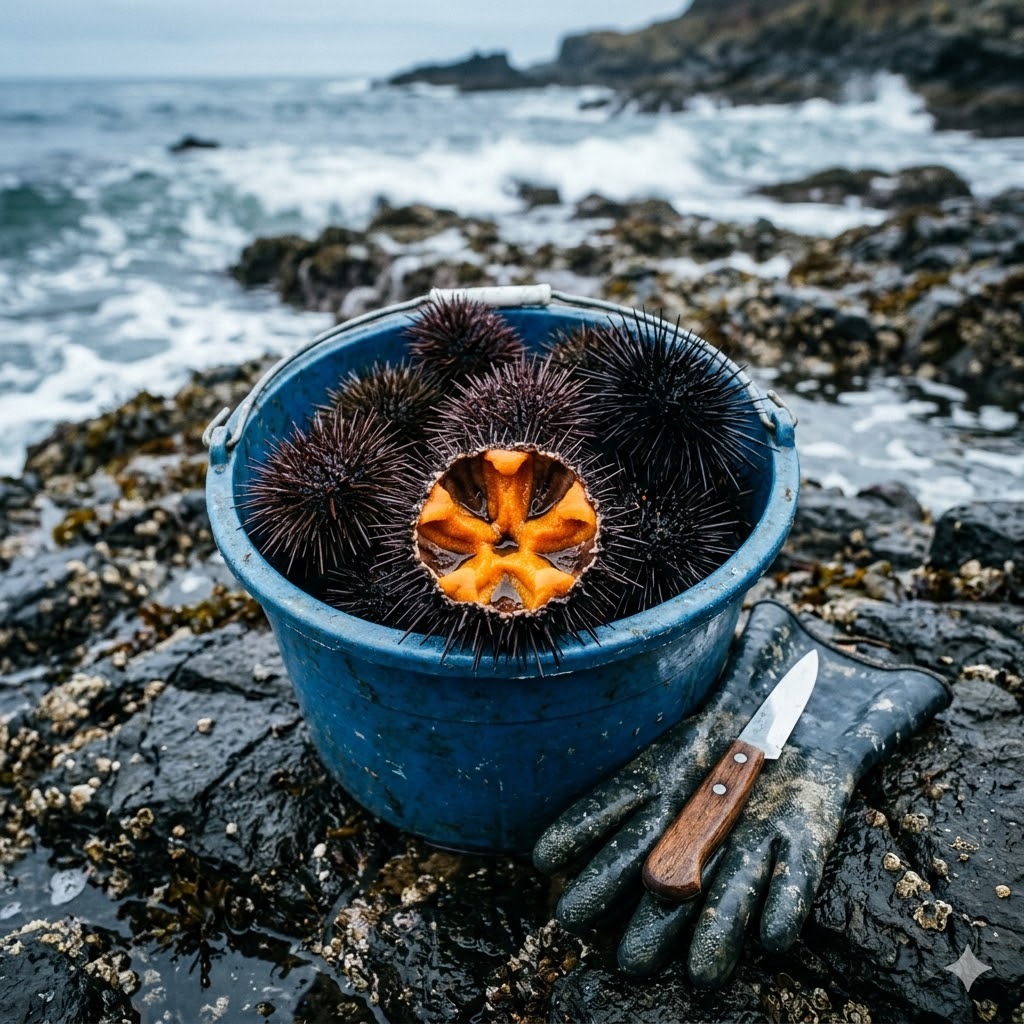
🔴 Follow local seasons and limits, and gather only from clean, open waters. The spines can give a painful, sometimes infected wound - gloves and care are non-negotiable.
The sea urchin is a spiny ball of a creature that most people walk straight past, but inside it holds one of the most prized ingredients in the sea: uni, the rich, briny roe served in sushi and eaten by the spoonful along many coasts. Gathering urchins is straightforward - you pick them off rocky reefs and out of tide pools by hand, or free-dive for them among the kelp. Cut one open at the underside and lift out the five orange tongues of roe, and you have a delicacy that costs a small fortune to buy.
The one thing that shapes the whole pursuit is the spines. A sea urchin is covered in sharp, sometimes brittle spines that puncture skin easily and cause painful, easily infected wounds. Thick gloves are not a suggestion here - they are the single most important piece of kit, and we mean it. This is an intermediate gather: the finding and picking are simple, but the spines, the local rules and the water quality all need respect. Handle those well and it is a hugely rewarding thing to do.
Why go for sea urchin
You go for sea urchin because the reward is genuinely luxurious for such a simple gather. Uni is expensive and hard to buy fresh, yet on the right reef you can gather it yourself with your hands and a knife. Cracking open a fresh urchin and tasting roe that was in the sea an hour ago is something you cannot buy at any price.
Be honest about the yield, though. Each urchin holds only a small amount of roe - the five little tongues - and not every urchin is full, especially out of season. You open a lot of urchins for a modest bowl of uni. But quality more than makes up for quantity. What you actually get:
- Rich, prized uni that is expensive and hard to buy fresh
- A simple hand-gather on accessible rocky shore
- A pursuit that works from the shore or by free-diving
- A real delicacy for very little outlay - beyond the gloves
Where and when to find them
Sea urchins live on rocky reefs, among boulders, in tide pools and on kelp beds, where they graze on seaweed. On the shore, look in rock pools and along rocky ledges at low tide, wedged into crevices and clustered under overhangs. In deeper water, they gather on reef and in kelp, where free-divers reach them. Clear, cold, clean water tends to hold the best of them.
Season matters more for urchins than for many shellfish, because it decides whether the roe is worth having. Urchins are full of roe at certain times of year and near-empty at others, so timing your gather to the season is the difference between a bowl of uni and a bucket of disappointment. Local knowledge and local seasons are your guide here.
A low spring tide is the shore gatherer's window, uncovering the most reef and the most urchins. For the roe to be good, aim for the season when local urchins are known to be full. As always, seasons and limits apply and vary by region, so check what is open in your area before you go, and do not gather out of season.
How to gather them
From the shore, gathering is simple: at low tide, work the rocky reef and tide pools and pick urchins up by hand. This is where the gloves come in - thick, puncture-resistant gloves, worn at all times, because bare hands and urchin spines end one way. Lift each urchin carefully, mindful that some species have longer or more brittle spines than others, and place it gently into a bucket rather than dropping it.
By free-diving, the method is the same but underwater: you descend among the reef and kelp, pick urchins off the rock by gloved hand, and bring them to the surface. This reaches the fuller, undisturbed urchins in deeper water, but it needs proper free-diving skill and safety - never dive alone, and know your limits in cold or moving water.
Whichever way you gather, take only what you will use, leave the smaller urchins, and do not strip a reef bare - urchin populations can be sensitive to over-gathering in a spot. Carry a sturdy bucket, your gloves, and a strong knife or purpose-made urchin tool for opening them. See our gear notes for gloves that will actually stop a spine, and the rest of the kit.
Handling, cleaning and cooking
Handle urchins with gloves on, always, until they are opened. Keep them cool and alive in a bucket until you are ready to process them, and open them the same day for the best roe.
Opening an urchin is simple once shown. Hold it underside up - the underside has the mouth in the centre, sometimes called the "Aristotle's lantern". With scissors or a knife, cut a circle around the mouth and lift out the central mouthpart and the dark guts. Inside, arranged around the shell, you will see the five orange or yellow tongues of roe. Gently lift each one out with a small spoon, and rinse it briefly in clean seawater to remove any bits of gut. Those five tongues are the uni, and that is all you eat. Honest ways to enjoy it:
- Fresh and raw. The classic. Eat the roe straight from the shell, or on rice or bread, seasoned with nothing more than a little salt or a squeeze of lemon. Freshness is everything.
- On sushi. Serve the tongues over rice as nigiri, the way it is prized in Japanese cooking.
- Stirred into a sauce. Fold uni through warm pasta or into a rich sauce off the heat, where its briny flavour carries beautifully.
Eat it fresh and treat it gently - uni is delicate and does not keep. For more on turning your catch into a meal, see our catch and cook guide.
Safety and the law
Sea urchin gathering is rewarding, but the spines make handling the main safety issue, alongside the usual water-quality and legal points. The most important habit is to check your local regulations first - see our shellfish safety page for how to check seasons, limits and water quality in your area.
Key points specific to sea urchin:
- Gloves are non-negotiable. Urchin spines puncture skin easily and cause painful wounds that infect readily, and broken spine tips can lodge under the skin. Wear thick, puncture-resistant gloves the entire time you gather and handle urchins. This is the single most important rule.
- Treat spine wounds seriously. If you are spined, remove what you can, clean the wound thoroughly, and watch for infection. Deep spines or signs of infection need medical attention.
- Seasons and limits. Take urchins only when local seasons allow, both for the law and because that is when the roe is worth having. Check your local season and daily limit and do not exceed it.
- Clean, open waters only. Urchins should be gathered only from clean water open for harvest, away from outfalls, drains and pollution.
- Free-diving safety. If you dive for them, never dive alone, respect the conditions, and know your limits in cold water.
- Gather sustainably. Take only what you will eat and leave the smaller urchins and enough behind to keep the reef healthy.
Wear the gloves without exception, mind the season, and gather from clean open water, and sea urchin stays exactly what it should be - a simple gather with a luxurious reward. More background is on the main shellfish section.