How to Catch Snow Crab
Snow crab live in cold, deep northern water and are mostly a commercial catch, so for nearly all of us this is a market delicacy rather than a realistic shore trip.
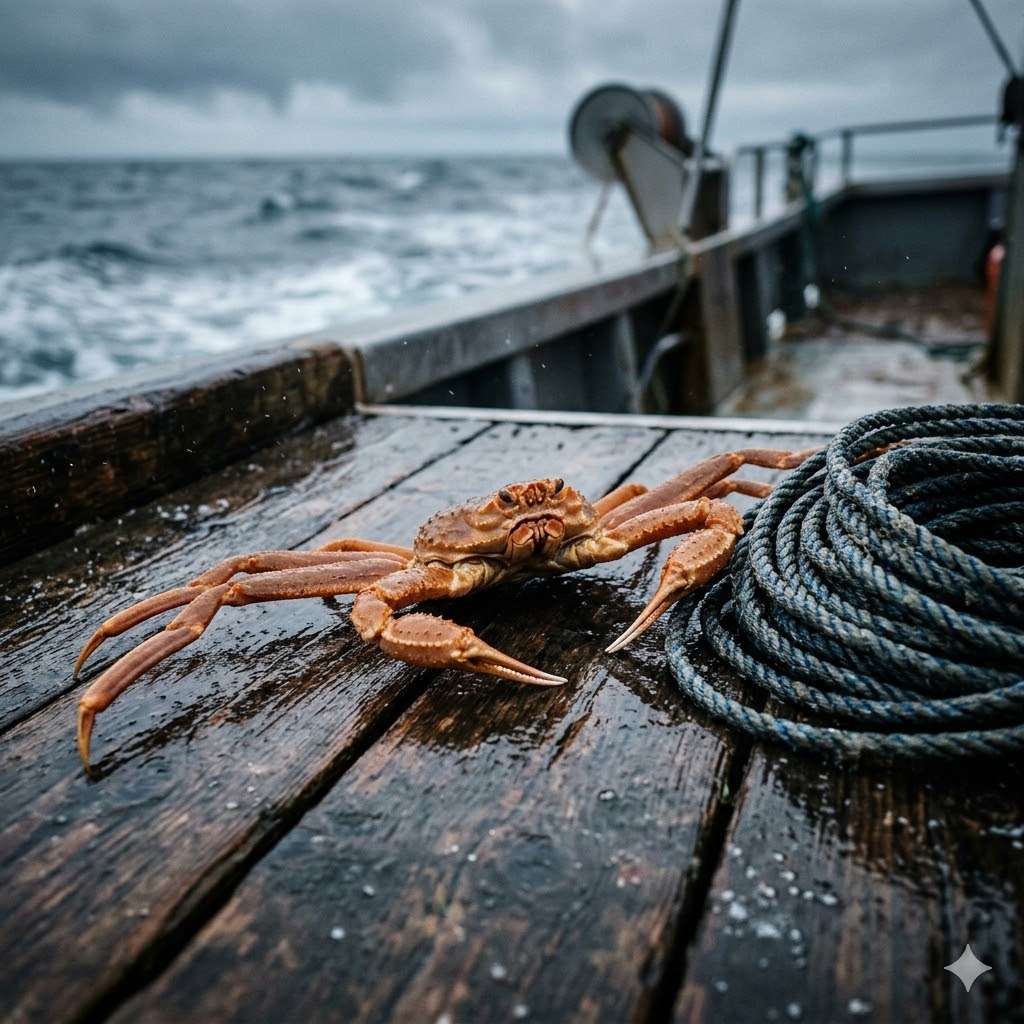
Recreational access is limited in many regions and quotas are tight. Check whether any recreational fishery exists where you are before setting gear.
Let me be straight with you from the first line, because it will save you a lot of wasted effort: snow crab is not a species most of us are ever going to catch ourselves. These are cold-water crabs that live scattered across the muddy and sandy floor of deep northern seas, often well past 50 metres down and frequently a great deal deeper than that. The long, sweet, easy-to-shell legs you see on a restaurant plate almost always came off a licensed commercial boat working hundreds of metres below the surface with heavy gear and a crew. That is the honest picture, and any guide that pretends otherwise is selling you a fantasy.
That does not mean the species is uninteresting, and it does not mean there is nothing here for a recreational angler. In a small number of regions there are limited recreational or subsistence fisheries, and if you happen to live near one it is worth understanding how snow crab behave and what the rules are. But for the vast majority of readers, the useful takeaway is knowing why you will not catch these from the beach, and how to buy and cook them well instead. This page will give you both.
Why go for snow crab
The appeal of snow crab is simple: the meat. The legs are long and slender, the shell is thin and relatively easy to crack, and the flesh inside is delicate, faintly sweet and clean-tasting. Pound for pound you get a good yield of usable meat, and it comes out in satisfying long pieces rather than the fiddly shreds you fight for in some smaller crabs. For a lot of people it is the crab they reach for when they want the eating to be relaxing rather than a battle.
There is also a genuine bucket-list quality to it. Snow crab is tied up in the culture of cold northern fishing ports, and tasting it fresh where it is landed is a real experience. But you need to separate two different things in your head. Enjoying snow crab as a food, and catching snow crab yourself, are almost entirely separate activities for the ordinary person. Chase the first one. Only chase the second if you genuinely live somewhere with legal recreational access, which is rare.
Where and when to find them
Snow crab are creatures of cold, deep water. They prefer soft bottoms - mud, sand, and mixed sediment - on the continental shelf and slope of northern seas, typically in cool temperatures that would be uncomfortable for a diver and impossible to reach with any shore-based tackle. They tend to move a little shallower in some seasons and deeper in others, following temperature and their own moulting and breeding cycles, but "shallower" here still usually means far beyond the reach of anyone standing on a rock or a pier.
This is the crux of why they are a commercial species. You simply cannot get a baited pot down to where they live and back again without a boat, a winch and a proper permit. There is no season or tide that magically brings them within casting range of the average angler, so if you are picturing a spot to walk to, snow crab is not it. If you are in one of the very few areas with a managed recreational fishery, the authority that runs it will publish exact opening dates, depths and zones. Follow those, not a general guide, because they are set locally and change from year to year.
How to catch them
For completeness, here is how snow crab are actually taken, so you understand the reality. Commercial boats fish large conical or rectangular steel traps, called pots, baited with oily fish and dropped in strings onto the deep sea floor. Each string is left to soak, then hauled back up with hydraulic gear because the depth and the weight make hand-hauling impossible. The catch is sorted on deck, undersized and female crabs are returned, and the legal males are kept live in tanks or on ice.
If you have secured legal recreational or subsistence access - and again, this is uncommon - you would be working a scaled-down version of the same idea: a heavy baited pot, a very long line, a strong buoy to mark it, and realistically a boat capable of reaching the required depth. This is advanced work. The gear is heavy, the water is cold, and a fouled or lost pot in deep water is both a safety risk and a pollution problem. If that is your situation, get hands-on guidance from someone who already runs pots legally in your area before you drop a thing. Do not treat it as a casual first outing. Sensible general pot and rope handling is covered on our gear page, but the deep-water specifics need a local mentor.
Handling, cleaning and cooking
Because most of us will meet snow crab at the fish counter rather than on a line, this is the section that will actually be useful. Snow crab is very often sold already cooked and frozen, split into clusters of legs. That is normal and fine - it was cooked fresh at sea or at the dock to lock in quality. Your job at home is usually just to reheat and serve, not to cook from raw.
To warm pre-cooked clusters, steam them over a pan of simmering water for a few minutes until heated right through, or drop them briefly into boiling water. Do not overdo it, because they are already cooked and long heat just toughens the meat and washes out flavour. Serve with melted butter, a squeeze of lemon and not much else - the point of snow crab is that the meat speaks for itself. Crack the thin shell with your hands or a light nutcracker and the leg meat slides out in long pieces.
If you ever do handle live or raw snow crab, treat it like any crab: keep it cold and alive until the moment you cook it, never let it sit dead and unrefrigerated, and cook it thoroughly. For ideas on turning any crab into a proper meal, our catch-and-cook guide walks through the whole process from shell to plate.
Safety and the law
This is the part that matters most, so read it even if you skip everything else. Snow crab is, for nearly everyone, a regulated commercial species, and that regulation exists for good reasons: these are slow-growing, cold-water animals whose populations can crash if overfished, and several fisheries have been closed outright in recent years to let stocks recover. Taking them without the correct permit is a serious offence, not a technicality.
If you are not in a recognised recreational fishery, the honest and legal answer is simple - buy your snow crab, do not try to catch it. If you are in one of the rare areas with recreational access, you must hold the correct licence, obey the exact season, respect the depth and zone rules, keep only legal-size males, and return females and undersized crabs unharmed. Never guess at these numbers. Check your local limit with the authority that manages the fishery, because minimum sizes, bag limits and openings are set locally and are not something a general page should invent for you.
Food safety matters too. Crab spoils fast once dead, so keep it cold, cook it properly, and when in doubt throw it out. Our full shellfish safety guide covers spoilage, allergies and the rules in more depth, and it is worth reading before you handle any shellfish. You can also browse the rest of the Shellfish and Crustaceans section for species that are genuinely within reach of an ordinary angler - because, being honest with you, snow crab usually is not.