How to Gather Soft-shell Clam (Steamer)
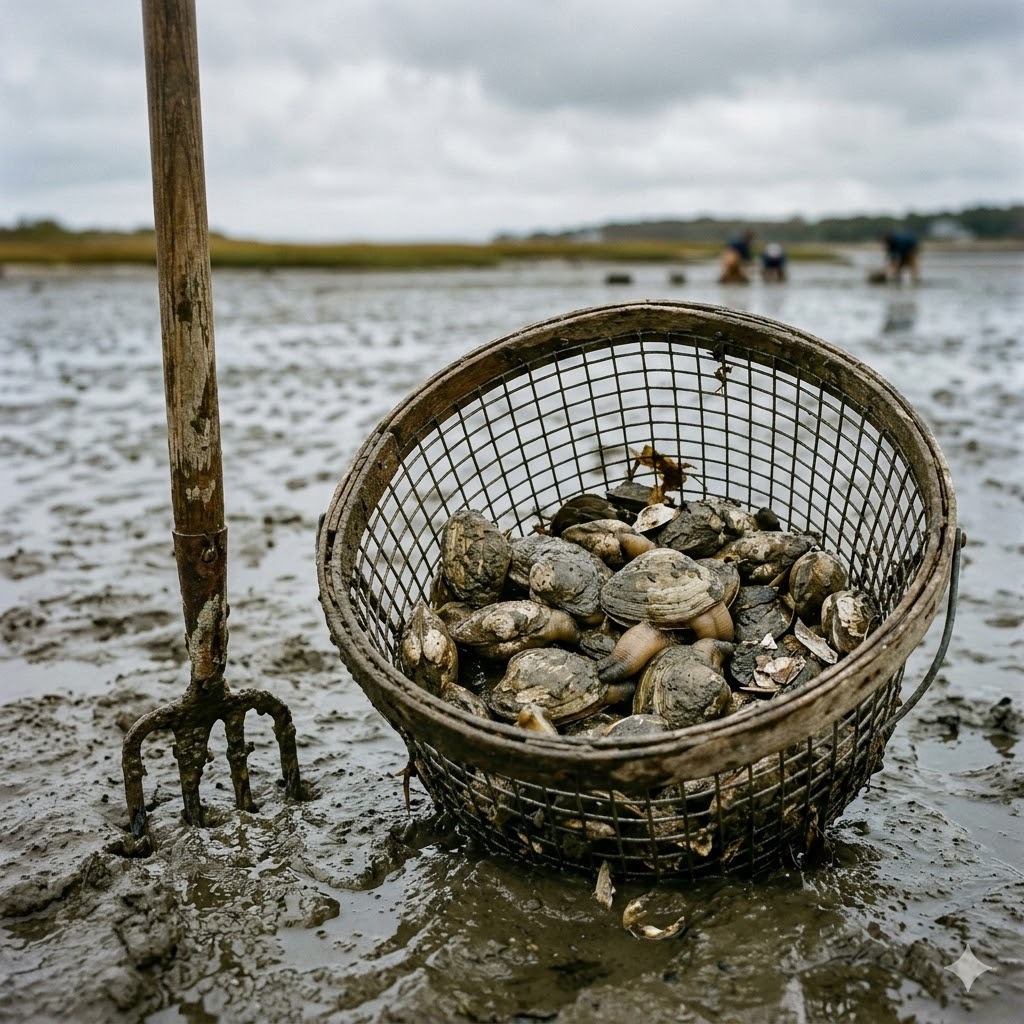
Dig steamers from soft mudflats at low tide with a clam hoe - a classic New England catch, but only ever from officially open waters, as clams concentrate biotoxins.
🔴 Harvest only from open, approved flats and always check red-tide/PSP closures - soft-shell clams concentrate biotoxins. Never dig closed areas. Follow size and quantity limits.
The soft-shell clam, known across New England as the steamer, lives buried deeper in the flats than the hard-shelled quahog and takes a bit more work to gather. Where a hard clam sits an inch down in firm sand-mud, the steamer burrows well into soft mudflats and reaches up to the surface through a long neck. That neck gives the game away: as you walk the flat, the clams squirt little jets of water, betraying their location and telling you exactly where to dig.
Digging steamers is a proper mudflat pursuit - wet, muddy and worth it. Their sweet, tender meat, steamed open and dipped in broth and butter, is a coastal tradition that people travel for. But steamers, like all clams, are filter feeders that concentrate whatever is in the water, including biotoxins that cooking cannot destroy. That makes the safety rules below the most important part of this whole guide. Get the water right, learn to read the squirts, and dig fast beside the hole - and you will bring home one of the best clams there is.
Why go for soft-shell clams
The eating is the reason people fall in love with steamers. Their meat is sweeter and more delicate than a hard clam's, and steamed open in a big pot they are a feast: you pull the clam from the shell, slip off the neck sheath, swish it in the cooking broth to rinse any grit, then dunk it in melted butter. It is a hands-on, communal meal that defines summer on parts of the coast, and doing it with clams you dug yourself makes it better.
There is a real skill to it that keeps diggers coming back. Reading a flat for the squirts, spotting the show holes, and digging quickly and cleanly beside the clam without breaking its thin, brittle shell is a craft. It is more demanding than gathering hard clams - steamers are deeper, faster to retreat, and easier to damage - which is why this sits at the intermediate level. That challenge is part of the appeal.
It is also low-cost and needs little kit. A clam hoe or short fork, a bucket and a good low tide are most of what you need. Once you know a productive, approved flat, you can go back to it again and again through the season. As with all clamming, the whole thing depends on gathering only from safe, open waters - but within that, it is an accessible way to bring shellfish home.
Where and when to find them
Soft-shell clams live in soft, muddy intertidal flats - softer ground than hard clams prefer - in sheltered estuaries, bays and tidal creeks. They burrow deep, often several inches to a foot down, and connect to the surface with a long siphon. Their presence shows in two ways: small keyhole or dimple-shaped holes in the mud, and the little jets of water they squirt as you walk near them and they pull their necks down. Those squirts are your map to the flat.
You dig steamers at low tide, when the mudflats are exposed. The lowest tides of the month, around the new and full moon, uncover the most ground and the best digging. Get onto the flat as the tide drops and work the exposed mud, keeping firmly aware of when the tide will turn - soft mudflats can be far from shore and the water returns quickly. Digging is possible through much of the year where waters stay open, though comfort and clam condition vary by season.
As with every clam, the most important question about where to dig is not where the clams are but whether the water is safe. Soft-shell clams are especially efficient at concentrating biotoxins, so you must only gather from flats officially classified as open and approved, and check the status every time. See /shellfish/safety/ for exactly how, and read it before you plan a trip.
How to catch them
The tool is a clam hoe - a short-handled hoe with long, curved tines - or a sturdy digging fork. The technique is all about speed and position. When you spot a squirt or a show hole, dig beside it, not directly on top of it, so you do not spear and shatter the clam. Steamers have thin, brittle shells that break easily, and a broken clam will not keep. Work fast, because a disturbed steamer pulls its neck down and starts to retreat deeper.
Open up a hole with the hoe, turning over a chunk of mud beside the show, then reach in with your hand to feel for the clam and lift it out gently. Because the clams are deep and the mud is soft and heavy, this is proper physical work - you will be muddy to the elbow. Many diggers work a small pit, taking several clams from one hole as they expose them, then move on. A basket or bucket set on firmer ground nearby holds the catch.
Measure as you go. Soft-shell clams have a legal minimum size, and undersized clams must be returned to the mud and reburied so they can survive. Handle keepers gently to avoid cracking shells, and rinse the worst of the mud off in seawater. Keep them cool and damp in a bucket or mesh bag - never sealed in fresh water - and take only what you will use, within any daily limit. Backfill your holes if local etiquette or rules ask for it, to keep the flat healthy.
Handling, cleaning and cooking
Keep steamers alive and cool from the flat to the pot. Store them in a bucket or mesh bag, out of the sun, on ice or in the fridge, but never submerged in fresh water or sealed airtight - both will kill them. A live steamer shows some response and its shell is intact; discard any that are badly broken or clearly dead. Because their shells gape naturally and do not close tightly, use gentle movement of the neck rather than a firm shell-close as your sign of life.
Purging is essential with steamers, as they hold a lot of grit. Let them sit in clean, cold seawater or salted water for a few hours so they spit out mud and sand - a sprinkle of cornmeal or oatmeal in the water can help. Rinse them well afterwards. This step is what separates gritty, disappointing steamers from clean, sweet ones, so do not skip it.
To cook, steam them. Put a little water, or water and wine, in a big pot, add the clams, cover, and steam just until the shells open. Serve them in the shell with the strained broth and a bowl of melted butter. To eat, pull the clam out, peel the dark sheath off the neck, swish the clam in the broth to rinse any last grit, then dip in butter. Discard any that stay firmly shut after steaming. For more on cooking your catch, see our catch-and-cook guide.
Safety and the law
This is the most important section in the guide, and with steamers it is critical. Soft-shell clams are filter feeders that pump water through their bodies and concentrate whatever is in it - harmful bacteria, viruses, and natural biotoxins including those responsible for red tide and paralytic shellfish poisoning. Steamers are particularly good at accumulating these toxins. The single most important rule is this: only ever gather from waters that the local shellfish authority has officially classified as OPEN and approved for harvest. Never dig from closed, unclassified or unknown flats, however clean and productive they look.
Check the shellfish-status map and any current advisories every single time before you go. Flats close quickly and often - after heavy rain, pollution, or a biotoxin bloom - and red-tide closures in particular can shut down harvesting across whole areas with little warning. A flat that was open last week may be closed today. And understand this without exception: cooking does not remove biotoxins. The toxins behind red tide and paralytic shellfish poisoning survive steaming, boiling and every other kind of cooking, so a steamer from contaminated water is dangerous no matter how you prepare it. Your only protection is the harvest area itself - dig only from approved, open waters.
On the legal side, digging steamers almost always needs a licence or permit, and there are minimum size limits and daily bag limits to respect. Measure every clam, return the undersized ones to the mud, and stay within your limit. On general safety, soft mudflats are dangerous ground: watch the tide constantly so you are never cut off, be aware that deep soft mud can trap feet and legs, and never dig alone in a remote spot without telling someone. Wear footwear you can move in and be ready to head for shore as the tide turns.
Read /shellfish/safety/ in full before every trip - for steamers, gathering only from open, approved waters and checking the status map every time is the difference between a great meal and a serious mistake. Browse other species in the shellfish section, and find clam hoes, buckets and boots in our gear guide.