How to Catch Spiny Lobster
Spiny lobster are warm-water clawless lobsters gathered by free-diving around reefs and ledges with a tickle stick and net, a fun hands-on catch tightly limited by season, size and bag rules.
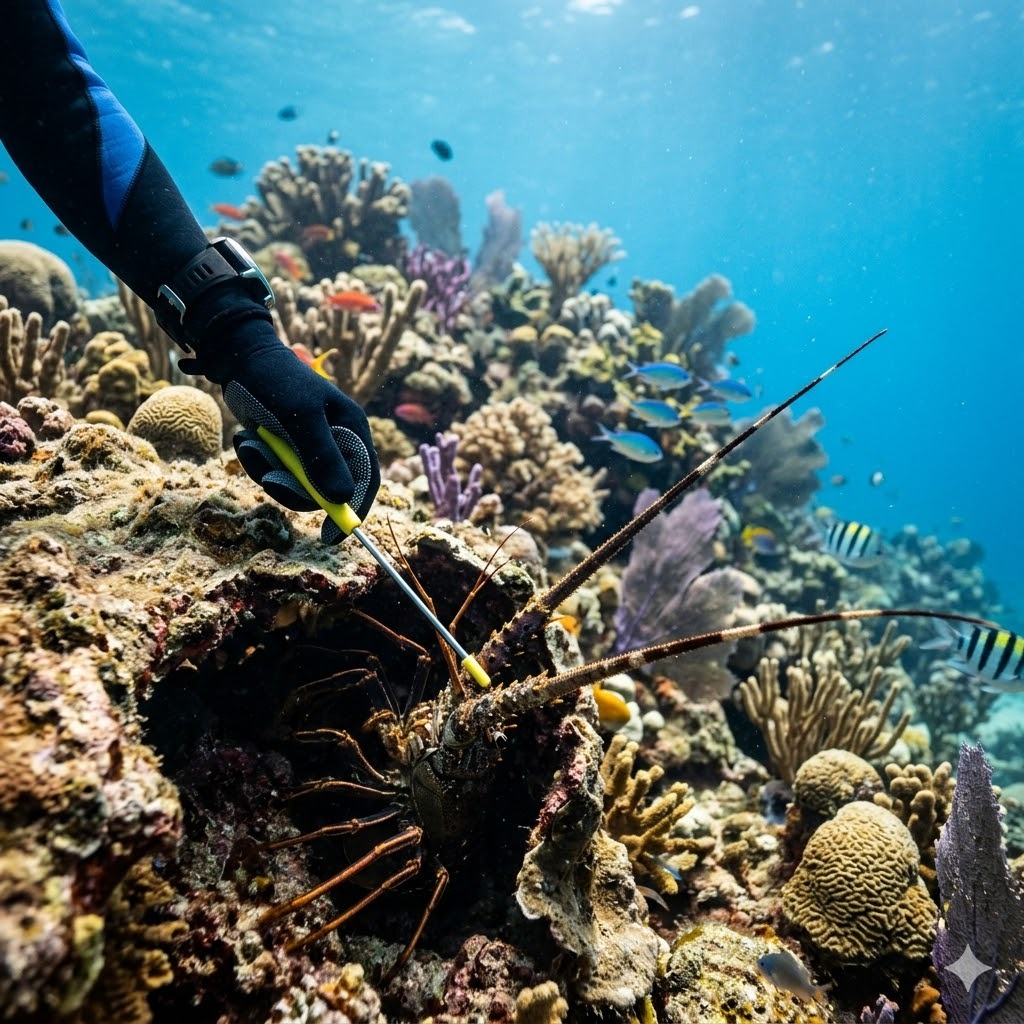
Strict season, carapace minimum, bag limit and no-egg-bearing rules. Never spear a spiny lobster where prohibited. Dive within your limits and never dive alone.
Spiny lobster are the warm-water cousins of the clawed lobster, and they make for one of the most enjoyable hands-on shellfish catches there is. Instead of two big claws they have long, spiny antennae and a heavy, sweet tail that is the real prize. They live around reefs, rocky ledges and any structure with holes to hide in, in warmer coastal waters, and the classic way to catch them is not with traps at all but by getting in the water yourself - snorkelling or free-diving, spotting a lobster tucked into a crevice, and coaxing it out by hand with a bit of simple gear.
That makes spiny lobster a genuinely fun, active catch that a reasonably confident swimmer can pursue at an intermediate level. It is more physical than sitting by a rod, and it demands respect for both the water and the rules, but there is nothing quite like easing a lobster out of a ledge and getting it into your net before it kicks away. This guide covers how it is done and, most importantly, the season, size and safety rules you absolutely must follow.
Why go for spiny lobster
The tail is the reason. Spiny lobster tail meat is firm, sweet and generous, arguably some of the best eating in the sea, and grilling or steaming a tail you caught yourself is a genuine highlight. Because they have no big claws, almost all the meat is concentrated in that thick tail, so cleaning is straightforward and the yield is excellent.
The other reason is the hunt itself. This is active, in-the-water fishing - part snorkelling, part treasure hunt. You are swimming reefs and ledges, peering into holes, learning to spot antennae poking out of the shadows, and working out how to get a wary lobster into your net before it darts backwards. It is engaging, athletic and social in a way that trap fishing is not. It sits at an intermediate level mainly because you need to be comfortable and safe in the water, and because the rules around spiny lobster are strict and matter a great deal.
Where and when to find them
Spiny lobster love structure in warm, clear coastal water. Look for coral and rocky reefs, ledges, undercut rock, wrecks and any submerged structure riddled with holes and crevices where a lobster can back itself in and hide during the day. They are largely nocturnal, so by day you will usually find them tucked deep into cover with just their long antennae showing - learning to spot those antennae is the key skill. At night they roam out to feed, which is why some divers hunt after dark, though that adds real risk and is not for beginners.
Season is everything with spiny lobster, and it is set by law, not convenience. Most areas have a defined open season with the fishery closed the rest of the year to protect breeding, and some have special short opening periods with their own extra rules. The water also needs to be warm and calm enough to dive safely, which naturally limits when you will go. Because seasons and open areas are decided locally and strictly enforced, check your local rules before you plan a trip - diving for lobster out of season, even by accident, is a serious offence.
How to catch them
The classic recreational method is by hand while snorkelling or free-diving, using two simple tools: a "tickle stick" and a net. You spot a lobster in its hole, gently use the tickle stick to coax or nudge it out from behind, and as it backs out you slip a net behind it - because spiny lobster shoot backwards when startled, they often swim straight into a net placed behind them. It takes practice and a calm approach, but it is a skill you can genuinely learn. Some areas also permit certain traps or other methods, but hand-catching by diving is the signature technique and the one most people picture.
A few important method rules. In many places spearing spiny lobster is banned outright because it damages undersized animals and wastes catch, so do not spear where it is not clearly allowed. You will also usually be expected to measure each lobster in the water, before you bring it up, so carry a proper gauge on you while you dive. Basic kit is a mask, snorkel or dive gear, gloves to protect your hands from the spiny shell and sharp reef, the tickle stick, a catch net and a mesh bag. For help choosing gloves, nets and dive-friendly gear, see our gear page.
Handling, cleaning and cooking
Keep your lobster cool and, ideally, alive until you are ready to cook. A mesh catch bag in the water keeps them lively while you dive; back on land, keep them cold and damp rather than sealed up or sitting in the sun. Handle them with gloves, because those spines and the edges of the shell can cut you.
Cleaning is easy thanks to that clawless build - almost everything you want is in the tail. You can cook a spiny lobster whole, or twist off the tail and cook just that. Split the tail down the middle, and it is superb grilled with a little butter and lemon, or steamed or boiled for a few minutes until the flesh is opaque and firm. As with all lobster, do not overcook it - the tail meat toughens quickly under long heat. Serve it simply and let the sweetness come through. For a full walkthrough from catch to plate, our catch-and-cook guide has you covered.
Safety and the law
This is the most important part of the page, and with spiny lobster there are two kinds of safety to think about - the water and the law - so read it carefully. In the water, the single biggest rule is never dive alone. Always dive with a buddy who is watching you, stay well within your comfort and breath-hold limits, mind your air if you are on scuba, and never push a dive to grab one more lobster. Fatigue, currents, cold and shallow-water blackout are real risks, and no lobster is worth them. Fly the correct dive flag so boats know you are below, and know your local conditions.
On the legal side, spiny lobster is tightly managed and the rules are strict. There is almost always a defined season, and taking lobster outside it is a serious offence. There is a minimum size, measured on the carapace with a proper gauge - which is why you measure in the water before keeping anything - and there is usually a daily bag limit on how many you may take. Egg-bearing females, carrying eggs under the tail, must always be released unharmed, and in many places spearing is banned. Do not trust any specific numbers from a general guide, including this one: season dates, minimum sizes and bag limits are all set locally and change, so check your local limit with the authority that manages your waters and carry your gauge every dive.
Finally, basic food safety: keep lobster cold, cook it thoroughly, and remember shellfish is a common serious allergen when you are serving others. Our full shellfish safety guide covers spoilage, allergies and the law in more depth and is well worth reading before your first trip, and the wider Shellfish and Crustaceans section has more species to explore once you have got the hang of this one.