How to Jig for Squid
A cheap, fast night pursuit off lit piers and boats during seasonal runs - simple spiked jigs, quick action, and fresh calamari that doubles as top bait.
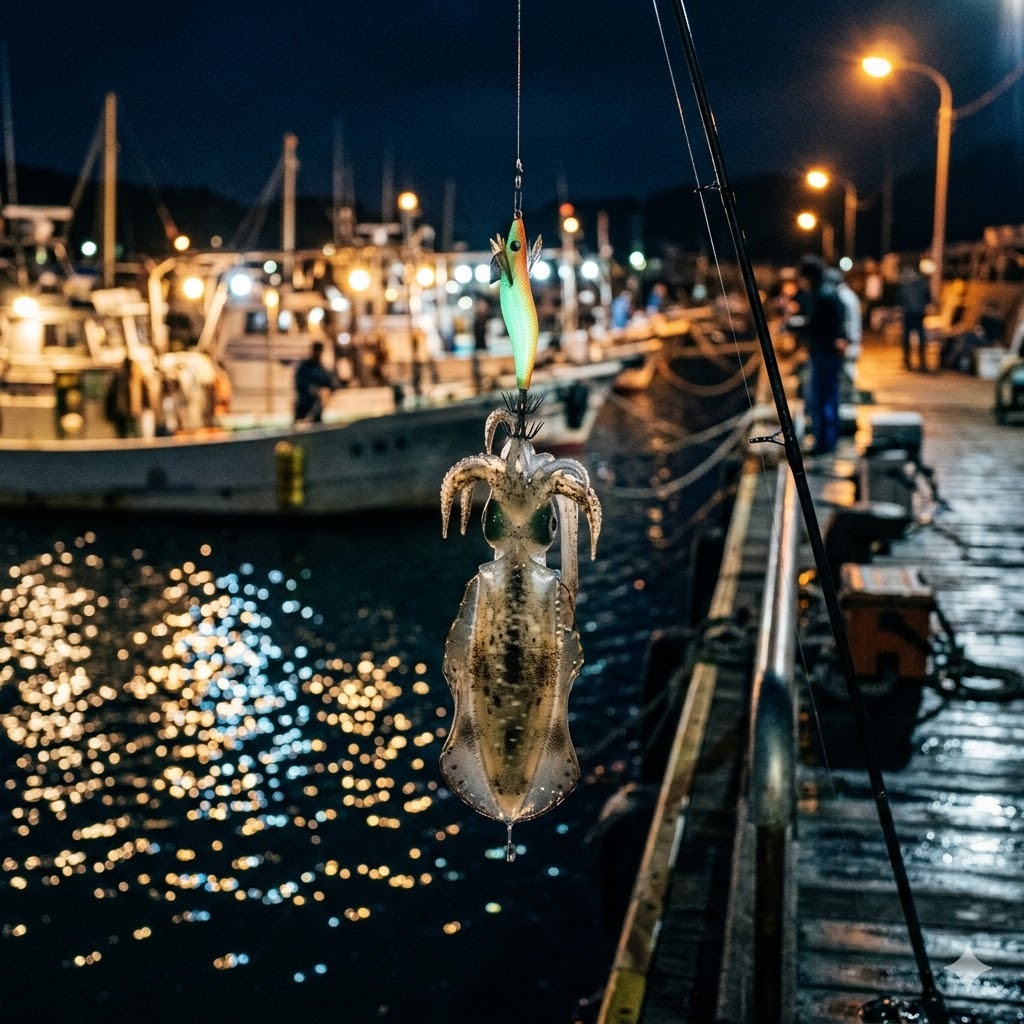
Follow local seasons and limits. Watch footing on wet, dark piers, and expect ink - wear clothes you do not mind staining.
Squid jigging is one of the most rewarding ways into shellfishing, and one of the few that is genuinely fast-paced. During seasonal runs, squid move inshore in numbers and gather around light after dark. You do not need a boat, a lot of gear, or much skill to start. A rod, a length of line, a couple of spiked squid jigs and a lit pier are enough to catch a bucketful on a good night.
What makes squid special is that a single evening pays off twice over. Fresh squid is excellent eating - the calamari you buy in a restaurant, only far better for being hours out of the water - and it is also one of the finest natural baits there is for other fish. Catch a bag of squid and you have both dinner and a full bait box. It is a beginner-friendly pursuit, cheap to try, and the action when a run is on can be relentless.
Why go for squid
You go for squid because the effort-to-reward ratio is hard to beat. The kit is cheap, the method is simple enough to learn in one session, and when the squid are in, you can catch steadily for hours. Unlike a lot of shellfishing, there is no digging, diving or heavy lifting - you stand on a pier or a boat deck and work a jig up and down.
Be honest about the seasonal nature of it, though. Squid runs come and go, and a pier that is heaving with squid one week can be dead the next. The pursuit rewards people who pay attention to timing and are willing to turn up after dark. What you actually get:
- A cheap, beginner-friendly night out with minimal kit
- Fresh calamari that is far better than shop-bought
- A ready supply of premium bait for other fishing
- Fast, repeatable action once you find an active run
Where and when to find them
Squid come inshore on seasonal runs, so timing is everything. Runs are local and vary by region, so the best guide is other people - a pier with a row of anglers working jigs after dark is telling you the squid are in. Ask at a local tackle shop when the run usually starts in your area.
Light is the key to location. Squid are drawn to lit water at night, where light attracts the small baitfish and plankton they hunt. Lit piers, jetties, harbour walls and boats with deck lights or a dedicated squid light are all classic ground. Look for the edge of a pool of light on the water - squid often hang just outside the bright zone, darting in to grab prey. Deeper water with a bit of current nearby tends to be better than dead shallows.
After dark is the window. Squid jigging is largely a night pursuit, and the hours after sunset and around a tide change are usually the most productive. A calm, clear night with the light reflecting on flat water is ideal. If you see squid flashing in the light or hitting the surface, you are in exactly the right place - stay put and work that spot.
How to catch them
The method is simple, which is a large part of the appeal. You use a squid jig - a weighted, torpedo-shaped lure ringed with rows of fine upward-pointing spikes rather than hooks. When a squid wraps its arms around the jig, the spikes catch and hold it. There are no barbs to set; the squid simply grabs and stays on.
Tie a jig to your line, cast or lower it into the lit water, and let it sink for a few seconds. Then work it with a slow, rhythmic lift-and-drop - raise the rod tip to make the jig dart and rise, then let it flutter back down. Most takes come on the drop, as the jig sinks. You will feel a sudden weight, as if the jig has snagged something soft and heavy. Do not jerk hard - a smooth, firm lift keeps the squid pinned on the spikes. Reel it in steadily without slack.
Squid colour preference changes night to night, so carry a few jigs in different colours and sizes and swap until you find what is working. Once you connect, others are usually nearby, so keep casting to the same zone.
One thing to be ready for: squid squirt water and ink when lifted from the sea, and they can fire it a fair distance. Swing your catch away from yourself and other people, and drop it straight into a bucket. Expect to get inked at some point - it washes off, but wear clothes you do not mind staining. See our gear notes for jigs, a suitable rod and a good bucket with a lid.
Handling, cleaning and cooking
Squid are easy to handle - no claws, no spines, no bite worth worrying about - but they are messy. Keep them cool in a bucket or cooler after catching, and clean them the same night or the next morning for the best eating.
Cleaning is quick once you have done it once. Pull the head and innards away from the body tube in one gentle motion. Reach inside the tube and remove the clear, plastic-like backbone (the "pen") and any remaining insides, then rinse the tube. Cut the tentacles off just in front of the eyes, and squeeze out the small hard beak from the centre of the arms. Peel off the thin spotted skin if you like a cleaner look, though it is edible. You are left with the white tube and the tentacles, both of which you eat.
Cooking calamari well comes down to one rule: fast and hot, or slow and long, never in between. A few honest methods:
- Fried. Slice the tube into rings, coat lightly in seasoned flour, and fry hot for a minute or two until just golden. This is classic calamari.
- Grilled. Score the tube, brush with oil, and grill over high heat for a minute a side. Quick and excellent.
- Braised. For older or larger squid, cook low and slow in a sauce until tender. Anything in the middle turns rubbery.
Any squid you do not eat freezes well and makes superb bait, whole or in strips. For more on turning your catch into a meal, see our catch and cook guide.
Safety and the law
Squid jigging is beginner-friendly, but a lit pier at night carries its own hazards, and the rules matter. The most important habit is to check your local regulations before you go - see our shellfish safety page for how to check seasons and water quality in your area.
Key points specific to squid:
- Seasons and limits. Many areas set seasons and daily catch limits for squid to protect the runs. Check your local season and limit before filling a bucket, and do not take more than you will use.
- Watch your footing. Piers and jetties get wet, dark and slippery, and squid ink makes them worse. Wear grippy footwear, carry a head torch, and take care near unlit edges. Never lean out over the water to net a squid.
- Never fish alone in a risky spot. On an exposed harbour wall or breakwater at night, go with someone and tell people where you are.
- Water quality. Squid you intend to eat should come from clean water open for harvest. Avoid harbours near outfalls, marinas and storm drains.
- Handle the ink. Point squid away from people when lifting them, and expect to be sprayed. It is harmless but stains.
Learn the local season and keep your footing sensible, and squid jigging stays what it should be - a cheap, fast, genuinely fun night out. More background is on the main shellfish section.