How to Catch Stone Crab
A remarkable Florida and Gulf crab where you take one legal claw and release the live animal to regrow it - possibly the most sustainable shellfish you can gather.
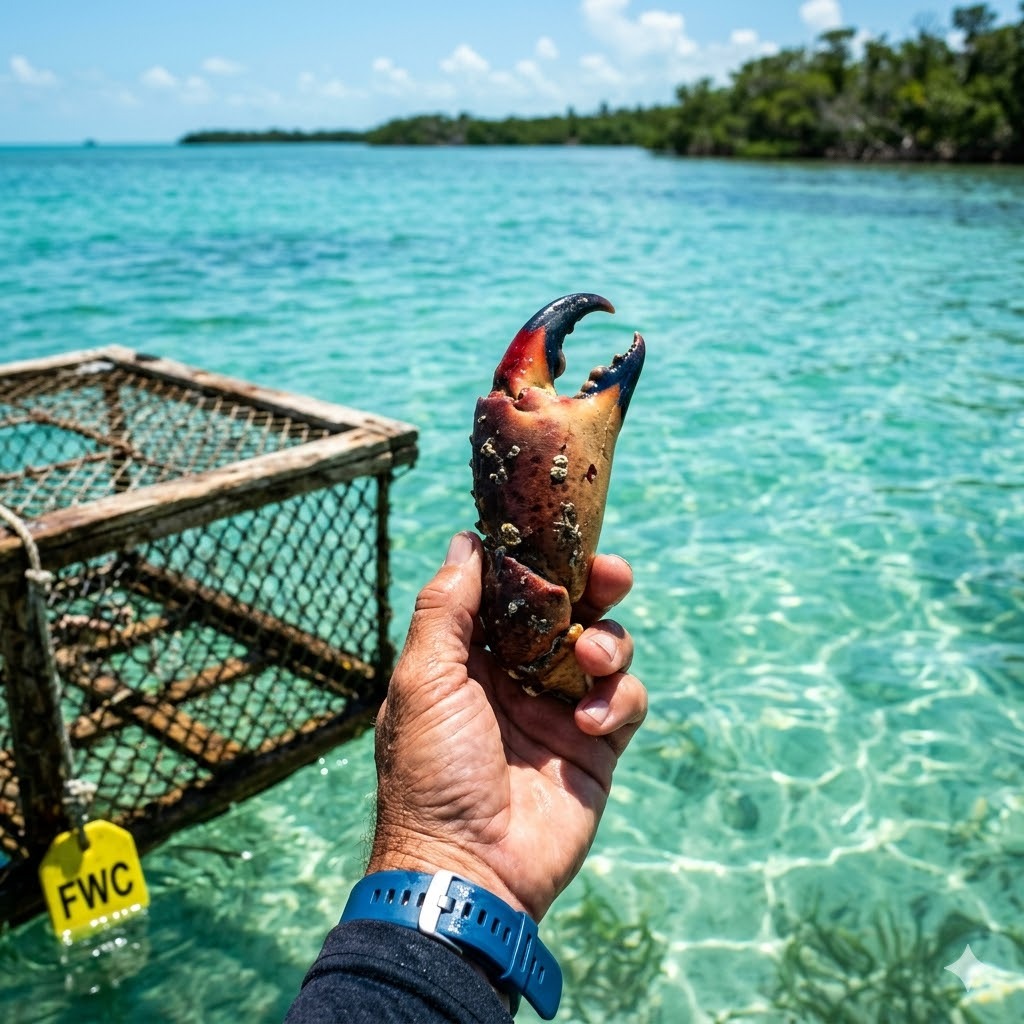
Claw size limit and rules on egg-bearing females are strict. Improper removal kills the crab - learn the correct technique or leave it.
The stone crab is one of the most interesting animals you can gather along the Florida and Gulf coasts, and not because it is easy. It lives on rocky flats, oyster bars, jetties and hard structure in warm coastal waters, and it has two heavy, blunt, immensely strong claws. Those claws are the entire point of the pursuit - the body is not eaten. What makes stone crabbing unique is the method: you take one legal claw, then release the living crab, which regenerates the missing claw over time.
The one thing that shapes this whole pursuit is that idea of a renewable catch. Because the crab lives on to grow a new claw, done correctly stone crabbing is about as sustainable as harvesting seafood gets - but "done correctly" carries real weight, because doing it wrong kills the crab. That makes this an intermediate pursuit rather than a beginner one. It suits anglers who take the rules seriously, who are willing to learn a precise technique, and who like the idea of a harvest that leaves the animal alive.
Why go for stone crab
You go for stone crab for two reasons: the claw meat is superb - firm, sweet and considered a delicacy - and the sustainability is genuinely satisfying. Taking one claw and releasing the crab to regrow it means, done right, you can harvest the same population year after year. Few forms of gathering give you that.
Be honest about the yield and the difficulty, though. You are harvesting one claw per legal crab, not a whole animal, so it takes a fair number of crabs to make a meal. And there is a right way and a wrong way to remove that claw - get it wrong and you have killed a crab for nothing, which defeats the entire point. This is not a casual bucket-and-string outing.
What you get:
- Prized, firm, sweet claw meat - a true delicacy
- A genuinely renewable, sustainable harvest when done correctly
- A rewarding technique to master
- The satisfaction of returning a live crab to grow another claw
Where and when to find them
Stone crabs favour hard structure. Look for rocky flats, oyster bars, jetties, seawalls, dock pilings and rubble in warm, relatively shallow coastal water. They dig burrows near this structure and defend them, so the ground you want is broken, rocky and full of hiding places - the opposite of the clean sandy bottom you would seek for some other crabs.
Season is strict. Stone crabbing has a defined open season with clear start and end dates, and harvesting outside it is illegal. Check your local season dates before you go every year. Within the season, the crabs are on their structure year-round, so location matters more than tide - though a bit of moving water and good visibility make the crabs easier to work.
To read the ground, look for the burrows: stone crabs excavate holes at the base of rocks and pilings, often marked by a fan of cleared shell fragments and a dark opening. On clear, calm days on shallow flats you can sometimes spot the crab itself tucked into structure. Where you find one burrow you will usually find more.
How to catch them
The traditional and most reliable method is the baited trap. Stone crab traps are baited boxes set on the bottom near rocky ground; the crab enters for the bait and is held until you haul the trap. Bait with fish, pig's feet or other tough, strong-smelling bait, set the trap on hard structure, and give it a soak of several hours to overnight where rules allow. Haul it up, and carefully remove any crab to check it.
Some crabbers also hand-catch on shallow rocky flats, reaching in among the rocks - but be warned, the claws are powerful enough to hurt you badly, so this is only for the experienced, and always approach a crab from the rear.
The critical skill is not the catching - it is the claw removal, which decides whether the crab lives or dies:
- Hold the crab firmly from the rear, well clear of both claws.
- Check that at least one claw meets the legal minimum size (measure the claw, not the crab).
- Take only one claw. Never take both - a crab with no claws cannot feed or defend itself and will die.
- Remove the claw cleanly at the joint where it meets the body, using a firm, controlled break so the crab seals the wound naturally. A ragged tear or breaking it in the wrong place kills the crab.
- Return the living crab to the water immediately, gently, near where you found it.
For the traps and tools you will want, see our gear notes.
Handling, cleaning and cooking
The claw is the catch here, so handling is mostly about the claws themselves. Keep them cold on ice from the moment you take them. Unlike whole crabs, you are not keeping the animal alive - you have released it - so your job is simply to chill the claws quickly and keep them cold until cooking.
Stone crab claws are almost always cooked before the shell is cracked, and there is very little cleaning involved - no gutting, no purging. Two or three honest ways to serve them:
- Boiled, then chilled. The classic. Boil the fresh claws briefly, then plunge them into ice water and serve cold. This is the traditional presentation and lets the sweet meat shine.
- Served warm. Some prefer the claws gently warmed rather than chilled, with melted butter.
- Cracked with mustard sauce. However you cook them, stone crab claws are traditionally served cracked with a tangy mustard dipping sauce - crack the shell carefully to keep the meat in one piece.
Because you handle so few, treat each claw well. For more on serving your catch, see our catch and cook guide.
Safety and the law
Stone crab is defined by its rules more than any other crab here, because the entire sustainability of the fishery depends on harvesting correctly. Read your local regulations before you go - our shellfish safety page covers licences, seasons and how to check they are current.
The points that matter most for stone crab:
- Licence and season. A licence is normally required, and there is a strict open season with defined dates. Harvesting outside it is illegal - confirm the current season before every trip.
- Claw minimum size. The legal measurement is the claw, not the crab. There is a minimum claw size - check your local minimum and measure every claw before taking it. Undersized claws stay on the crab.
- Take one claw only, then release. This is the heart of the fishery. Never take both claws - a clawless crab dies. Take at most one legal claw and return the live crab immediately.
- Remove the claw correctly. Break the claw cleanly at the body joint so the crab can survive and regrow it. A wrong break wounds the crab fatally and wastes the animal. If you are not confident of the technique, practise the method and be sure before you take a single claw.
- Egg-bearing females. In many areas you may not take a claw from a female carrying eggs - check your local rule and release egg-bearing crabs untouched.
- Powerful claws. For your own safety, always handle a stone crab from the rear. The claws can crush a finger.
Stone crabbing is a privilege built entirely on doing it right. Learn the one-claw rule and the clean break until they are automatic, and you have one of the most sustainable harvests in all of shellfishing. More background is on the main shellfish section.