How to Gather Whelk
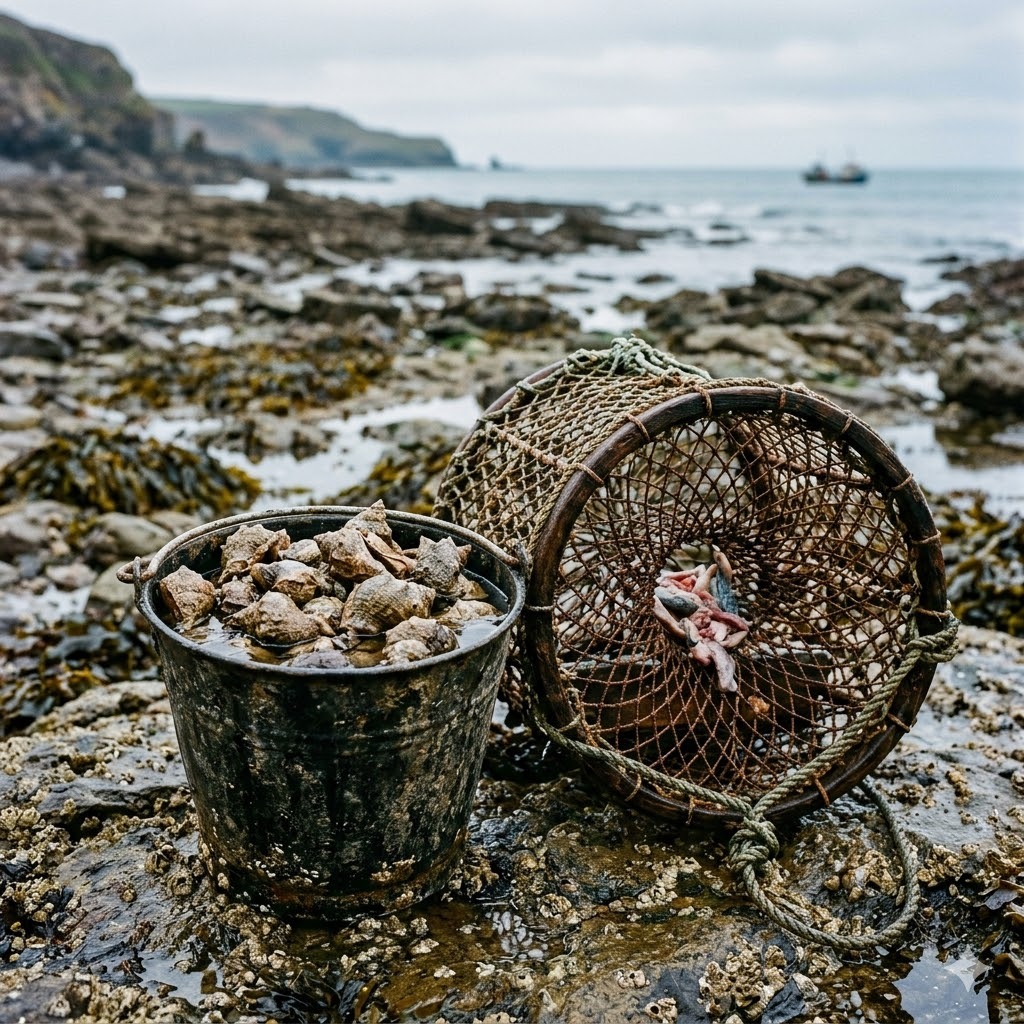
Large sea snails gathered by hand from rocks and flats or in baited pots - firm chewy meat and a cheap, beginner-friendly gather where the waters are open.
🔴 Queen conch is protected or restricted in many places - never take it where prohibited. All shellfish: harvest only from open, approved waters and follow size and bag limits.
Whelks are large sea snails, and gathering them is one of the simplest forms of shellfishing there is. You either pick them up by hand from rocks, weed and tidal flats, or you drop a baited pot and let them come to you. There is no rod, no line and no chasing involved - just a bucket, a low tide or a pot, and a bit of local knowledge about where they gather. It is genuinely beginner-friendly and one of the cheapest ways to bring home a feed of shellfish.
The meat is firm and chewy, closer to a scallop or a well-cooked squid than to a soft mussel, and it is a staple in many cuisines - eaten hot with butter, cold with vinegar, or worked into stews and salads. A word of caution up front, though: the name "conch" covers several very different animals, and the true queen conch is protected or restricted in many places. This guide is about the common edible whelks and the everyday conchs you can legally gather - never take a protected species. We cover that fully in the safety section.
Why go for whelk
You go for whelk because it is about as accessible as shellfishing gets. The gear is minimal, the technique is picking things up, and productive ground is often free public shoreline. For a beginner or a family, it is a low-stress introduction to gathering your own seafood, with a real meal at the end of it.
Be honest about the meat. Whelk is firm and chewy by nature, and it needs cooking with a bit of care or it turns tough and rubbery. It is not to everyone's taste, but done well it is excellent, and it is a prized ingredient in plenty of kitchens. What you actually get:
- One of the cheapest, simplest gathers there is
- Firm, satisfying meat that stores and cooks well
- A pursuit that works for beginners and families
- Two easy methods - hand-gathering or baited pots
Where and when to find them
Whelks live on and around rocky shores, mudflats, sand flats and the shallow seabed just offshore. Different species favour different ground: some cluster on intertidal rocks and among seaweed where you can pick them up at low tide, while larger whelks live in deeper water and are usually taken in pots.
For hand-gathering, the low tide of a good spring tide is your window - it uncovers the most ground and the most snails. Work the rocks, weed beds and firm flats, turning over stones and looking along the bases of larger rocks where whelks gather. They are slow-moving, so once you find a productive patch, you can pick steadily.
For potting, whelks are drawn to bait, so a baited pot dropped on suitable bottom and left to soak will gather them for you. This is how most larger whelks are taken. Whichever method you use, cold, clean, open water tends to hold the best and safest whelks. And as always, seasons and area rules apply, so check what is open in your area before you go.
How to gather them
Hand-gathering is the simplest method going. At low tide, work along rocky shore, weed beds and firm flats with a bucket, picking up whelks as you find them. Look under and beside rocks, in weed, and on open flats where they leave slow trails. There is no skill to it beyond patience and knowing where they gather - which comes quickly once you have found one good spot.
The other method is a baited pot. Whelks come readily to bait, so a pot baited with fish or crab, dropped on suitable bottom and left to soak, will gather them while you do other things. Pots are the standard way to take the larger, deeper-water whelks that you cannot simply pick up by hand. Pot design and rules vary by region, so check what is allowed locally.
Whichever method you use, carry a measuring gauge and check every whelk against the local minimum size before it goes in the bucket. Undersized snails go straight back. See our gear notes for a good bucket, a gauge and suitable pots.
Handling, cleaning and cooking
Whelks are easy and safe to handle - no claws, no spines. Keep your catch cool and damp in a bucket, and it will keep alive for a good while. Many people purge whelks in clean seawater for a day before cooking to let them clear out grit, which is worth doing if you can.
Cooking whelk well is mostly about not overcooking it. The classic method is to boil the whole snails in well-salted water until the meat is cooked, then pull each animal out of its shell with a pin or small fork. Remove the hard, horny "trapdoor" (the operculum) from the foot, and trim off the dark coiled gut at the tail end, keeping the firm white foot, which is the part you eat. Honest ways to serve it:
- Boiled and served simple. Cook, pick, and eat warm with butter and a squeeze of lemon, or cold with vinegar and bread. Traditional and hard to beat.
- Sliced into dishes. Slice the cooked foot into stir-fries, chowders, stews and salads, where its firm texture holds up well.
- Gently simmered. For tenderness, keep the heat moderate. Hard, fast boiling for too long is what makes whelk rubbery.
Cook thoroughly and eat fresh. For more on turning your catch into a meal, see our catch and cook guide.
Safety and the law
Whelk gathering is beginner-friendly, but two things demand your attention: protected species and water quality. The most important habit is to check your local regulations first - see our shellfish safety page for how to check licences, seasons and water quality in your area.
Key points specific to whelk and conch:
- The queen conch is protected. This is the big one. The true queen conch is protected or restricted across much of its range, and taking one where it is prohibited is illegal and damaging. Never take a queen conch, or any species you cannot confidently identify as a legal, common edible whelk, where restrictions apply. If unsure, leave it.
- Gather only from approved open waters. Whelks filter their surroundings, so they should only be taken from clean water open for harvest. Avoid outfalls, marinas, storm drains and anywhere near pollution.
- Size and bag limits. Most areas set a minimum size and a daily limit to keep the population healthy. Check your local size and limit, carry a gauge, and return undersized snails.
- Licences. Some areas require a licence or permit to gather shellfish. Check what your area requires before you go.
- Rinse and purge. Rinse your catch well, and purge in clean seawater where you can, to clear grit before cooking.
Know your species, gather from clean open water, and respect the size and bag limits, and whelk gathering stays exactly what it should be - a cheap, simple, sustainable feed. More background is on the main shellfish section.