How to Keep Cardinal Sulawesi Shrimp at Home
The famous deep-red, white-spotted Sulawesi shrimp (Caridina dennerli) - a jewel of the hobby that needs different water from most Caridina: warm and slightly alkaline, like Lake Matano, the only lake it comes from. A true specialist.
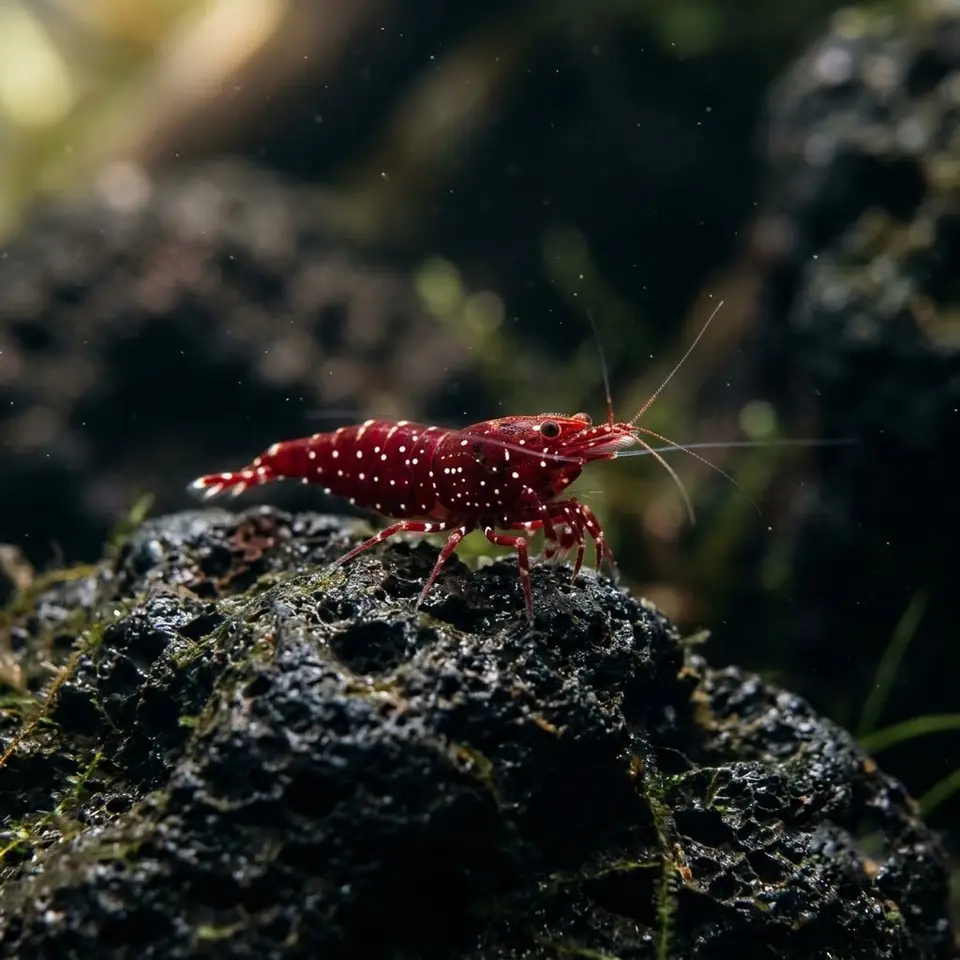
Cardinal Sulawesi shrimp are living rubies - deep blood-red bodies dotted with white, from Lake Matano on Sulawesi, an ancient lake formed in a tectonic graben. They are a specialist's shrimp because their needs differ from the usual Caridina playbook: instead of soft and acidic, they want warm, slightly alkaline water like their lake, where Wikipedia records 27-31 °C, a pH of 7.4 and a conductivity of 224 µS/cm. The IUCN lists the species as critically endangered, possibly extinct in the wild, with none recorded since 2013; it survives in the hobby, where it is kept and bred in captivity (Wikipedia), so buy captive-bred shrimp. In a dedicated species tank tuned to those conditions they breed and glow; in a general community tank they simply fade and die.
Why raise Cardinal Sulawesi shrimp
For their unmatched colour and the satisfaction of a demanding niche.
- Jewel-like appearance - arguably the most beautiful freshwater shrimp.
- A rewarding specialist project for experienced keepers.
- Valuable when bred successfully.
The tank and setup
- Dedicated species tank. Their unusual water chemistry rules out most tankmates.
- Warm water, around 27-29°C - hotter than most shrimp; Lake Matano itself runs 27-31 °C (Wikipedia).
- Slightly alkaline water - the recorded pH in Lake Matano is 7.4 (Wikipedia); some keepers use a dedicated Sulawesi mineral.
- Rock and biofilm mimicking the lake bed; mature, stable biology throughout.
Water and stability
The difference is the whole point: warm, slightly alkaline water, unlike the soft, acidic water of Blue Bolts. Copper is lethal as ever, and stability is critical: these lake endemics evolved in an unusually constant environment and punish swings hard. Fully cycle and stabilise before adding a single shrimp.
Feeding and daily care
Light feeding of quality shrimp foods and biofilm; they graze the warm biofilm-rich rockwork most of the day. Remove leftovers promptly - warm water fouls fast.
Breeding and raising the young
They breed in freshwater with no larval stage, but only when the warm, slightly alkaline conditions are dialled in and stable. The tiny young graze the same biofilm; a mature, undisturbed species tank is the whole technique. Slow to build a colony, so patience is essential.
Mistakes that cost stock
- Applying the soft, acidic-water advice for other Caridina.
- Mixing into a community tank with incompatible chemistry.
- Running them too cool.
- Any copper, any instability.
Is Cardinal Sulawesi shrimp right for you
Only for experienced keepers wanting a dedicated, specialist species tank. Their inverted chemistry and sensitivity make them a poor community or beginner choice - but a superb project for someone ready to build a tank around a single spectacular animal.
Kit for a home aquarium
As an Amazon Associate we may earn from qualifying purchases - at no extra cost to you. We link gear types, not sponsors' picks: you choose the exact product.