Raising Signal Crayfish: A Large Crayfish with Caveats
A guide to signal crayfish - a large, fast-growing North American crayfish farmed for meat, hardy and adaptable, but a notorious invasive that must be strictly contained and is banned in many regions.
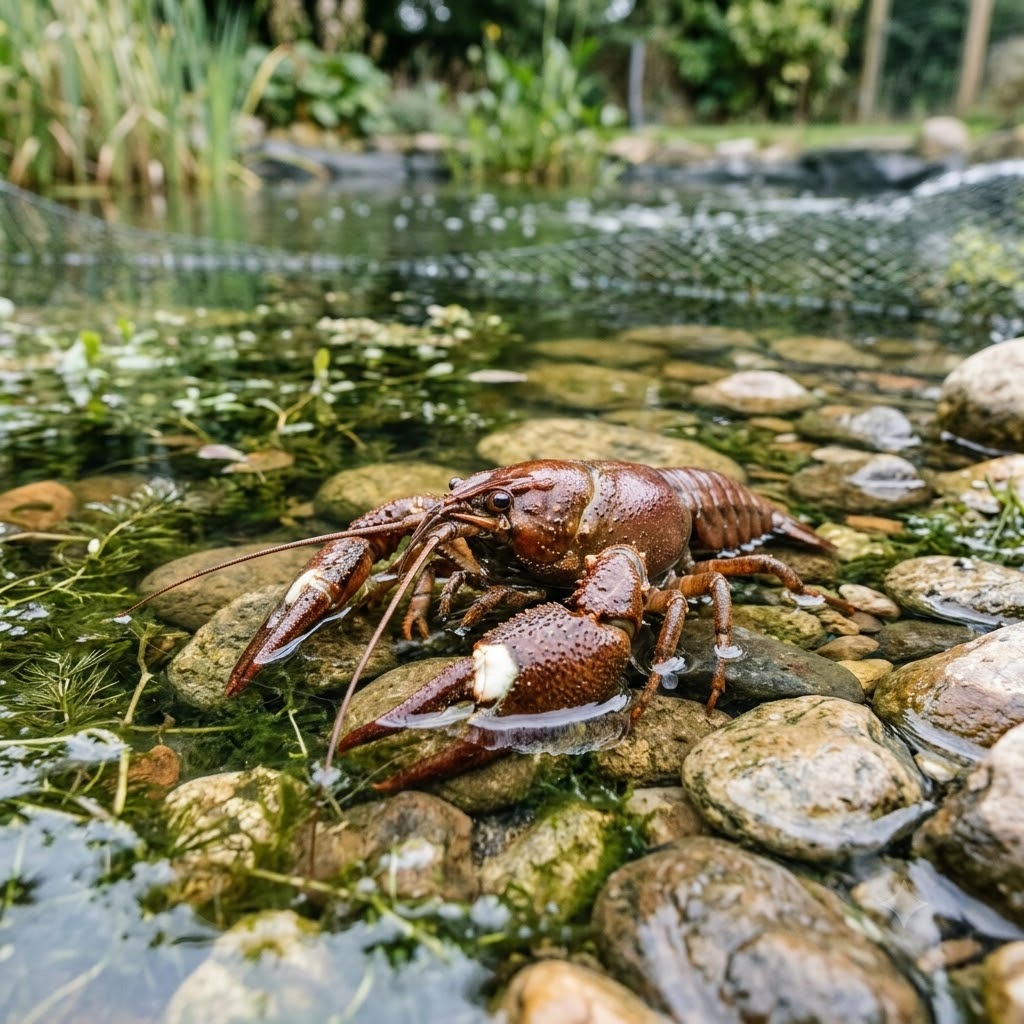
Signal crayfish are large, fast-growing and hardy, prized where they are farmed for their size and meat. But they carry a serious warning: introduced beyond their native range, they have devastated native crayfish through competition and disease, so keeping them is banned or tightly restricted in many regions. Where legal, they are productive - but containment and local law come first.
Is it right for you?
Signal crayfish suit a grower, where legal, who wants a large fast-growing crayfish and can guarantee containment. Their invasive status means checking local law is the first, non-negotiable step.
System & Space
A contained pond or tank with cover and hiding spots suits them; because they burrow and escape, the system must be secured against any release into the wild.
Water & Temperature
They are hardy and adaptable across cool to warm water and tolerate a range of conditions, which is part of why they are so invasive. Containment matters more than fine-tuning water.
Stocking & Feeding
Stock breeders where legal and feed detritus, vegetation and supplemental food; they are omnivorous and grow fast. A vegetated system feeds them in part.
Health & Care
Very hardy, though they can carry crayfish plague that devastates native species; the overriding concern is containment and legality, not disease of the crayfish themselves.
Harvest & Enjoying Them
They reach a large size quickly and are trapped for their generous tail and claw meat - the appeal that drove their spread.
Getting Started
First confirm they are legal where you live; if so, set up a fully contained system, stock breeders, and manage them with strict escape prevention.
Common Mistakes
Keeping them where banned, and any escape or release into the wild, are the serious mistakes - both are illegal and ecologically damaging in many regions.
FAQ
Are they legal to keep? Often not - they are banned or restricted in many regions; check first.
Why the restrictions? They are a devastating invasive that spreads crayfish plague to native species.