Fishing Rod Travel Cases
Hard tubes, soft cases and airline-grade cases for fishing rods: what to look for in each, what the TSA says about rods, hooks and pliers, and how to carry rods by car.
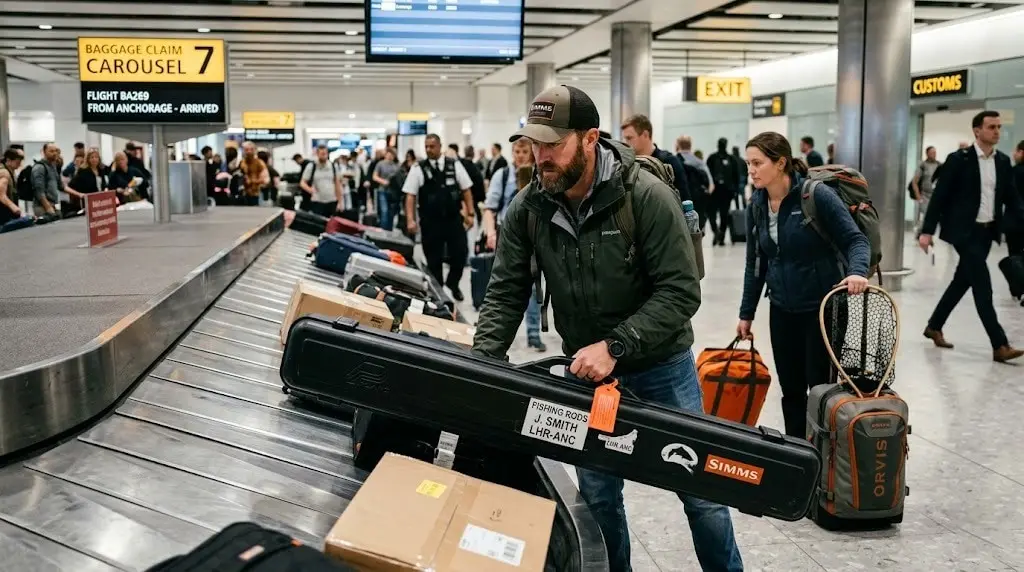
A broken rod ruins a fishing trip and an expensive piece of gear in one moment. Whether you are chasing saltwater species on a flats trip or hauling gear to a home lake, travel rod cases protect your investment from airline baggage handlers, car door slams, trunk loads, and the constant compression of fishing road trips. The right case turns a fly rod from a fragile liability into freight that arrives intact.
This guide covers the main kinds of case - hard tubes, soft cases, multi-rod systems and airline-grade cases - what to look for in each, and the rules for flying with rods.
What You’re Protecting Against
Air Travel
- Crushing under baggage - Other bags stacked on yours.
- Drops from heights - Loading and unloading carts and belts.
- Lost luggage - Cases with bright colors and ID labels recover faster.
- Pressure changes - Generally not an issue but worth noting.
Car Travel
- Door slams - Rods sticking out at angles.
- Trunk compression - Other gear sliding around.
- Heat exposure - Black cases on hot dashboards.
- Long-term storage - Vibration and slow wear during long road trips.
Day Fishing
- Walking through brush - Tip protection in transit to the water.
- Boat storage - Rods stacked in rod lockers.
Case Categories
Hard Tube Cases
A rigid tube (often PVC or aluminum) with end caps. The classic fly rod tube; also used for spinning and casting rods.
Pros: Crush-resistant, simple, reliable, often included with premium rods. Cons: Single-rod capacity; rigid; awkward to pack with other gear.
Soft Padded Cases
A fabric tube with internal padding. Often holds multiple rods.
Pros: Light, multi-rod, packable. Good for car and boat use. Cons: Limited impact protection; not airline-safe by itself.
Hybrid Soft/Hard Cases
Outer fabric shell with internal rigid tube or framework.
Pros: Multi-rod, more protection than soft alone, better than hard for everyday use. Cons: Bulkier than soft cases; still limited for serious air travel.
Airline-Grade Hard Cases
Heavy-duty hard cases with foam interiors. Designed for checked baggage.
Pros: The most protection. Lockable. Multi-rod capacity. Cons: Heavy, bulky, expensive. Often look like high-value gear targets.
Multi-Rod Travel Systems
Hard or hybrid cases designed to hold 4-12 rods for tournament travel, guide trips, or extended fishing.
What to Look For
We have not tested cases against one another, so we name no models and give no prices.
Hard tubes. Check the inside length against your longest rod section, the wall stiffness, and how the cap fastens - a screw cap stays on, a push cap can work loose. The tube that came with a rod is usually the right one for that rod.
Soft and hybrid cases. Look at how many rods the case really holds with reels on, the padding at the tip end, the zips, and the shoulder strap. For flying, a soft case needs a rigid tube or frame inside it.
Airline-grade hard cases. Look for a rigid shell with foam that holds each rod apart from the next, latches that take a lock, and a length that your airline will accept. Weigh it empty: a heavy case eats into your baggage allowance.
For all of them: a bright colour or a strap you will recognise on the belt, and your name and phone number inside and out.
Air Travel Tips
Length Restrictions
- Every airline sets its own size limits and fees for checked bags, and many have a separate rule for fishing equipment. Read your airline’s sporting-equipment page, with the length of your case in hand, before you book.
- A long rod tube often counts as oversize.
- Some airlines (especially small regional or international) refuse oversize rod tubes entirely. Check ahead.
Multi-Piece Travel Rods
- Multi-piece travel rods break down short enough to go inside ordinary luggage, which avoids the oversize question altogether. Most rod makers offer them.
What to Pack Inside
- Rods well-padded with foam, towels, or socks.
- Reels separately - Don’t leave attached on travel; remove and pack in checked bag (in waterproof bag) or carry-on.
- Identification - Name, address, phone on inside and outside of case.
- Insurance - Read your travel policy: sporting equipment is often limited or excluded.
TSA Considerations
- Rods. The Transportation Security Administration says fishing rods are permitted in carry-on and checked bags, but passengers should check with the airline that the rod fits within its size limits for carry-on items.
- Hooks and tackle. The same page says sharp tackle that may be considered dangerous, such as large fish hooks, should be sheathed, securely wrapped and packed in checked bags, and suggests carrying expensive reels and small flies with you.
- Pliers and tools. TSA’s rule is that tools 7 inches or shorter may be allowed in carry-on baggage; longer ones go in checked bags. The final decision rests with the officer at the checkpoint.
- Locks. Checked cases can be opened for inspection; a lock the TSA can open avoids a broken latch.
Car Travel Tips
Inside the Vehicle
- Lay rods diagonally across the back seat, tips toward the rear corner, butts toward front.
- Avoid the trunk for serious rods - heat and compression.
- Use a soft multi-rod case to bundle rods together.
Roof Racks
- Roof boxes and purpose-made roof-top rod carriers take rods and multi-rod tubes; check the inside length before you buy.
- Magnetic and suction rod carriers are for short, slow drives only - follow the maker’s speed limit.
Truck Beds
- Hard cases or lockable rod boxes can be secured to the bed rails.
Maintenance and Care
- Dry rods completely before storing in cases - moisture causes corrosion.
- Rinse saltwater rods before storage even briefly in cases.
- Don’t store wet reels in attached configurations - corrosion accelerates.
- Check cases periodically for foam degradation, broken latches, frayed straps.
Build Your Own Travel Tube
Many anglers make their own tube from PVC pipe:
- 4-6” diameter PVC pipe cut to rod length + 3-4 inches.
- End caps (one fixed, one screw-off cleanout cap).
- Foam padding inside.
- Bright color/wrap for visibility.
It is heavy, and it works.
FAQ
Will airlines damage my rod? Damage happens. A rigid case reduces the risk, and many regular travelers avoid the question by using multi-piece rods that fit inside ordinary luggage.
Do I need a case for short car trips? Yes - even short trips wear on rod guides and tips. Soft padded cases handle this for cheap.
Can I carry on a fishing rod? Security allows it: the TSA permits fishing rods in carry-on bags. Whether the airline does depends on its size limits for cabin baggage, so check before you fly. Multi-piece travel rods break down small enough for most.
How do I ship rods? Use the original rod tube inside a heavier shipping box, and insure it for its full value.
Is a multi-rod hard case worth the price? For anglers who travel with many rigged rods, it can be. For weekend trips by car, a padded soft case is enough.
Conclusion
Rod travel cases are insurance you pay once and benefit from for years. Match the case to the trip: hard tubes for single fly rods in checked luggage, padded soft cases for car and boat use, airline-grade hard cases for multi-rod air travel, and hybrid multi-rod systems for tournament travel. Whatever case you choose, label it, lock it, and pack it with the assumption it will be tested by baggage handlers and trunk overload. A case costs far less than the rod it saves.
Recommended Gear on Amazon
- Rod travel cases - browse current options and reviews on Amazon.
- Travel fishing rods - browse current options and reviews on Amazon.
- Reel cases - browse current options and reviews on Amazon.
As an Amazon Associate, we earn from qualifying purchases - at no extra cost to you. This helps us keep producing free, in-depth guides.