Live Well Setup Guide
Whether you are running a tournament livewell to keep bass alive for weigh-in or a bait tank to keep shiners and herring fresh, the principles are the same: oxygen, temperature…
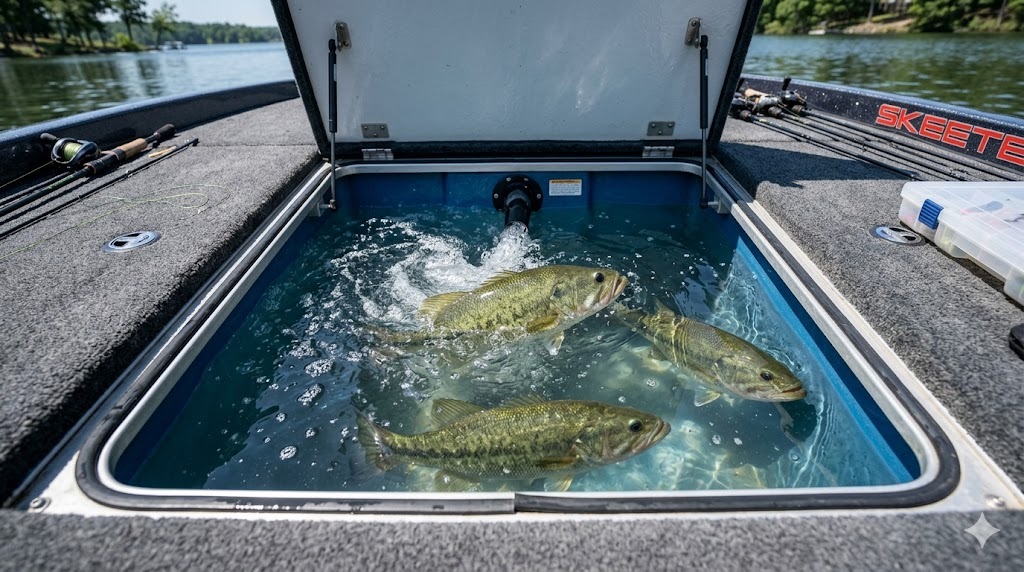
Whether you are running a tournament livewell to keep largemouth bass alive for weigh-in or a bait tank to keep shiners and herring fresh, the principles are the same: oxygen, temperature, water quality, and stress reduction. A poorly set up livewell loses fish to lack of oxygen, heat stroke, ammonia buildup, or simple panic. A correctly set up one keeps even delicate bait alive all day in summer.
This guide walks through the four pillars of livewell success, the aerators and batteries that drive the system, and the differences between tournament livewells and bait tanks.
The Four Pillars
Oxygen
Fish die from lack of dissolved oxygen long before anything else. Warm water holds less oxygen, and stressed fish use it faster. Effective livewells keep dissolved oxygen above 5 mg/L, which requires constant aeration - the same water-chemistry principles that keep a home aquaculture system healthy.
Temperature
Cool water holds more oxygen and reduces fish metabolism. In summer, keeping livewell water 5-10°F cooler than the lake dramatically extends survival.
Water Quality
Fish excrete ammonia and slime. Without water exchange, the livewell becomes a toxic stew within hours. Recirculate and freshen regularly.
Stress
Crowding, rough handling, light, and noise stress fish. Reduce by giving space, keeping the lid closed, and using rejuvenator additives.
Aeration: How Much and What Kind
Recirculating Aerators
Standard livewell pumps (Rule, Attwood, Johnson) recirculate water and inject air bubbles. Two flow modes:
- Recirc - Pulls water from inside the well, sprays it back through an aerator spray head. Keeps oxygen up without exchanging water.
- Fill/Pump - Draws fresh lake water in from outside the boat.
Most modern bass boats have both modes. Auto timer cycles aerator periodically.
Air Stones / Bubblers
12V air pumps with ceramic air stones push dissolved oxygen into bait tanks. Common on aerated bait buckets and shiner tanks. Brands: Marine Metal, Frabill, Sweetwater.
Oxygenation Systems
For serious live bait operations - guides hauling blueback herring or live shrimp - pure oxygen systems (Oxygen Edge, Keep Alive O2) use bottled oxygen with a regulator and stone. Far more efficient than air bubblers and essential for bait that demands high DO like herring.
How Much Flow?
- Tournament livewell (5-7 bass): 500-800 GPH aerator with recirc mode.
- Bait tank (20-50 shiners): 200-400 GPH aerator or 12V air pump with two stones.
- Heavy bait load (cast net of menhaden): Dedicated O2 system or 500+ GPH plus stones.
Temperature Control
Ice
The simplest and most effective. Sealed bottles of frozen water (no loose ice - chlorine in tap water kills fish) dropped into the well drop temperature by 5-15°F.
A typical setup: freeze 4-6 plastic bottles, drop one in every 1-2 hours on hot days.
Insulation
Closed lid keeps cool water cool. Some livewells are foam-insulated; aftermarket insulation kits exist.
Recirculation vs Fresh Pump
In summer, recirculating chilled water is better than pumping in warm lake water. In cooler weather, fresh-pump cycles keep oxygen high.
Water Quality
Rejuvenator Additives
Products like Sure-Life Bass Saver, Rejuvenade, and G-Juice Fishing Formula reduce slime loss, calm fish, and add ammonia-binding agents. Use per package directions - usually 1-2 oz per 20 gallons.
Water Exchange
Pump in fresh lake water at least once an hour on hot days. Avoid pumping water from heavily algae-polluted areas.
Salt
A pinch of non-iodized salt (1 tablespoon per 5 gallons) reduces stress in many freshwater species. Standard practice in some tournament circles.
Batteries: Powering the System
Aerators draw 2-5 amps continuously when running. A typical tournament-day load can drain a battery if not properly sized.
Battery Choice
- Cranking battery - Drives starter; not designed for deep cycling. Don’t run aerators from cranking battery for long periods.
- Deep cycle battery - Designed for sustained discharge. Best for trolling motor and livewell.
- Dual-purpose - Compromise; works for occasional aerator use.
Bass boats typically have a dedicated trolling motor battery bank separate from the cranking battery. Some run aerators off the cranking battery (with engine running to recharge); others off the trolling motor bank.
Sizing
A 100 amp-hour deep cycle battery powering a 3-amp aerator continuously runs for ~33 hours theoretical, ~16-20 hours practical. Sufficient for a tournament day with auto-cycle.
Charging
Keep onboard chargers running between trips. A discharged battery left for weeks will sulfate and die.
Tournament Livewell Setup
For bass tournament use:
- Pre-trip: Fill livewell at the ramp with fresh lake water. Add rejuvenator.
- Add frozen bottles to chill on hot days.
- Set aerator to recirc + timer (e.g., 2 min on, 4 min off in cool weather; continuous in hot).
- Each fish caught: lift, photograph if needed, slide directly into livewell. Don’t toss.
- Crowd management: Limit (5 bass) per livewell. Larger boats with two wells split the load.
- Periodic fresh pump: Once an hour, pump fresh water for 2-3 minutes.
- Pre-weigh-in: Switch to fresh pump for 5 minutes to oxygenate.
Dead fish at weigh-in usually mean: too warm, too crowded, not enough aeration, or no rejuvenator.
Bait Tank Setup
For live bait - shiners, herring, mullet, shrimp, perch:
Tank Choice
- Round insulated tanks (Engel, Yeti-style, Frabill) preserve bait better than rectangular.
- 8-30 gallon size depending on bait volume.
Aeration
Combination of recirc pump and air stone for shiners. Dedicated O2 for herring and tougher bait.
Cool Down
Frozen bottles, especially in summer.
Crowding
Bait dies fast when crowded. Rule of thumb: 1 gallon per 10 small shiners.
Salt
For freshwater bait being run in saltwater conditions or vice versa, mismatched salinity stresses bait. Use the bait’s home water.
Common Failures
- Aerator quit: Check fuse, intake clog, hose disconnect.
- All fish floating: Likely temperature shock or aerator off.
- Cloudy water: Slime buildup; pump fresh water and add rejuvenator.
- Dead within 30 minutes: Almost always oxygen failure.
FAQ
How long can I keep bass in a livewell? With proper aeration, temperature control, and rejuvenator, healthy bass survive 8-12 hours in a well-managed livewell. Hot summer conditions reduce this; cool weather extends it.
Can I use tap water in my livewell? No - chlorine and chloramine in tap water kill fish. Use lake water only. Freeze tap water in sealed bottles, but never pour into the well.
Do livewell additives really work? Yes - quality rejuvenators reduce slime loss, calm fish, and bind ammonia. Tournament bass survival rates improve measurably.
Aerator running constantly vs cycled? Cycled aeration (using a timer) saves battery in cool weather. In hot weather and with heavy fish loads, run continuously.
What about live shrimp and herring - do I need pure O2? For serious volume yes. A small bait tank with shrimp can run on air for a couple of hours; herring need O2 within an hour or so.
Conclusion
A working livewell is part biology, part plumbing, part electrical, and 100% essential for tournament fishing and live-bait fishing. Master the four pillars - oxygen, temperature, water quality, and stress - and your fish arrive at weigh-in alive or your bait tank stays full all day. Run a quality aerator, freeze bottles, add rejuvenator, and respect battery loads. A livewell that works is invisible. A livewell that fails ruins the day.
🛒 Recommended Gear on Amazon
- Livewell aerator pump - browse current options and reviews on Amazon.
- Portable bait aerator - browse current options and reviews on Amazon.
- Livewell treatment - browse current options and reviews on Amazon.
As an Amazon Associate, we earn from qualifying purchases - at no extra cost to you. This helps us keep producing free, in-depth guides.