White Sturgeon
The white sturgeon is the largest freshwater fish in North America and one of the largest fish anywhere in fresh water.
🗓️ Last reviewed: June 2026
Overview
The white sturgeon is the largest freshwater fish in North America and one of the largest fish anywhere in fresh water. It is an ancient, living-fossil species, a member of the sturgeon family that has changed little over tens of millions of years, and individual fish can live well over a century. For West Coast anglers, hooking a white sturgeon is the closest thing in fresh water to battling a true giant: a slow, deep-living bottom feeder that, once hooked, can run for hundreds of feet and even rocket clear of the water. These fish are pursued with heavy gear and scent-soaked baits dragged on the bottom, and the fight with a big one is a serious, sometimes hour-long test. Because they grow so large and mature so slowly, white sturgeon are also one of the most carefully regulated and conservation-minded fisheries in the country.
Identification & Appearance
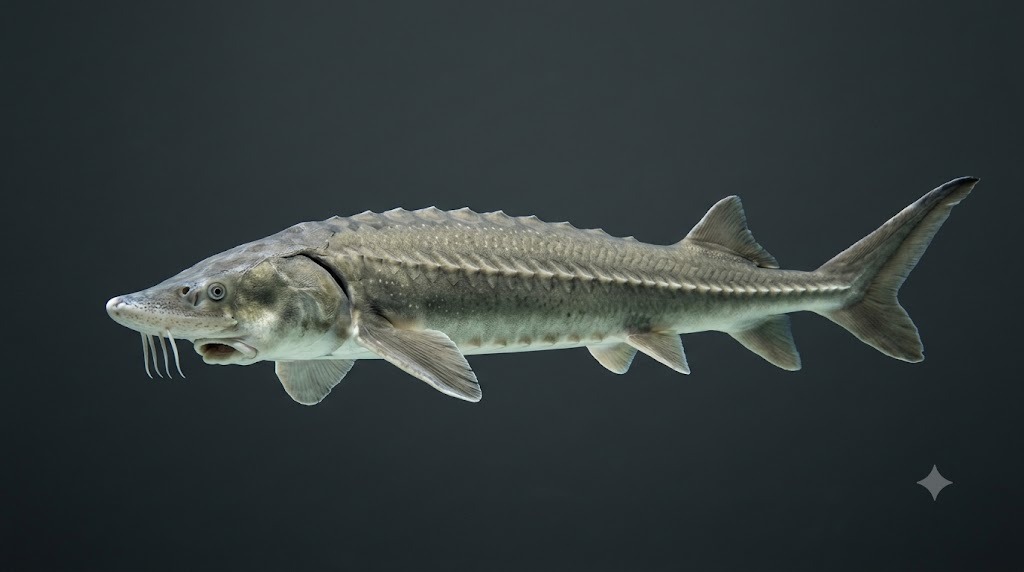
The white sturgeon has a long, torpedo-shaped body built around a cartilaginous skeleton rather than true bone. Its skin is scaleless and instead carries five rows of bony plates called scutes - one along the back and two along each side - which are sharp in young fish and worn smoother with age. The head ends in a broad, somewhat blunt snout, and on the underside is a toothless, protrusible, tube-like sucker mouth used to vacuum food off the bottom. Just ahead of that mouth hang four sensory barbels, which the fish drags along the bottom to taste and smell its way to a meal. The tail is heterocercal and shark-like, with the upper lobe longer than the lower. Coloration runs gray to pale olive or brownish on the back and sides with a pale, whitish belly. White sturgeon are separated from the similar green sturgeon by their blunter snout, different scute counts and arrangement, and gray rather than olive-green color; the green sturgeon also shows olive striping the white sturgeon lacks.
Range & Habitat (US waters)
White sturgeon are a Pacific drainage species. The largest populations live in the Columbia and Snake River systems of Oregon, Washington, and Idaho, and in the Sacramento-San Joaquin system and the San Francisco Bay-Delta in California; the Fraser River in British Columbia holds another famous population. Some white sturgeon are anadromous, moving between fresh water and the estuary or ocean, while many populations are landlocked in fresh water - for example, fish confined to reservoirs above dams that they can no longer pass. They favor deep water with current: deep river holes and channels, the deep basins of reservoirs, and the deep channels of estuaries, typically over bottoms of sand, gravel, or rock. The endangered Kootenai River population in Idaho and Montana is a stark example of how dam construction and habitat change have isolated and harmed some of these fish.
Behavior & Feeding
White sturgeon are bottom feeders. They cruise slowly along the deepest parts of a river, reservoir, or estuary, dragging their four barbels over the bottom to detect food, then extend their tube-like mouth to vacuum up whatever they find. They locate food overwhelmingly by smell and taste rather than by sight, which is why they are caught on scent-heavy natural baits resting on the bottom and essentially never on artificial lures. Their diet is broad and includes fish (live, dead, and decaying), lamprey, eulachon and other smelt, shad, clams, crayfish, shrimp, worms, and other bottom organisms. During and after salmon runs they gorge on salmon eggs and on the carcasses left behind, and their feeding often follows seasonal runs of forage. A sturgeon's bite at the rod is unhurried, reflecting an animal that grazes the bottom rather than chasing prey.
Best Seasons & Times to Catch
White sturgeon can be caught year-round in many systems, but the best action is usually tied to two things: tide and forage. In the tidal lower Columbia and the California Delta, moving water turns the bite on, and many anglers favor the strong push of an outgoing tide. Bites also peak around runs of food - shad in late spring and early summer, smelt and eulachon in the lower Columbia, and salmon eggs and carcasses during and after the salmon runs in fall. Winter and spring are often excellent in the lower Columbia and the California Delta, while in the heat of summer the fish hold in cool, deep water. Because so much depends on the stage of the tide and what the local sturgeon are keying on, timing your trip to a good tide and the right seasonal bait matters far more than the hour on the clock.
Where to Find Them - Reading the Water
White sturgeon live deep, so finding them means finding the deepest, current-swept water in a system. In rivers, look for deep holes, the heads and tails of long pools, and main channels with a sandy or rocky bottom that gathers food. In reservoirs, target the deep basins and old river channels. In the tidal Delta and lower Columbia, fish the deep channels, the edges of flats that flush bait on the tide, and holes where current concentrates food on a moving tide. A sounder is a real advantage for locating depth changes, holes, and the bottom contour where sturgeon travel. The simple rule: find deep water with current and a food-holding bottom, anchor on it, and let your scent trail do the work of pulling fish to your bait.
Tackle & Rigs
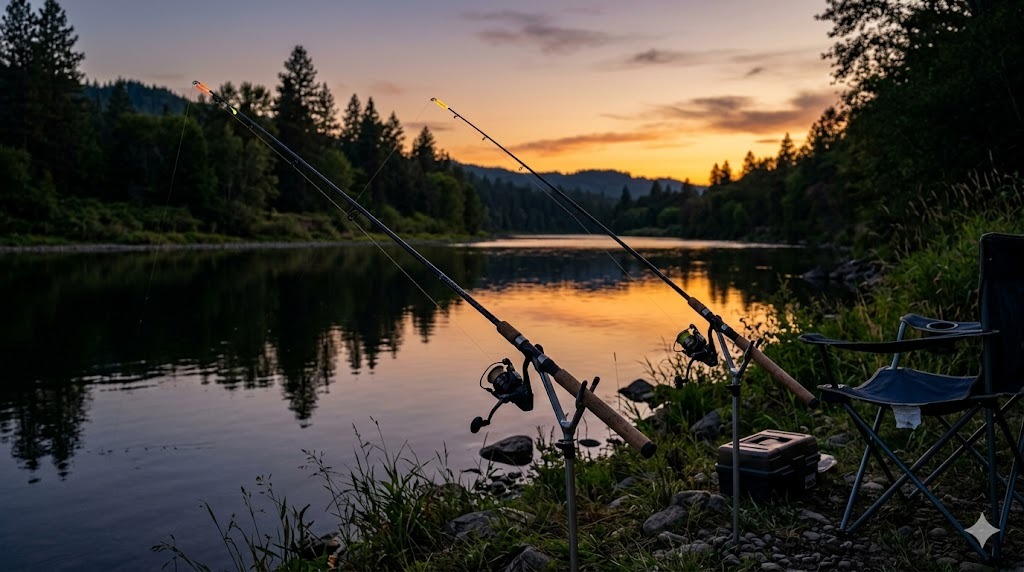
Sturgeon gear is heavy gear. The standard outfit is a stout 7 to 9 foot heavy or extra-heavy rod paired with a strong conventional or baitcasting reel that has a smooth, powerful drag, spooled with heavy braided main line, often in the 60 to 100 pound range or more, joined to a strong leader. The workhorse setup is a bottom rig: a sliding sinker or a fixed weight - a sturgeon slider, a rubber-cored sinker, a pyramid, or a cannonball - sized to hold bottom in the current, positioned above a sturdy single hook on a strong leader. In many waters a barbless circle hook is required, both to protect fish and because it suits the way sturgeon take a bait. Solid rod holders are essential, since the rod sits in the holder while you wait, and so is patience: sturgeon fishing is often a waiting game punctuated by sudden, violent strikes.
Best Baits & Lures
White sturgeon are caught by smell, not by lures, so the entire game is fresh, scent-heavy natural bait fished on the bottom. Top choices include salmon eggs and roe, shad, herring, anchovies, smelt and eulachon, sand shrimp, grass shrimp, mud or ghost shrimp, nightcrawlers, squid, and lamprey. The single best bait at any given time is usually whatever the local sturgeon are currently feeding on: salmon eggs during a salmon run, shad during the shad run, eulachon or smelt in the lower Columbia in winter. Freshness and scent are everything - many anglers re-bait often to keep a strong scent trail flowing downstream to a cruising fish. There is no lure selection to speak of here; success comes from matching the natural bait to the season and presenting it in the right deep, current-swept spot.
Techniques - How to Fish for It
The core technique is anchored bottom fishing. Position the boat over a deep hole, channel, or productive flat, cast the baited bottom rig out, and set the rod firmly in a holder while the weight pins your scent bait to the bottom. Then you watch the rod tip for the telltale sturgeon "pump" - a slow, rhythmic nodding or a series of sharp taps as the fish mouths the bait. With circle hooks, the right move is to reel steadily into the fish to let the rod load and the hook find the corner of the mouth, rather than rearing back with a hard jerk. Once hooked, a white sturgeon, especially a big one, fights extremely hard, with long powerful runs and sometimes spectacular leaps that throw the whole fish clear of the water. Landing a large sturgeon can be a lengthy, full-body battle, and tidal timing combined with the right bait is the key to getting those bites in the first place.
Common Mistakes
A classic mistake is setting the hook too hard with a circle hook - jerking pulls the hook away instead of letting it slide into the jaw, so you should reel tight and let the rod load. Another is using gear too light to control a giant fish, which leads to broken lines, a fish fought far too long, or both. Anglers also lose fish by ignoring the tide and fishing the wrong stage of moving water, and by failing to check and follow the slot and oversize regulations that govern most sturgeon waters. The most serious mistakes are handling errors: dragging a big sturgeon onto shore, hanging it vertically by the tail, or lifting it by the gills can injure or kill a very old, often protected fish. Using barbed or treble hooks where they are prohibited is another avoidable error that can harm both the fish and your standing with the law.
Size, Records & Eating Quality
White sturgeon are routinely several feet long, and many fish exceed 6 feet and 100 pounds; the species can reach truly giant sizes, with historic records of fish over 1,000 pounds and approaching 20 feet in length, which is what makes it North America's largest freshwater fish. The IGFA all-tackle world record is around 468 pounds, a fish taken from California waters in 1983. Trophy sturgeon are extremely old animals, and today many of the largest fish are protected oversize fish that must be released and may not even be removed from the water to be weighed. Conservation is central to this fishery. Populations range from healthy and harvestable to threatened and endangered - the landlocked Kootenai River population is listed as endangered - and in many waters fishing is strictly catch-and-release. Where limited harvest is allowed, it is tightly controlled by narrow slot limits that let you keep only a fish within a specific length window (often measured by fork length, such as from the front of the eye to the fork of the tail), along with short seasons, required tags or cards, and rules that make it illegal to remove very large brood-stock fish from the water. As table fare, slot-legal white sturgeon flesh is firm, mild, and highly regarded, often grilled or smoked, and sturgeon roe is the source of true caviar - a value that historically drove devastating overharvest. Because of that history, regulated and limited harvest of only slot-size fish, with widespread catch-and-release and full protection of oversize fish, is the norm today. Always check current state regulations before keeping any fish, because seasons and slot limits change frequently.
Pros & Cons (as a target species)
Pros: white sturgeon are the largest freshwater fish on the continent and offer a genuine shot at a giant, with brutal, long-running fights and even airborne leaps from fish that can outweigh the angler. They are a fascinating ancient species, they bite year-round in many systems, and they are caught on simple bottom-fishing tactics that reward patience over endless casting. Cons: they require heavy, specialized gear and stout rod holders; success depends heavily on tide timing and access to deep water, often from a boat; the fishing involves long waits between bites; and the strict, frequently changing slot and oversize regulations mean that in many waters you cannot keep a fish at all and must handle every fish with great care to protect a long-lived, sometimes endangered species.
Best Suited For
White sturgeon suit the patient angler who is after a single unforgettable fish rather than fast numbers, and who is comfortable with heavy tackle and waiting on the bottom for a strike. They are ideal for boat anglers fishing deep rivers, reservoirs, and the tidal Delta and lower Columbia, and for anyone drawn to big, powerful fish and a serious fight. Just as importantly, they are best suited to anglers who take regulations and fish handling seriously, since responsible catch-and-release and careful handling of oversize fish are central to pursuing this species.
FAQ
What is the best bait for white sturgeon? There is no single best bait - the right choice is whatever the local sturgeon are currently feeding on. Salmon eggs shine during salmon runs, shad during the shad run, and smelt or eulachon in the lower Columbia. The key is fresh, scent-heavy natural bait fished on the bottom; sturgeon are caught by smell, not on lures.
Can I keep a white sturgeon I catch? It depends entirely on the water and the fish. Many fisheries are catch-and-release only, and where harvest is allowed it is limited to slot-size fish within a specific length window, with tags or cards and short seasons. Oversize fish must be released and often cannot even be lifted from the water. Always check current state regulations before keeping any sturgeon.
Do I need a boat to catch white sturgeon? A boat is a big advantage because it lets you anchor over deep holes and channels in rivers, reservoirs, and the tidal Delta. Shore fishing is possible where deep, productive water comes close to accessible banks, but most consistent sturgeon fishing is done from an anchored boat over deep water.
How do I set the hook on a sturgeon? With the circle hooks required in many waters, do not jerk. When you see the rod pump, reel steadily into the fish and let the rod load up, which slides the hook into the corner of the jaw. A hard jerk usually pulls the hook away and misses the fish.
Are white sturgeon good to eat? Where legal harvest of slot-size fish is allowed, the firm, mild flesh is highly regarded and excellent grilled or smoked, and the roe is true caviar. But historic demand for flesh and caviar devastated populations, so only slot-legal fish may be kept where harvest is permitted, oversize and protected fish must be released, and catch-and-release is the norm across much of the species' range.