How to Gather Chitons
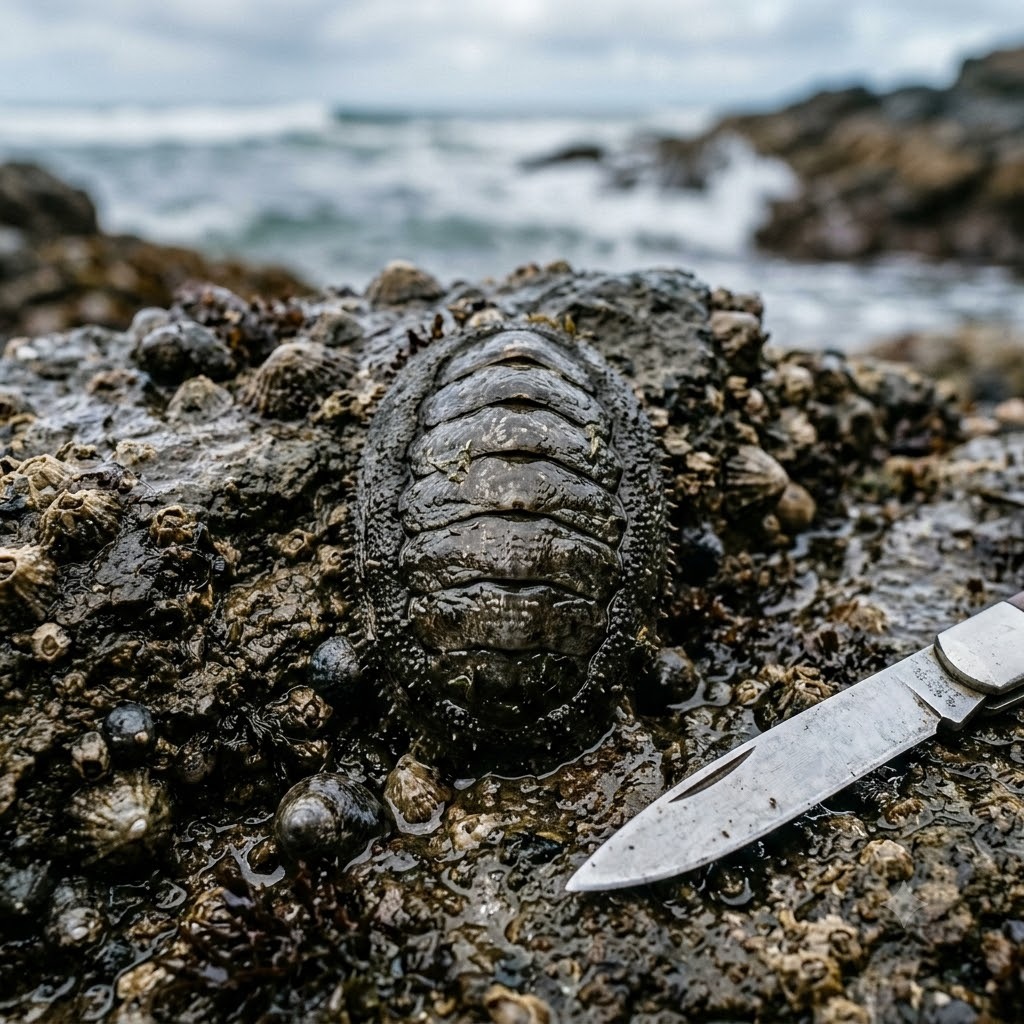
Chitons are armoured oval mollusks with eight plates that cling to intertidal rock like limpets, a traditional food from the Pacific Northwest to Chile - tough, needing careful cleaning and long cooking.
Gather chitons only from clean, certified-safe rocky shores and take modestly - some large species are slow to recover. Mind the surf and slippery rocks. The meat needs thorough cleaning and cooking; shellfish is a serious allergen.
Chitons are among the oldest foods of the rocky shore - armoured, oval mollusks wearing eight overlapping plates like a little suit of armour, clamped to wave-washed rock beside the limpets. Coastal peoples from the Pacific Northwest to the coast of Chile have gathered and eaten them for millennia. They are tough and demand careful cleaning and patient cooking, so they are a forage for the curious and the persistent - but a genuine, traditional taste of the intertidal.
Why go for them
They are a link to a very old way of eating from the sea, free and gathered by hand from rocks you can reach at low tide. For the forager who values tradition and does not mind the work of cleaning and slow-cooking tough meat, chitons offer an authentic, offbeat shellfish that almost no one else bothers to try.
Where and when to find them
Chitons live on wave-washed intertidal rocks, boulders and ledges, often in crevices and on the undersides and shaded faces of rock, exposed at low tide. Gather them on a good low tide, working the rocks where they cluster. As always with rock-clinging shellfish, clean water matters more than finding the animal.
How to catch them
Like limpets, chitons clamp down when disturbed, so slide a blade quickly under the girdle and pry the whole animal off in one motion before it seals; a curled chiton comes away like a little armoured ball. Wear gloves, mind the slick rock and the surf, and take only a modest number, as some large species are slow-growing.
Handling, cleaning and cooking
Cleaning is the work: blanch the chiton to loosen it, then remove the eight plates and the tough girdle, and clean the foot, discarding the guts. The remaining foot meat is tough, so pound and tenderise it and either quick-fry it or simmer it long and slow in a stew or chowder until it softens. Cook thoroughly.
Safety and the law
Gather chitons only from clean, open, certified-safe rocky shores, heed local closures and size or take rules where they exist, and harvest modestly to protect slow-growing populations. Wave-washed rocks are slippery and the surf is dangerous, so watch your footing and the sea. Clean and cook the meat thoroughly; shellfish is a serious allergen. Read our shellfish safety guide.