Smallmouth Bass Tactics
Smallmouth bass live in two very different worlds - clear cold rivers and deep northern lakes - and the tactics that crush them in one environment fall flat in the other…
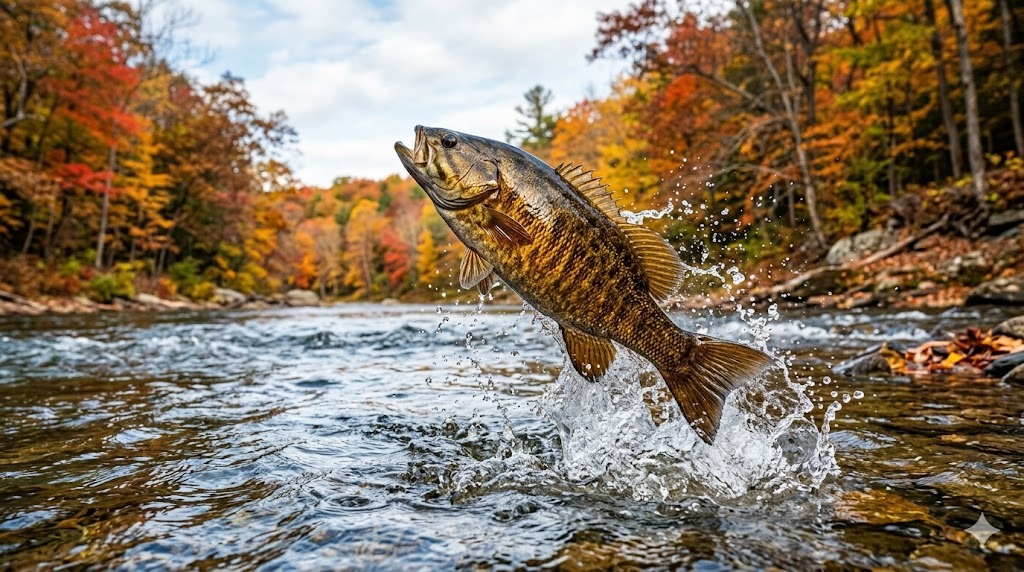
The smallmouth bass lives in two very different worlds - clear cold rivers and deep northern lakes - and the tactics that crush them in one environment fall flat in the other. River smallmouth ambush prey in current behind boulders and on gravel flats. Lake smallmouth roam open water and prowl deep rock structure. The lure choices, presentations, and reading of the water diverge dramatically.
This guide covers smallmouth bass tactics for both environments, the seasons that matter, and the gear that puts more fish in the net regardless of where they live.
What Smallmouth Want
Across both rivers and lakes, smallmouth eat:
- Crayfish - Top forage in nearly every smallmouth water.
- Baitfish - Shiners, alewives, ciscoes, smelt, dace, gobies.
- Insects and larvae - Especially in rivers; hellgrammites, mayflies, dragonflies.
- Other small fish - Including their own young.
Match-the-hatch matters with smallmouth. Crayfish-pattern jigs and tubes work because crayfish are everywhere; baitfish profiles win when bass are chasing alewives or gobies.
River Smallmouth: Reading Current
Key Holding Spots
- Behind boulders - Smallmouth sit in the slack water behind rocks, facing upstream, picking off bait drifting past.
- Eddies and seams - The line between fast and slow current. Bass hold in the slow water and ambush into the fast.
- Gravel and cobble flats - Crayfish bottoms. Smallmouth feed actively here.
- Pool tail-outs - Where pools dump into the next riffle. High-percentage spots in spring and summer.
- Deep pools - Cold-water and winter holds.
- Downed wood - Logjams and laydowns hold fish year-round.
- Bridge pilings, dam tailwaters - Always worth a few casts.
Reading Current Speed
Smallmouth prefer moderate current - strong enough to deliver food, slow enough to hold. Identify cushions of slack water behind every current break and target them systematically.
River Smallmouth Tactics
Tubes
The classic river smallmouth bait. A 3-4” tube on a 1/8 to 3/8 oz internal jighead, drifted with the current and bouncing along the bottom. Drag, hop, and let the current swing it through likely lies.
Ned Rigs
Versatile finesse rig in current. Cast upstream or across, let the bait drift naturally past structure.
Crankbaits
Square-bill cranks (Strike King KVD 1.5, Rapala BX Brat) ripped through riffles and across cobble flats. Smallmouth crush them.
Topwater
Walking baits (Heddon Spook Jr, Rapala Skitter Walk) and poppers (Rebel Pop-R) at dawn and dusk in summer. Targets on pool tails and along banks.
Jerkbaits
Suspending jerkbaits (Rapala Husky Jerk, Megabass Vision 110) twitched in slack water and seams.
Streamers (Fly)
For fly anglers, weighted Woolly Buggers, Murdich Minnows, and Clouser Minnows on 6-8 weight rods.
Wading and Boat Approach
Wade upstream when possible. Approach pools from the downstream end so you don’t spook fish in the slack. From a boat, anchor upstream and cast down to targets, or drift with a controlled drag chain.
Lake Smallmouth: Reading Structure
Key Holding Spots
- Main lake points - Especially with rock and depth changes.
- Offshore rock piles, humps, reefs - Smallmouth gold. Often hold large schools.
- Steep cliffs and bluffs - Dropoff fishing.
- Mid-lake flats with rock or gravel - Search areas.
- Deep weed edges - Especially with goby populations.
- Bridge causeways - Concentrated structure with bait.
- Wind-blown shorelines - Push bait, push bass.
Reading Depth by Season
- Spring (water 50-60°F) - Shallow rocky banks and chunk rock spawning areas, 3-15 ft.
- Post-spawn early summer - Transition to 10-25 ft on points and humps.
- Summer - Deep main-lake structure, 18-40 ft on northern lakes.
- Fall - Reverse migration to shallower flats, 8-25 ft.
- Winter (open water) - Deep, 25-50+ ft, slow vertical presentations.
A good electronics game changes everything for lake smallmouth. Side imaging finds the rock pile; live sonar (Garmin LiveScope, Lowrance ActiveTarget, Humminbird MEGA Live) puts the bait on the fish.
Lake Smallmouth Tactics
Drop Shots
The deep-water smallmouth standard. 1/4-3/8 oz tungsten weight, 14-18 inch leader, finesse worm or minnow bait (Roboworm, Strike King Dream Shot). Vertical or short cast, slight shake.
Ned Rigs
Effective at all depths. Glide on the bottom, lift, fall.
Tubes
Effective in deeper water too. Cast and slow-drag along the bottom.
Hair Jigs
Bucktail or marabou jigs (Outkast Feider Fly, A-Jay’s Hair Jigs) in 1/4-3/4 oz. Deadly in clear water year-round.
Spybait
A unique technique with finesse jerkbaits (DUO Realis Spinbait 80) slowly retrieved subsurface. Crushing tool for pressured clear-water smallmouth.
Damiki Rig / Moping
Cast or vertical-drop a minnow on a heavy jighead, hold it in suspended fish on live sonar. The modern smallmouth game-changer.
Underspin / Swimbait
3-4” swimbait on an underspin head, slow-rolled through bait clouds suspended over structure.
Topwater
Walk-the-dog baits over offshore humps and along main-lake points in low light. Smallmouth crush them.
Rod and Reel for Smallmouth
River Setup
- Medium spinning rod 6’10”-7’2”, fast action.
- 3000 size reel, smooth drag.
- 10-15 lb braid + 8-10 lb fluorocarbon leader, or 8-10 lb fluorocarbon mainline.
Lake Drop-Shot / Ned
- Medium-light spinning 7’1”-7’4”, extra-fast tip.
- 2500 size reel.
- 10 lb braid + 6-8 lb fluorocarbon leader.
Lake Hair Jig / Tube
- Medium spinning 7’-7’3”, fast action.
- 3000 size reel.
- 10 lb braid + 8-10 lb fluorocarbon leader.
Seasonal Patterns
Spring
Pre-spawn smallmouth move shallow into chunk rock and gravel. Aggressive on jerkbaits, swimbaits, hair jigs. Spawn happens at 55-65°F.
Summer
In rivers, ambush points and shaded structure. In lakes, deep main-lake structure with finesse and live-sonar techniques.
Fall
Smallmouth gorge for winter. Aggressive feeding on baitfish patterns. Swimbaits, jerkbaits, and crankbaits all produce.
Winter (Open Water)
Slow vertical presentations on deep structure. Hair jigs, drop shots, jigging spoons.
Catch and Release
Smallmouth are a popular sportfish and most fisheries depend on release. Hold fish horizontally; never lip-grip a smallmouth and let it dangle. Wet hands. Quick photo. Release.
FAQ
What’s the best all-around smallmouth lure? A 3” tube on a 1/8-1/4 oz jighead. Works in rivers and lakes, year-round.
Why are my river smallmouth small? Either the river holds small fish or you’re missing the deeper, slower water where bigger smallmouth live. Move to bigger pools and undercut banks.
Drop shot or ned rig? Drop shot for deep, vertical, finesse fishing. Ned rig for casting and dragging along the bottom. Both are essential.
Do smallmouth eat topwater? Yes, aggressively, in low light and warm weather. Walking baits and poppers on offshore humps and along shorelines.
How fast can I retrieve a hair jig? Slow - let it pendulum, hop, and drag along the bottom. Most strikes happen on the pause or fall.
Conclusion
Smallmouth bass are arguably the hardest-fighting freshwater fish for their size, and they reward anglers who understand their environment. In rivers, read current and target ambush points with tubes and topwater. In lakes, find rock structure and play the finesse game with drop shots, ned rigs, and hair jigs. Match the tactics to the water, fish through the seasons, and a 4-pound brown bass will make any spinning rod into the most fun you’ve had on a fishing trip. When you want a break from bronzebacks, the same rivers often hold walleye worth a cast.
🛒 Recommended Gear on Amazon
- Ned rig kit - browse current options and reviews on Amazon.
- Tube baits - browse current options and reviews on Amazon.
- Topwater poppers - browse current options and reviews on Amazon.
As an Amazon Associate, we earn from qualifying purchases - at no extra cost to you. This helps us keep producing free, in-depth guides.