Trout Streamer Fishing
Streamer fishing for trout is the closest thing in fly fishing to throwing a jerkbait. It targets the biggest trout in the river - the predators that eat baitfish, leeches, and other…
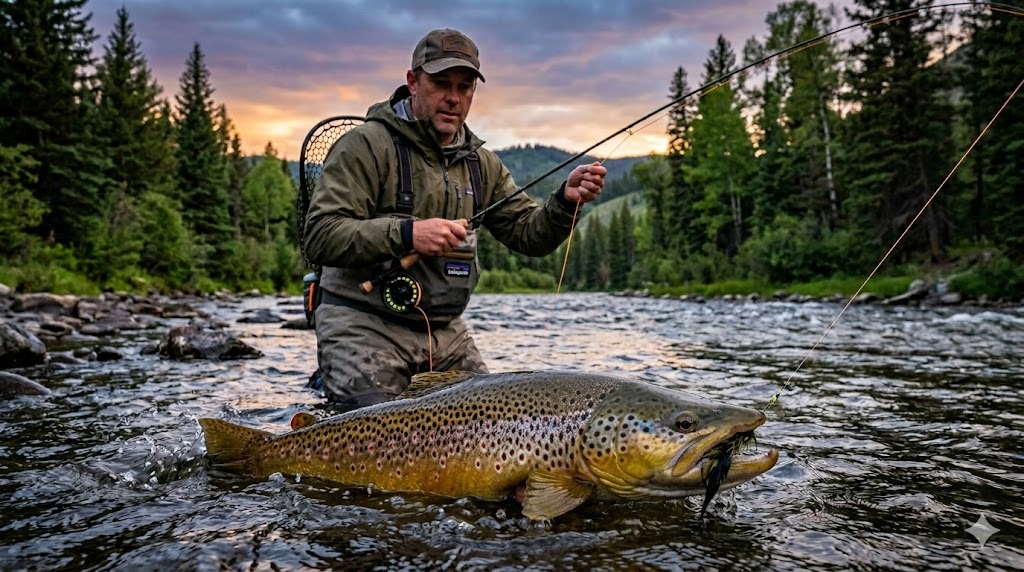
Streamer fishing for trout is the closest thing in fly fishing to throwing a jerkbait, and it sits among the most rewarding advanced fishing techniques you can learn. It targets the biggest trout in the river - the predators that eat baitfish, leeches, sculpins, and other trout. While dry-fly anglers count rises and nymph fishers chase numbers, streamer fishers chase trophies, and the eats are violent enough to break leaders and shake the rod from your hand.
This guide covers the flies, retrieves, sink tips, and water that make streamer fishing the trophy hunter’s discipline of fly fishing.
Why Streamers Catch Big Trout
Trout over 18 inches are no longer eating mayflies as their primary food. They are eating other fish - sculpins, dace, juvenile trout, suckers, baitfish. A 24-inch brown trout will pass on a #16 BWO to chase a 4-inch streamer that promises 200 calories in one bite.
Streamer fishing capitalizes on this predator behavior. You may catch fewer fish than nymph anglers in a day, but the fish you catch are bigger on average, and the strikes are unforgettable.
When Streamers Work Best
- High and slightly off-color water after rain pushes bait around and triggers feeding.
- Pre-spawn and post-spawn when trout are aggressive (brown trout in fall, rainbows in spring).
- Low-light - dawn, dusk, and overcast days.
- Fall and spring generally outproduce summer.
- Cold-front pressure changes can trigger active streamer eats.
Bright bluebird midsummer afternoons are the worst conditions. Move and adjust accordingly.
Streamer Patterns
Articulated Streamers
Two-hook flies with a connecting joint that gives kicking, swimming action. The deadliest big-fish streamers.
- Galloup’s Sex Dungeon - Bunny strip and marabou; classic for big browns.
- Mike’s Meal Ticket - Articulated baitfish profile.
- Skiddish Smolt - Realistic juvenile salmonid pattern.
- Drunk and Disorderly - Articulated diving streamer with deer-hair head.
- Boogie Man - Larger articulated leech/sculpin pattern.
Single-Hook Streamers
- Woolly Bugger - The gateway streamer. Black, olive, and brown. Versatile and effective.
- Sculpzilla - Heavy sculpin imitation.
- Clouser Minnow - Originally saltwater but deadly on trout in baitfish water.
- Muddler Minnow - Classic deer-hair head streamer.
- Zonker - Rabbit-strip baitfish pattern.
Sizes and Colors
Big-fish streamers run 3-7 inches; trout-killer Woolly Buggers are 2-4 inches. Color guidelines:
- Bright water: Natural - olive, brown, tan, black.
- Dirty water: Bold - black/yellow, white, chartreuse.
- Sunny: Smaller and more natural.
- Cloudy or pre-rain: Larger and bolder.
Carry a few of each in light and dark, sizes 4 to 1/0.
Rod, Reel, and Line
Rod
- 5-6 weight for smaller streamers and small rivers.
- 7-8 weight for big articulated streamers and large western rivers.
- Fast action with a strong butt section to throw heavy flies and turn over sink tips.
Top choices: Sage Sonic, Orvis Helios, Echo Streamer.
Reel
A reel with a good drag (large arbor) - important for the rare trophy that runs. Sized to balance the rod.
Line
This is where streamer fishing diverges from dry-fly:
- Floating line with a polyleader or sink tip for shallow runs.
- Integrated sink-tip line (Type 3 / Type 6 / Type 8) for deeper water.
- Full intermediate or sink line for lakes and slow deep runs.
Brands: Scientific Anglers Sonar Sink 25, Rio InTouch Streamer Tip, Cortland Streamer Plus.
A 5-foot fluorocarbon leader of 0X-2X (12-16 lb) connects the line to the fly. No tapered fancy leader needed - short, stout, and direct.
Reading Water for Streamers
Streamers shine in:
- Cut banks and overhanging vegetation where big trout hide.
- Deep runs and bucket pools with structure.
- Confluence of currents where bait gets disoriented.
- Behind boulders and seam lines.
- The heads of pools where current dumps in.
Cast across and slightly downstream, let the fly swing and sink, then strip back. Cover water - streamer fishing is hunting, not waiting.
The Strip
Retrieve cadence makes or breaks streamer fishing.
Slow Strip-Pause
Long slow strips with 1-2 second pauses. Imitates a wounded baitfish. Often deadly for cold-water and pressured trout.
Erratic Strip-Strip-Pause
Two quick strips, a pause, another strip. Triggers reaction strikes from predators.
Fast Continuous Strip
Long fast strips with no pause. Aggressive search retrieve in warm water or for chasing fish.
Swing and Strip
Cast across, let the fly swing on a tight line through the seam, then begin stripping back. Classic and effective.
Vary retrieves until a fish tells you what they want. Watch for follows - many big trout follow without committing; speeding up or pausing right at the rod tip can trigger the eat.
The Strip Set
Trout streamer fishing requires a strip set, not a trout set. When you feel a strike, pull hard with your line hand while keeping the rod tip low. If you lift the rod (trout set), you pull the fly out of the fish’s mouth before the hook sets.
This is a hard habit to break for dry-fly anglers. Practice it.
Sink Tips: How to Choose
- No tip (floating) - Skating streamers, shallow water under 2 feet.
- Type 3 (3 ips sink rate) - Runs 2-4 feet deep.
- Type 6 (6 ips) - Runs 4-7 feet deep, most versatile.
- Type 8+ (8+ ips) - Deep runs over 7 feet, heavy water.
Carry interchangeable polyleaders (Airflo, Rio) or two reel spools with different lines.
FAQ
Why aren’t I catching fish on streamers? Most likely: not covering enough water, not getting deep enough, wrong retrieve speed, or wrong conditions (bluebird midsummer). Move, change sink tip, change cadence.
Two-handed or single-handed? Single-handed is standard for most trout streamer fishing. Two-handed (switch or spey) rods shine on big western rivers when swinging large flies.
Are barbless hooks okay for streamers? Yes - and recommended for catch and release. Pinch barbs on articulated flies for easier hook removal.
How big is too big a fly? On most trout water, 5-7 inches is the practical upper end. Western browns and Argentine rivers see flies to 9 inches. Match to the size of bait in the river.
Strip set vs trout set - does it really matter? Yes. A trout set on a streamer takes the fly away from the fish before it can close on it. Strip set with the rod tip low.
Conclusion
Streamer fishing for trout is hunting. You walk and wade, casting big flies into the spots big fish live, stripping them back at varying speeds and waiting for the violent eat that defines the technique. The right rod, sink tip, and strip set turn what looks like blind casting into a calculated predator pursuit. If you want the trout of your life, put down the dries, tie on a Sex Dungeon, and start covering water.
🛒 Recommended Gear on Amazon
- Trout streamer flies - browse current options and reviews on Amazon.
- Sink tip fly line - browse current options and reviews on Amazon.
- Fly box - browse current options and reviews on Amazon.
As an Amazon Associate, we earn from qualifying purchases - at no extra cost to you. This helps us keep producing free, in-depth guides.