Smallmouth Buffalo
The smallmouth buffalo is a big, heavy-bodied native sucker that ranks among the largest freshwater fish in the central United States, and one of the most underrated.
🗓️ Last reviewed: June 2026
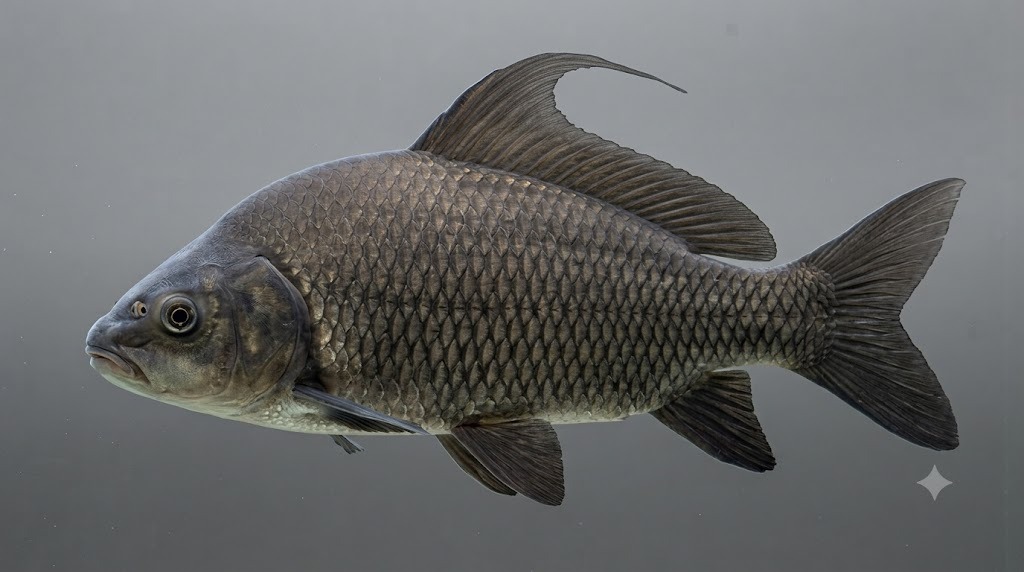

Overview
The smallmouth buffalo is a big, heavy-bodied native sucker that ranks among the largest freshwater fish in the central United States, and one of the most underrated. Despite its bulk and the way it is so often confused with carp, it is not a carp at all - it is a member of the sucker family, native to the big rivers and reservoirs of the American heartland. This is a deep-bodied, slate-gray bottom feeder that grazes the mud and gravel for small organisms, and it grows large: fish in the 10 to 20 pound class are common, and the species can top 30, 40, even 50 pounds. It is also remarkably long-lived, with some buffalo proven by research to live for many decades. For anglers who fish bottom rigs near current and flats with simple natural baits, the smallmouth buffalo offers a powerful, dogged fight from a heavyweight that most people walk right past. It is also a major bowfishing target, and while it is famously bony, the firm flesh is good eating when handled right.
Identification & Appearance
The smallmouth buffalo has a deep, robust, laterally compressed body that gives it a tall, almost humpbacked profile through the shoulders, tapering to a narrow tail. As the name suggests, its mouth is small and set low on the underside of the head, pointing downward - a true sucker mouth with thick lips, built for vacuuming food off the bottom rather than for grabbing prey. The lips are distinctly grooved and the upper lip sits well below the level of the eye. A long dorsal fin runs down much of the back, beginning with a tall front lobe that tapers rearward. Coloration is a dull slate-gray to bronze or brownish on the back and sides, fading to a pale belly, usually without bold markings. The body is covered in large, coarse scales. The most common mistake is calling it a carp, but the smallmouth buffalo has no barbels at the corners of its mouth - carp have two pairs of fleshy barbels - and it lacks the carp's serrated spine at the front of the dorsal fin. It is separated from the related bigmouth buffalo by its smaller, downturned, sucker-like mouth; the bigmouth buffalo has a larger, forward-facing, more terminal mouth and a more sloped head.
Range & Habitat (US waters)
The smallmouth buffalo is a fish of the central United States, native to the Mississippi River basin and its major tributaries. Its range covers a broad swath of the heartland, from the Great Lakes drainages and the Ohio River system south through the Mississippi, Missouri, Arkansas, and Red River systems, down to the Gulf states and into the Rio Grande drainage of Texas and the desert Southwest. It thrives in big water: large rivers, their backwaters and oxbows, and the reservoirs and impoundments built across those river systems. It generally prefers clearer, deeper water with some current and a firmer bottom than the bigmouth buffalo, which leans toward more sluggish, weedy backwaters. Look for smallmouth buffalo in the main channels and deeper pools of big rivers, in tailwaters below dams, and out over the open flats and channel edges of large reservoirs, typically over bottoms of mud, sand, gravel, or rock where they can graze for food.
Behavior & Feeding
The smallmouth buffalo is a bottom feeder through and through. It works slowly along the bottom with its downturned sucker mouth, vacuuming up small food items and sifting them from the mud, sand, and gravel. Its diet is built around small organisms: aquatic insect larvae, tiny crustaceans, mollusks and other small invertebrates, bits of plant material, algae, and detritus. It is not a predator and does not chase baitfish, which is exactly why it is caught on small, scent-bearing natural baits sitting still on the bottom rather than on lures. Buffalo often feed in loose groups, moving across flats and along channel edges as they graze. Their feeding tends to pick up in warmer months, and they will move shallow onto flats and into backwaters to feed, especially around the spring spawn when fish gather in large numbers in shallow, current-touched water. A buffalo's take is often subtle for such a big fish - a slow, mouthing pickup of a soft bait on the bottom rather than a violent strike - which is part of why so many go uncaught.
Best Seasons & Times to Catch
The prime time for smallmouth buffalo is the warm half of the year, from spring through fall, with spring often the standout. As the water warms and the fish stage and spawn, big buffalo crowd into shallow flats, backwaters, and current areas, and this is when they are most concentrated and most catchable on bottom baits. Through summer they continue to feed well, often moving onto flats and channel edges in low light around dawn and dusk and feeding through the night, which can be an excellent time to target them in the heat. Fall keeps producing as fish feed up before the cold. In the cold of winter their metabolism drops and feeding slows markedly, making them much harder to catch in most waters. As with most warm-water bottom feeding, timing your trip to warming water, low-light periods, and areas where fish are actively grazing matters more than any exact hour on the clock.
Where to Find Them - Reading the Water
Finding smallmouth buffalo means thinking like a bottom-grazing fish in big water. In rivers, look to the main channel and deeper pools, the seams and slack water beside current, the mouths of tributaries, and the tailwater zones below dams where current concentrates food. Backwaters, oxbows, and the edges of flats are prime feeding areas, especially in spring when fish push shallow to spawn. In reservoirs, target the broad flats, the channel edges and drop-offs, points, and the areas near inflowing creeks and rivers, focusing on firmer bottoms of mud, sand, gravel, or rock where buffalo graze. A sounder helps you find the flats, channel edges, and depth changes the fish travel, and on calm days you may even see buffalo rolling or their backs breaking the surface over a feeding flat. The simple rule: find big water with a food-holding bottom near current or a channel edge, anchor or position on it, and let a still bottom bait do the work.
Tackle & Rigs
You do not need exotic gear for smallmouth buffalo, but you do need gear stout enough to handle a strong, heavy fish. A medium-heavy to heavy rod of 7 to 9 feet, the kind of outfit many anglers already use for carp or catfish, paired with a solid spinning or baitcasting reel with a smooth, dependable drag, is ideal. Spool with a strong main line - braid in the 20 to 40 pound range, or heavy monofilament - because a big buffalo will run hard and bulldog in current. The workhorse setup is a simple bottom rig. A sliding sinker rig, often called a slip-sinker or a carp-style running rig, with an egg or no-roll sinker above a swivel and a short leader to the hook, lets the fish pick up the bait and move off without feeling the weight. A simple fixed sinker bottom rig works too. Hooks should be fairly small and sharp to match the small sucker mouth - a wide-gap or circle hook in a moderate size baited with a compact offering. Many anglers fish two rods in holders and wait, watching the rod tips for the slow pull of a feeding buffalo. A baitrunner-style reel or a loosened drag helps, since the take can be unhurried right up until the fish loads the rod.
Best Baits & Lures
Smallmouth buffalo are caught on small, soft, scent-bearing natural baits, not on lures, because they graze the bottom for tiny food rather than chasing prey. The classic offerings are dough baits, including the prepared and homemade dough baits and the sweetened, flavored doughs popular with carp anglers, along with bread (balled-up white bread or bread flakes), and worms such as nightcrawlers and red worms. Buffalo also fall to corn, small bits of bait fished on the bottom, and other soft natural offerings. The key is a compact bait that a small downturned sucker mouth can take, fished still on the bottom so the fish can vacuum it up. A bit of scent or sweetness helps draw grazing fish to the spot, and many anglers will pre-bait or chum an area lightly to gather buffalo before fishing. There is essentially no lure fishing for this species; success comes from a soft, scented bottom bait in the right place rather than from any lure selection. The other major way smallmouth buffalo are taken is by bowfishing, where archers shoot the big fish as they cruise shallow flats and backwaters in spring - a popular pursuit, though a different game from rod and reel.
Techniques - How to Fish for It
The core technique is patient bottom fishing with a still, scented bait. Position yourself over a flat, channel edge, pool, or current seam where buffalo feed, cast the baited bottom rig out, and set the rod in a holder. With a slip-sinker or running rig, the goal is to let a feeding buffalo pick up the soft bait and move off without feeling resistance, so a loosened drag or a baitrunner reel is a real help. Watch the rod tip closely, because the take from even a huge buffalo is often a slow, steady pull or a series of gentle nods rather than a hard slam - when that rod tip pulls down and stays down, take up the slack and let the rod load into the fish. Once hooked, a smallmouth buffalo fights hard and dogged, using its deep, heavy body to bulldog in long, powerful runs along the bottom, especially in current, and a big one can keep you busy for a while on the right tackle. Pre-baiting or lightly chumming a spot to gather grazing fish before you fish, and timing your outing to warm water and low-light periods, will put far more of these heavyweights on the end of your line.
Common Mistakes
The most common mistake is dismissing the smallmouth buffalo as a "trash carp" and not targeting it seriously, when in fact it is a powerful, hard-fighting heavyweight worth pursuing. On the water, a frequent error is using a hook too large for the small sucker mouth, or a bait too big and hard for the fish to take, which leads to missed and dropped runs. Another is fishing with the drag locked down or no slack to give, so the fish feels the weight and drops the bait - a slip-sinker setup and a loosened or baitrunner drag fix this. Anglers also go too light on tackle and get bullied by a big buffalo in current, or fish too fast and impatiently, when this is a waiting game over a baited spot. Finally, expecting a violent strike causes many anglers to miss the slow, subtle pull that a feeding buffalo gives, and to set up on bites far too late. Watch for the steady draw, not the slam.
Size, Records & Eating Quality
Smallmouth buffalo grow big. Fish in the 10 to 20 pound range are common in good water, and the species regularly reaches 30 and 40 pounds, with the largest fish topping 50 pounds or more, which puts it firmly among the heavyweight freshwater fish of the central US. The IGFA all-tackle world record stands at over 80 pounds, a fish taken from Athens Lake in Texas, which shows just how large this underrated species can grow. Beyond their size, smallmouth buffalo are now known to be extraordinarily long-lived: aging research has documented individual buffalo living well past 100 years, making them some of the oldest known freshwater fish in North America, which is worth keeping in mind when you handle a true giant. As table fare, the smallmouth buffalo has firm, mild, white flesh that is genuinely good eating and has long supported commercial fisheries across the heartland - it is sold in markets as "buffalo fish." The big catch is bones: like other suckers, the flesh is laced with fine intramuscular Y-bones, which is why buffalo are often scored and fried so the small bones soften, or smoked, or ground for patties. Because of those bones it is an honestly bony fish, but the flavor and firmness are well regarded by those who know how to prepare it. Always check current state regulations before keeping fish, as rules on harvest, methods such as bowfishing, and any limits vary by state and water.
Pros & Cons (as a target species)
Pros: smallmouth buffalo are big, strong, and dogged fighters that pull like a freight train on the bottom, and they offer a genuine shot at a 20, 30, or even 40-plus pound freshwater fish on simple, inexpensive bottom-fishing gear and baits. They are widespread across the central US, often overlooked and therefore under-pressured, they feed well through the warm months, and they make for firm, mild eating when prepared properly. They are also a popular bowfishing target. Cons: they are bottom grazers caught by patience rather than action, so the fishing involves waiting over a baited spot rather than active casting; their take is often slow and subtle and easy to miss; they are famously bony and fiddly to clean for the table; and they are so widely written off as "carp" that many anglers never give them the respect they deserve. Cold-water months also slow the fishing down sharply.
Best Suited For
The smallmouth buffalo suits the patient bottom angler who enjoys the carp- and catfish-style game of soaking a baited rig and waiting for a slow, heavy pull, and who is happy to target a powerful, overlooked heavyweight instead of chasing the usual gamefish. It is ideal for anglers fishing big rivers, their backwaters, and large reservoirs across the heartland, especially those who already own carp or catfish gear and want a new challenge close to home. It also suits bowfishers looking for large, shallow-cruising targets in spring. Above all, it is best suited to anglers willing to look past the "trash fish" reputation and appreciate a hard-fighting, long-lived native heavyweight for what it is.
FAQ
Is a smallmouth buffalo a type of carp? No. Despite constantly being mistaken for one, the smallmouth buffalo is not a carp at all - it is a native North American sucker. The easiest way to tell them apart is the mouth: a buffalo has a small, downturned, sucker mouth and no barbels, while carp have a larger mouth with two pairs of fleshy barbels at the corners and a serrated spine at the front of the dorsal fin.
What is the best bait for smallmouth buffalo? Small, soft, scented natural baits fished still on the bottom work best. Dough baits, bread, and worms such as nightcrawlers and red worms are the classics, and corn and other soft offerings also produce. The key is a compact bait a small sucker mouth can take, often with a bit of scent or sweetness, presented on a slip-sinker bottom rig.
Why am I missing so many bites? The take from a buffalo is usually slow and subtle, not a hard strike, so it is easy to misread and set up too late. Use a hook small enough for the little sucker mouth, keep your bait compact, and fish a slip-sinker rig with a loosened or baitrunner drag so the fish can pick up the bait and move off without feeling the weight. Wait for the rod tip to pull down and stay down, then load into the fish.
Are smallmouth buffalo good to eat? Yes, the firm, mild, white flesh is genuinely good and has long been sold commercially as buffalo fish. The catch is bones: like other suckers it carries fine Y-bones, so it is usually scored and fried, smoked, or ground into patties to deal with them. It is an honestly bony fish, but well regarded by those who know how to prepare it. Check your state regulations before keeping any fish.
How big do smallmouth buffalo get? They are true heavyweights. Fish of 10 to 20 pounds are common, 30 and 40 pound fish are regularly caught, and the largest top 50 pounds, with the IGFA all-tackle world record exceeding 80 pounds from a Texas lake. They are also extremely long-lived, with research documenting individual buffalo well over 100 years old.